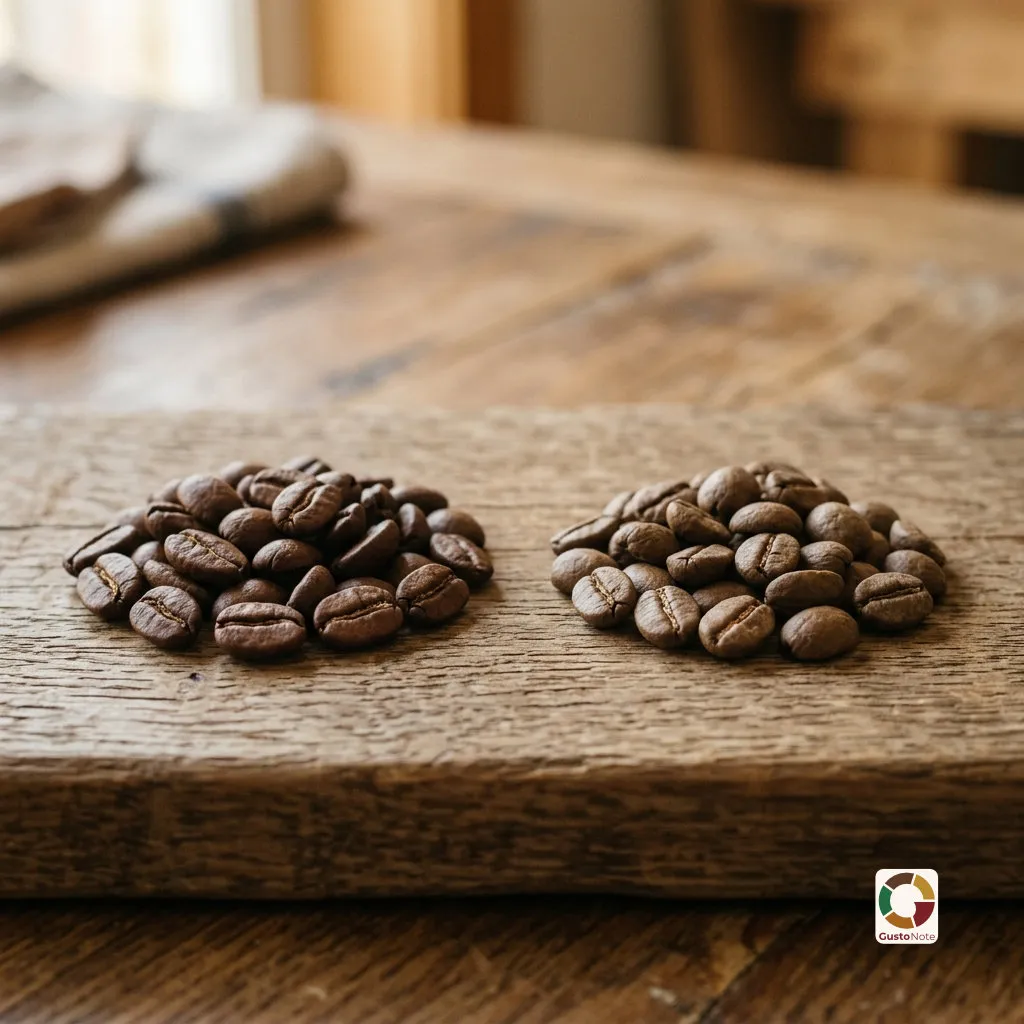
Arabica vs Robusta - the two souls of coffee
One word keeps coming back on coffee bags: arabica, usually as a badge of quality. The other side of that story is robusta, treated like a lesser cousin. The truth is more interesting. These are two different species of plant, each with its own character, and both make sense if you know what to want from them.
Two species, not two brands
Arabica and robusta are two botanically different coffee species. Arabica is around 60 to 70 percent of world production, robusta the rest. They grow in different conditions and make a completely different drink.
- Arabica - prefers higher mountains and a cooler climate, is more delicate and harder to grow.
- Robusta - grows lower, tolerates heat and disease, yields more and costs less.
How they differ in the cup
- Flavour - arabica is more complex, with acidity and notes of fruit, flowers or chocolate. Robusta is bolder, earthier, nuttier, sometimes rubbery or grainy.
- Caffeine - robusta usually has almost twice as much. It is the plant natural pesticide, but also a reason for more bitterness.
- Crema - robusta produces a thicker, longer-lasting crema, which is why it often appears in espresso blends.
Is robusta worse coffee
Not necessarily. Cheap, mass-produced robusta tends to be flat and bitter, hence its bad name. But well-grown, carefully processed robusta is a distinct and respected category, and in many classic Italian espresso blends it adds body, crema and a caffeine kick. Worse is not about the species, but about the quality.
Learn to tell them apart
The best way is to taste a pure arabica and a strong robusta blend side by side. The method in home coffee cupping will help, and if arabica acidity surprises you, see why good coffee tastes sour. In GustoNote you note the species and profile of every coffee, and over time you will see which soul of coffee you lean toward.