Coffee guide
Where to start
New to the topic? Read these in order, step by step:
- 1Where coffee gets its flavour - origin, variety and processing
- 2How coffee is made - from fruit to bean
- 3Coffee roast levels - light, medium, dark and what it means
- 4Coffee grind size - how it changes the taste in your cup
- 5Coffee brewing methods at home - how they change the taste
- 6The coffee tasting profile - acidity, sweetness, body and aftertaste
All articles
Basics and tasting
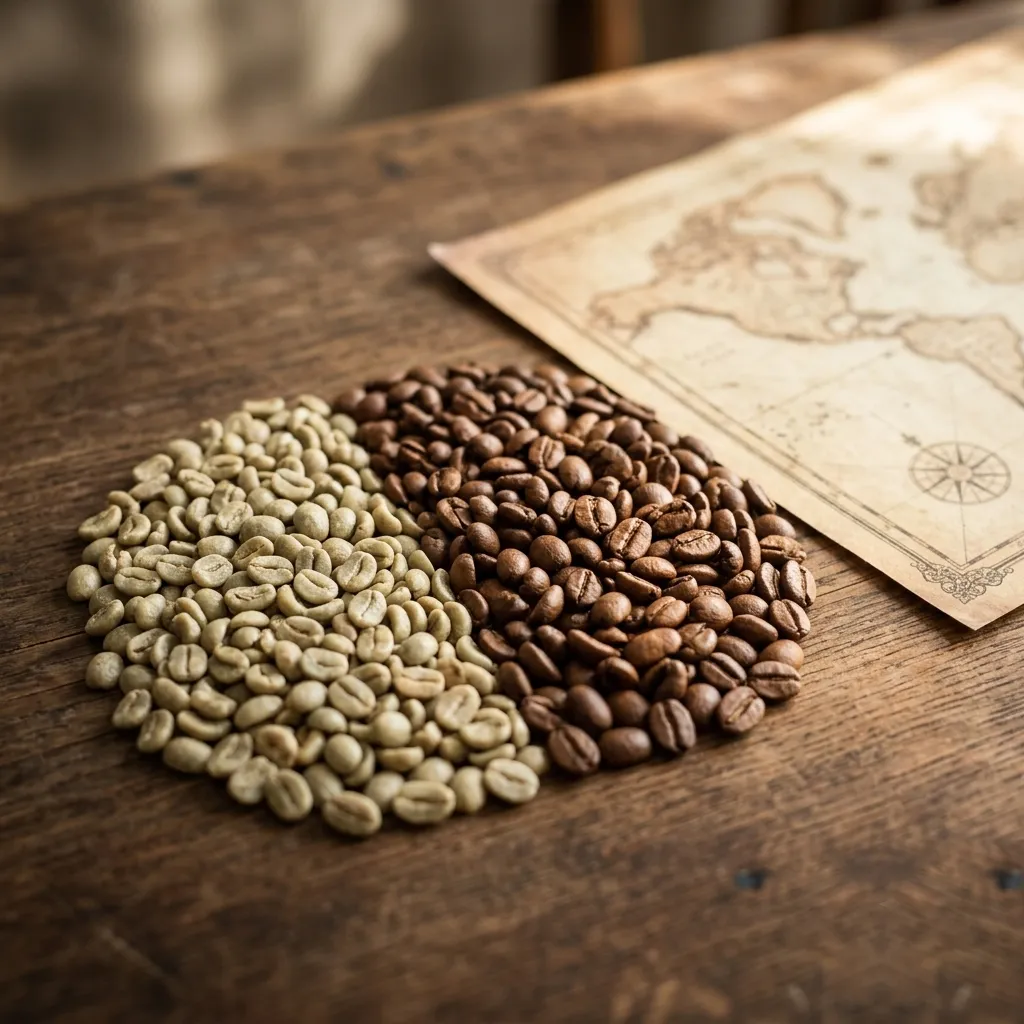
Where coffee gets its flavour - origin, variety and processing
One coffee smells of berries and flowers, another of nuts and chocolate - and both are just „coffee". The difference is not the roast, but the origin, the species and how the bean was processed. Step by step.
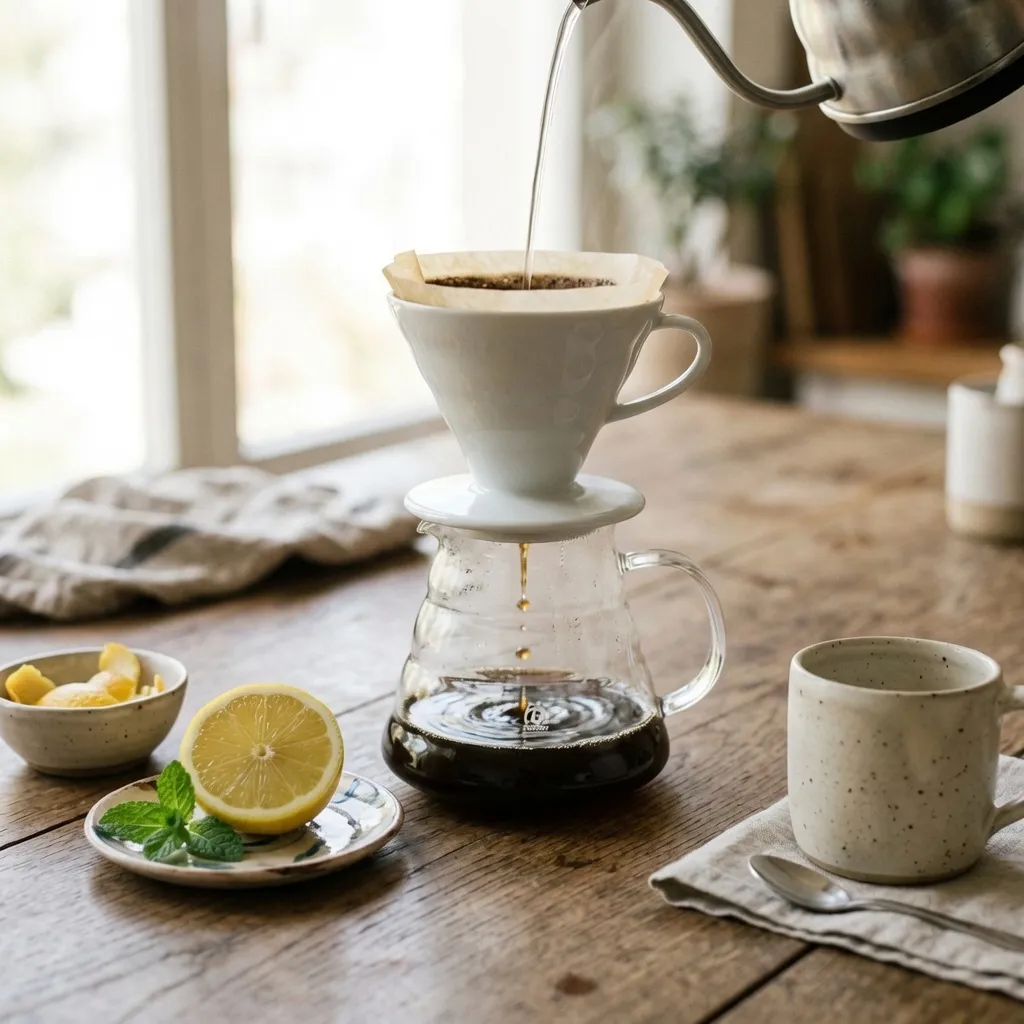
Why good coffee tastes sour (and why that is not a flaw)
Specialty coffee tastes sour and thin and you are after strength? You probably brew it wrong. A relaxed, practical guide to start tasting coffee - from the bean to your own notes.
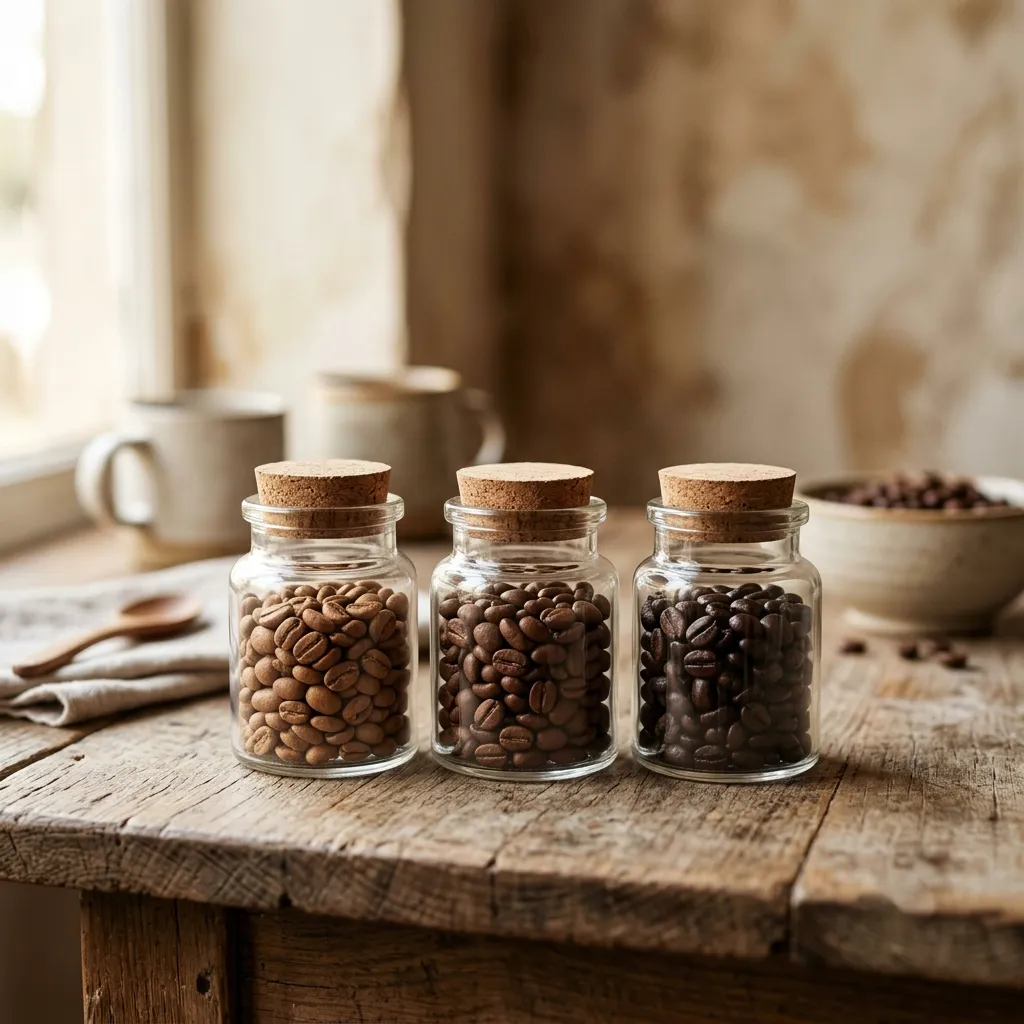
Coffee roast levels - light, medium, dark and what it means
The roast level changes the taste of coffee more than you think. Where acidity comes from in a light roast and bitterness and chocolate in a dark one, and which to pick for your brewing method.
What happens in the roastery: first crack and second crack
Roasting coffee is a drama in temperature. Learn about first crack and second crack - two cracks that mark the roast level, the Maillard reaction and the moment the bean gives off energy. From light to dark - a guide with a table.
The roast curve and development time - how a roaster designs flavour
Professional coffee roasting is not a clock but a graph. Learn about the roast curve, rate of rise, development time ratio (DTR) and why a declining pace gives the best flavour. How a roaster designs coffee - a guide with a table.
Espresso roast vs filter roast - why a roastery makes two profiles
The same coffee, two different roasts. The espresso roast is darker and longer developed for solubility and body, the filter one lighter for acidity and aroma. Why, and what an omni roast is. A guide with a table.
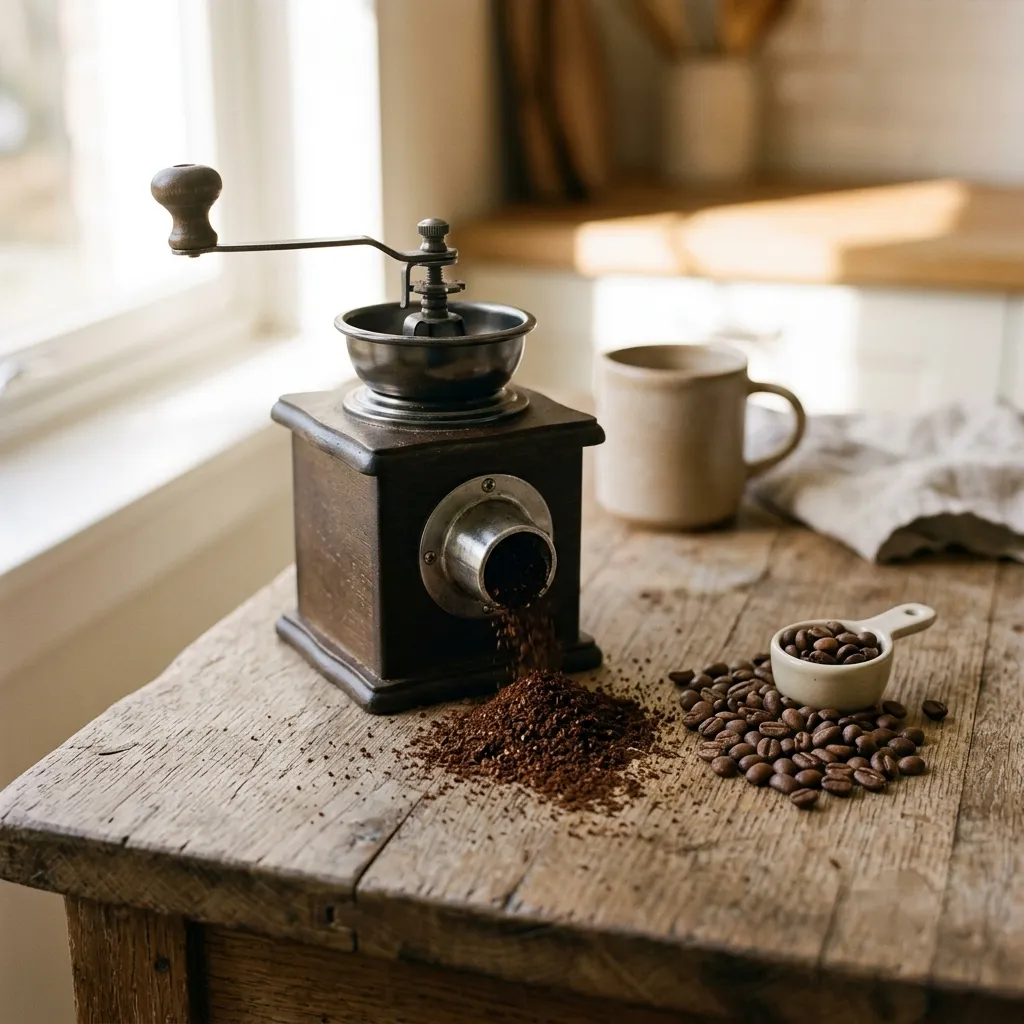
Coffee grind size - how it changes the taste in your cup
Too fine and coffee turns bitter, too coarse and it is sour and watery. How grind size controls extraction and how to match it to your brewing method.
Coffee grind distribution: boulders, fines and uniformity
A good grinder is not only about grind size but uniformity. Learn about boulders, fines and particle distribution. Why an uneven grind gives coffee that is both sour and bitter. Conical vs flat burrs. A guide with a table.
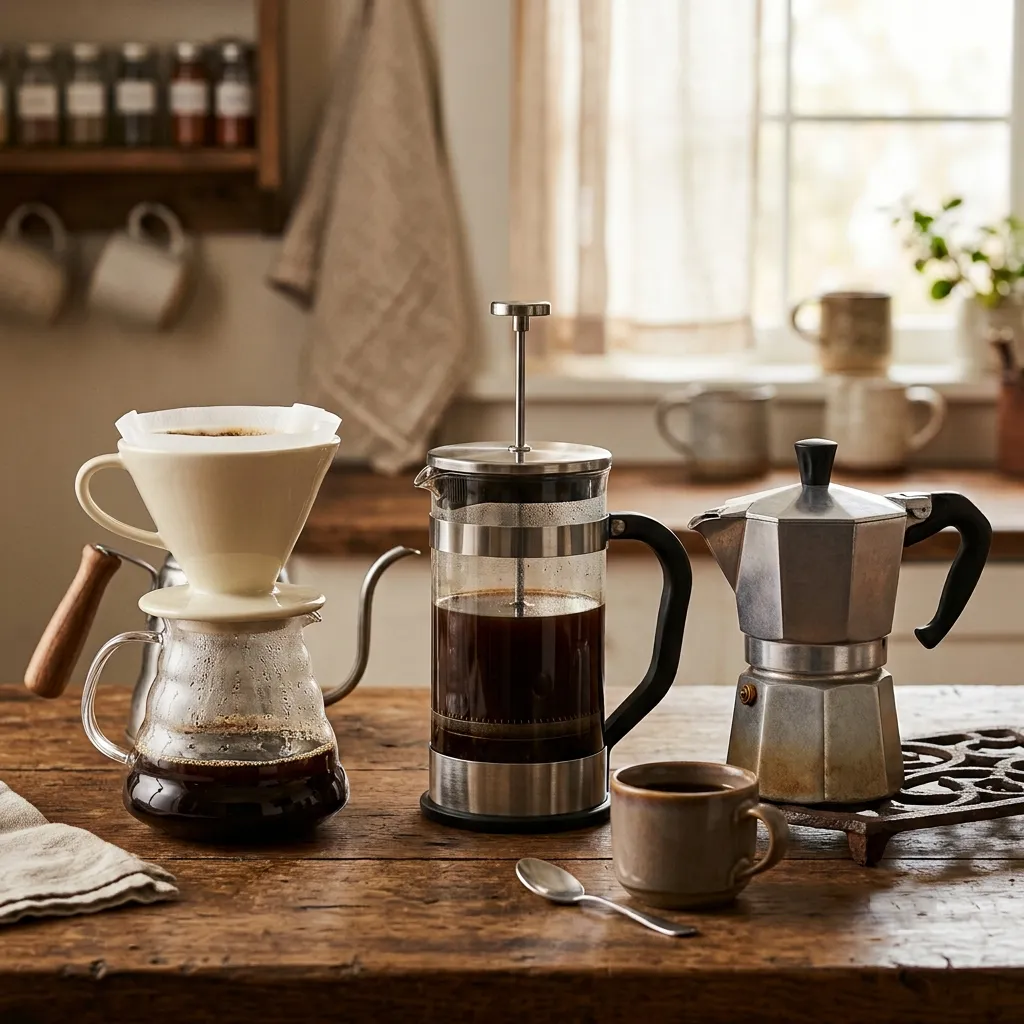
Coffee brewing methods at home - how they change the taste
Pour-over, French press, espresso or moka pot - each method pulls something different from the beans. How to brew at home and how grind, temperature and time change the taste.
Pre-infusion and the bloom - why wet coffee before brewing
This short step makes a huge difference. Pre-infusion (the bloom) is wetting the coffee with a little water before the real brew. It pushes out CO2, ensures even saturation and prevents channeling. How and why to do it. A guide with a table.
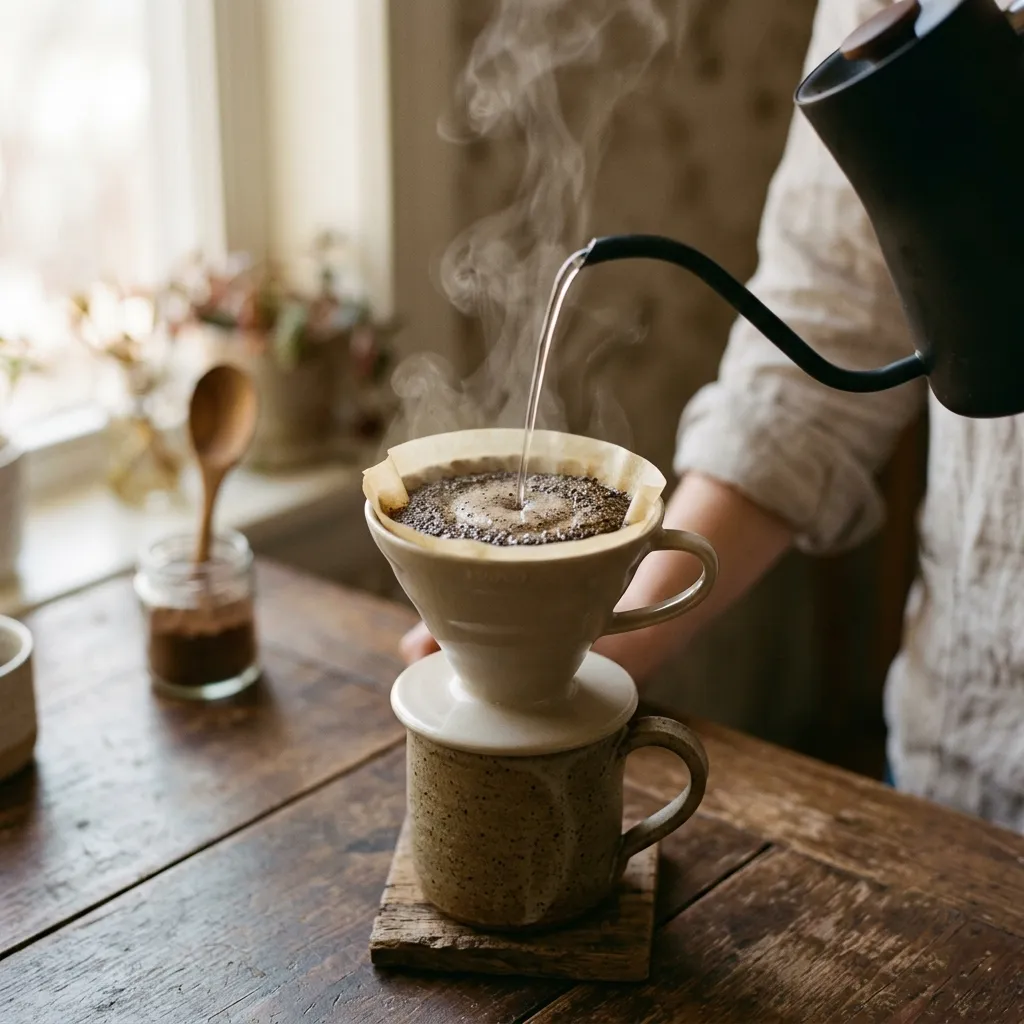
Water for coffee - the hidden ingredient everyone forgets
A cup of coffee is over 98 percent water. Hard, soft, tap or filtered, its temperature and amount - all of it changes the flavour more than you think. A simple guide.
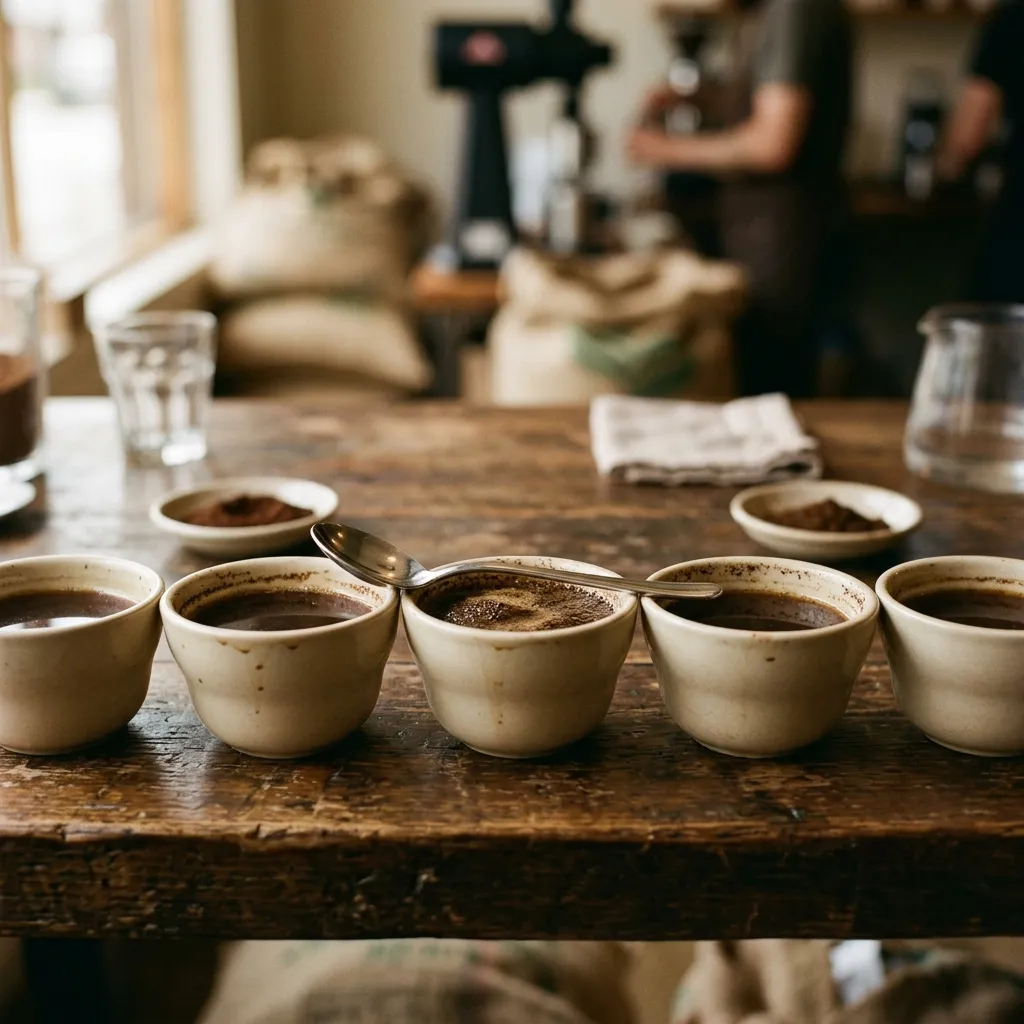
Home coffee cupping - score coffee like a professional
Cupping is the method roasters use to evaluate coffee: several coffees side by side, no machine, off a spoon. How to do it at home, step by step, and why it teaches you to recognise flavours fastest.
Coffee extraction: under/over, TDS and the refractometer - the numbers behind flavour
Sour coffee is under-extracted, bitter is over-extracted. Learn about extraction (18-22 percent), TDS, the refractometer and the Golden Cup. How to measure and fix the flavour of coffee with numbers. A guide with a table.
The SCA Flavor Wheel and Q-grading - the language and scoring of coffee
How do professionals describe and score coffee? Learn the SCA Flavor Wheel - a map of aromas from general to specific - and Q-grading, a scoring system on a 100-point scale, where above 80 is specialty. A guide with a table.
The coffee ring effect - why a stain has a dark rim
When a drop of coffee dries, it leaves a stain with a dark, dense rim at the edge. It is not chance but physics described in a famous 1997 paper. Here is how the coffee ring effect works and why it matters for printing, diagnostics and science.
Coffee acidity - malic, citric, acetic and more
Acidity is not a fault but the brightness of good coffee. Learn the kinds of acid: malic (apple), citric (citrus), phosphoric (sparkling), acetic (winey or a fault) and quinic (the bad sourness of old coffee). A guide with a table.
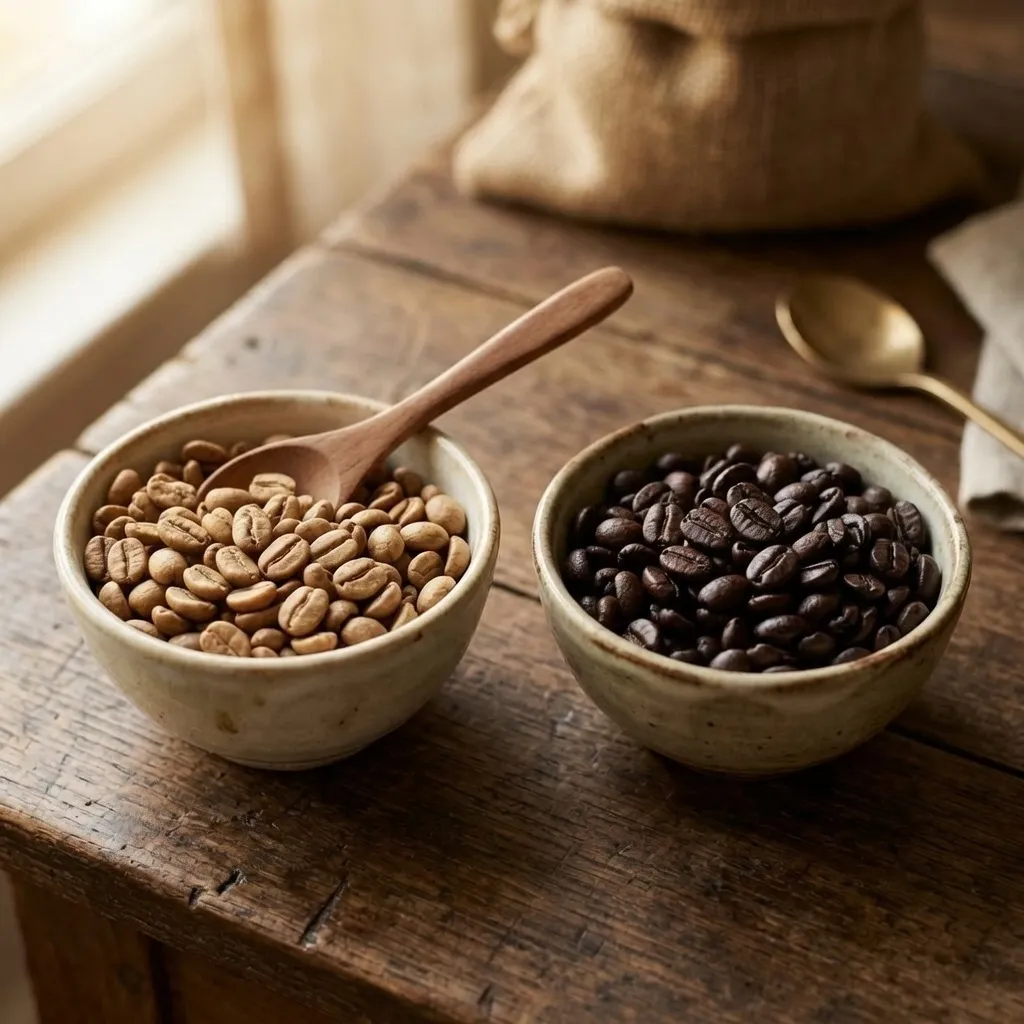
Does dark roast have more caffeine? The strong coffee myth
Dark roast tastes stronger but does not have more caffeine - sometimes even less. What roasting really changes, where the myth comes from and what "strong coffee" means in practice.
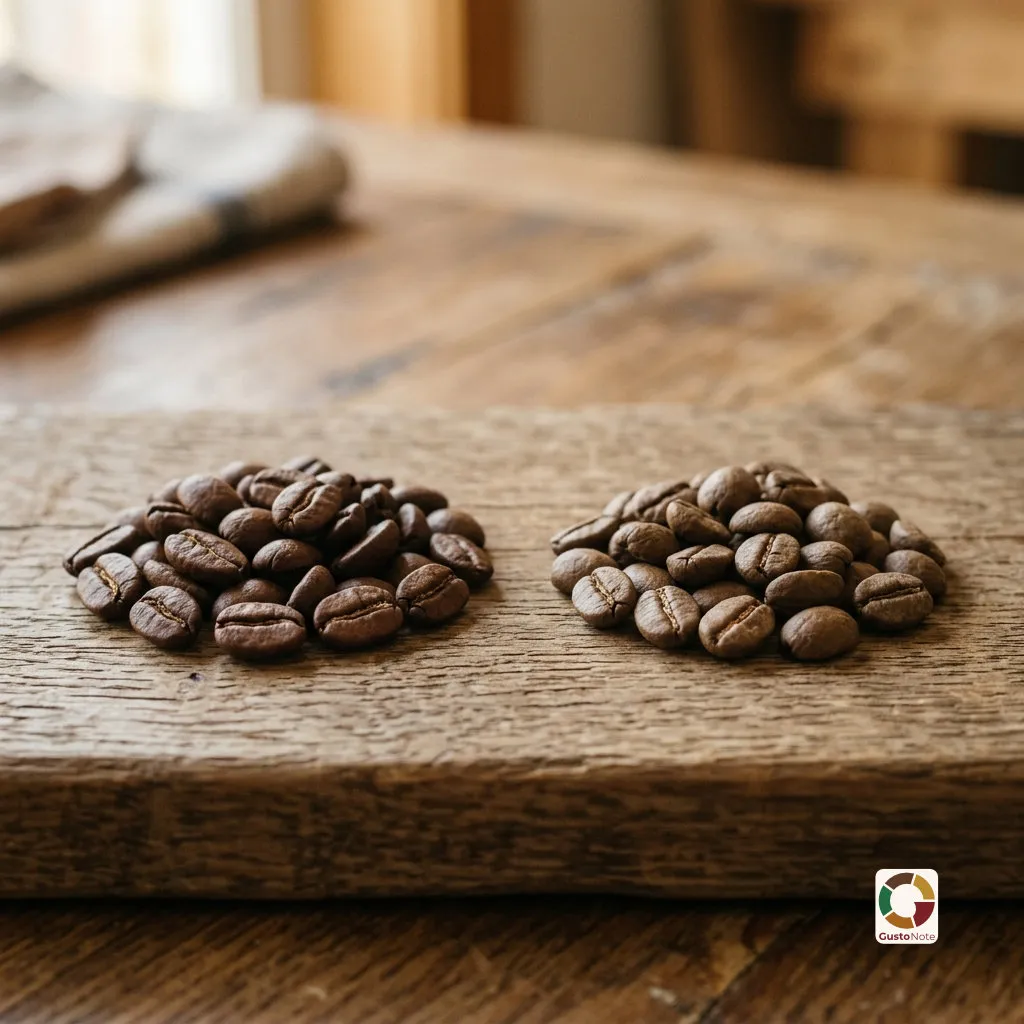
Arabica vs Robusta - the two souls of coffee
Almost all the world coffee is two species: arabica and robusta. How they differ in flavour, caffeine and price, why robusta is not always worse, and how to taste it in the cup.
Robusta - rehabilitation and fine robusta
Robusta was for years considered an inferior coffee. Learn about its rehabilitation and fine robusta - specialty robusta of smooth, chocolatey character. Where the bad reputation comes from, what the fine grade is and why robusta is gaining importance. A guide with a table.
The genetic bottleneck of arabica - why coffee is a time bomb
Arabica, the source of most of the worlds coffee, has surprisingly low genetic diversity. It is the result of a single, ancient hybridization and self-pollination. It makes it vulnerable to disease, like the Cavendish banana. Here is what the genetic bottleneck of arabica is and why it is dangerous.
Liberica and Excelsa - the forgotten coffee species
Beyond arabica and robusta there are two more coffee species: Liberica and Excelsa. Learn about these forgotten coffees of exotic, smoky-fruity flavour, their history, Filipino barako and why they are gaining importance in the age of climate change. A guide with a table.
Stenophylla - the lost coffee that could save your morning cup
Coffea stenophylla tastes like arabica but tolerates temperatures 6-7 degrees higher. For decades it was thought extinct, until it was rediscovered in 2018 in Sierra Leone. Why it is a hope for coffee in the face of climate change and what the taste tests showed.
Coffea charrieriana - the only coffee caffeine-free straight from nature
Most decaf coffees are made by chemically removing caffeine. But Coffea charrieriana from Cameroon has none at all - from nature, because it lacks the gene for producing caffeine. What it is, how it was discovered and why it is a hope for decaf without chemistry.
Arabica varieties - Bourbon, Typica, SL28, Caturra, Catuai
Arabica is not one flavour. The key coffee varieties: Typica and Bourbon as the foundation, Caturra, Catuai and Kenyan SL28. How they differ in flavour, yield and resistance. With a comparison table.
F1 hybrid coffee - Centroamericano and the varieties of the future
Coffee against warming and rust: what F1 hybrids are, how hybrid vigour works and why Centroamericano or Starmaya give bigger yields and a better cup. A guide to the varieties of the future.
Coffee leaf rust - the fungus that threatens arabica
Hemileia vastatrix: how coffee leaf rust destroys arabica plantations, how it wiped out coffee in Ceylon and triggered a crisis in Latin America. Where the threat comes from and how it is fought.
Altitude and coffee flavour - why high-grown beans are better
SHB, SHG, hard bean: how growing altitude makes the bean denser, concentrates sugars and acids and gives a brighter, more complex coffee. Where the quality of high-grown coffee comes from. A guide with a table.
Shade-grown vs sun-grown coffee - cultivation, biodiversity and flavour
Shade-grown versus sun-grown: how tree shade gives a denser bean, more birds and fewer pesticides, while full sun gives a bigger yield. Where coffee quality and ecology come from. A guide with a table.
Coffee terroir - how volcanic soil and microclimate shape the flavour
Does coffee have terroir like wine. Volcanic soil, microclimate, minerals: how the growing place leaves its mark on the acidity and complexity of coffee. Where the bright spark of the best beans comes from.
Cherry ripeness and selective picking - why specialty coffee is hand-picked
Only ripe cherries give a sweet, clean coffee. Selective picking versus strip picking: how fruit ripeness and the way of harvest decide the quality and sweetness of the cup. A guide with a table.
The washed process and the role of fermentation - where coffee clean, bright acidity comes from
How fermentation removes the pulp from the bean and why it gives coffee cleanness and lively acidity. The washed process step by step: the role of microbes, enzymes and acids. Where the clarity of flavour comes from.
The natural process - fruity, wild and risky. Fruit-forward coffee
Drying the bean in the whole fruit gives strawberry, blueberry and a winey character, but also the risk of faults. How the natural process works, where the wild fruitiness comes from and why it is a high-risk, high-reward coffee.
Honey process: yellow, red, black - what the coffee colours mean
Honey has nothing to do with honey - it is the sticky layer of mucilage left on the bean. Yellow, red and black honey differ in how much mucilage and drying time. Where the sweetness and fruit come from - a guide with a table.
Anaerobic and carbonic maceration in coffee - where the wild, fruity flavours come from
Coffee tasting of strawberry, rum or wine? It is often anaerobic fermentation in a sealed tank. Learn about anaerobic and carbonic maceration - how the lack of oxygen and CO2 build an intense, fruity profile. A guide.
Co-fermentation and added flavours in coffee - the speciality controversy
Coffee tasting of cinnamon, strawberry or passionfruit? It is co-fermentation - fermenting the beans together with fruit and spices. Where the flavours come from, how it differs from infusion and why it divides the industry. A guide on transparency and terroir.
Coffee seasonality: fresh crop vs past crop - coffee has a season too
Coffee is a fresh agricultural product, not an eternal bean. Fresh crop is coffee at its peak, past crop loses acidity and turns woody. Where the seasons come from, why green coffee ages and how to sense it. A guide with a table.
Coffee and climate change - the future of the coffee belt
By 2050 half the land suitable for coffee may disappear. Arabica is sensitive to heat, robusta more resistant. How climate change threatens coffee, why cultivation is migrating uphill and to new areas, and what it means for your cup.
Third wave coffee - what it is really about
Coffee like wine, single origin, lighter roast, transparent sourcing. What third wave coffee is, where it came from and how it differs from the first and second wave. A simple guide, no snobbery.
Fourth wave coffee - what comes after the third
After the third wave of specialty comes the fourth - but what actually is it? Learn the competing definitions: scalability, science and precision, the home as the centre, and community and accessibility. Find out whether the fourth wave even exists. A guide with a table.
Coffee from a bioreactor - will we drink coffee without beans
Scientists grow coffee from cells in bioreactors, and other companies recreate its flavor from date pits, with no beans at all. It is a response to climate change threatening crops. Here is how beanless coffee is made and whether we will want to drink it.
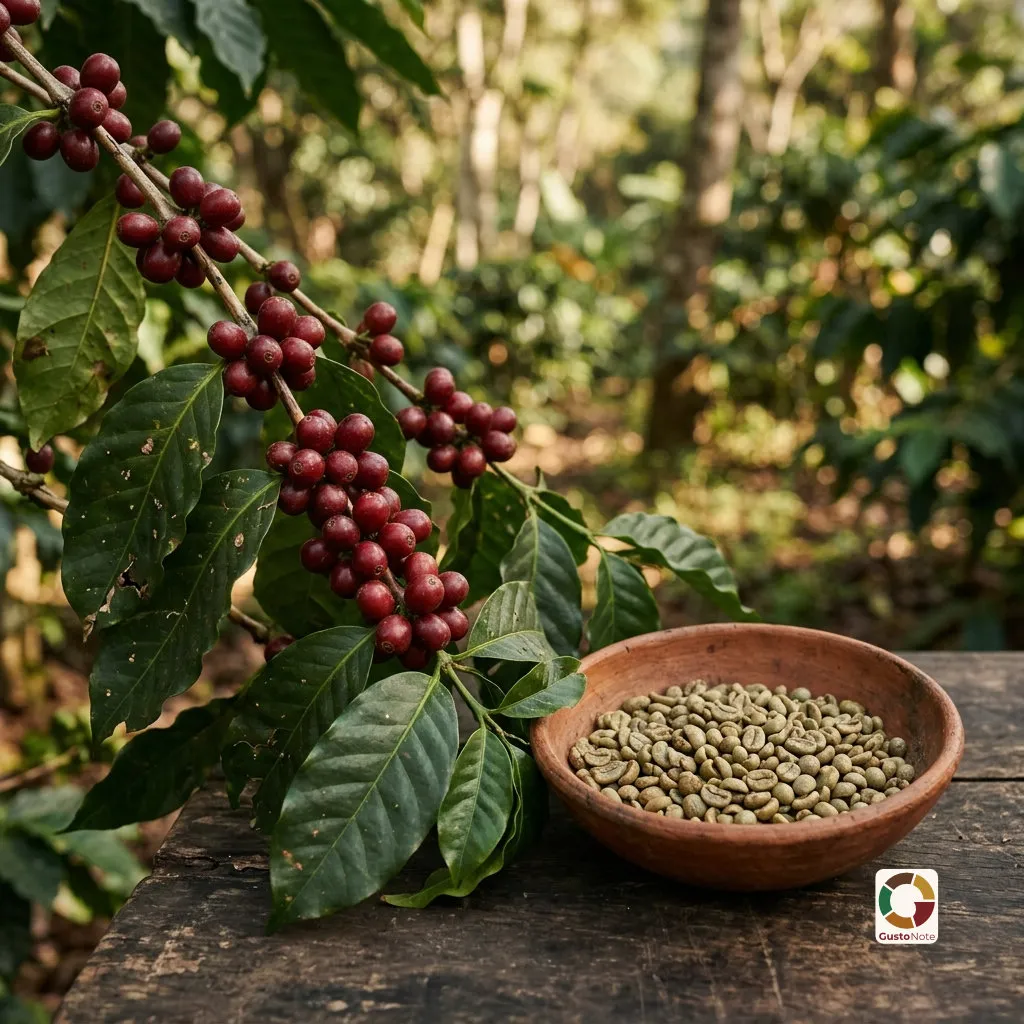
How coffee is made - from fruit to bean
Before you grind it, coffee travels a long way: the shrub, the red fruit, the harvest and the processing. Where flavour is born, why coffee is really a fruit seed, and how it changes the cup.
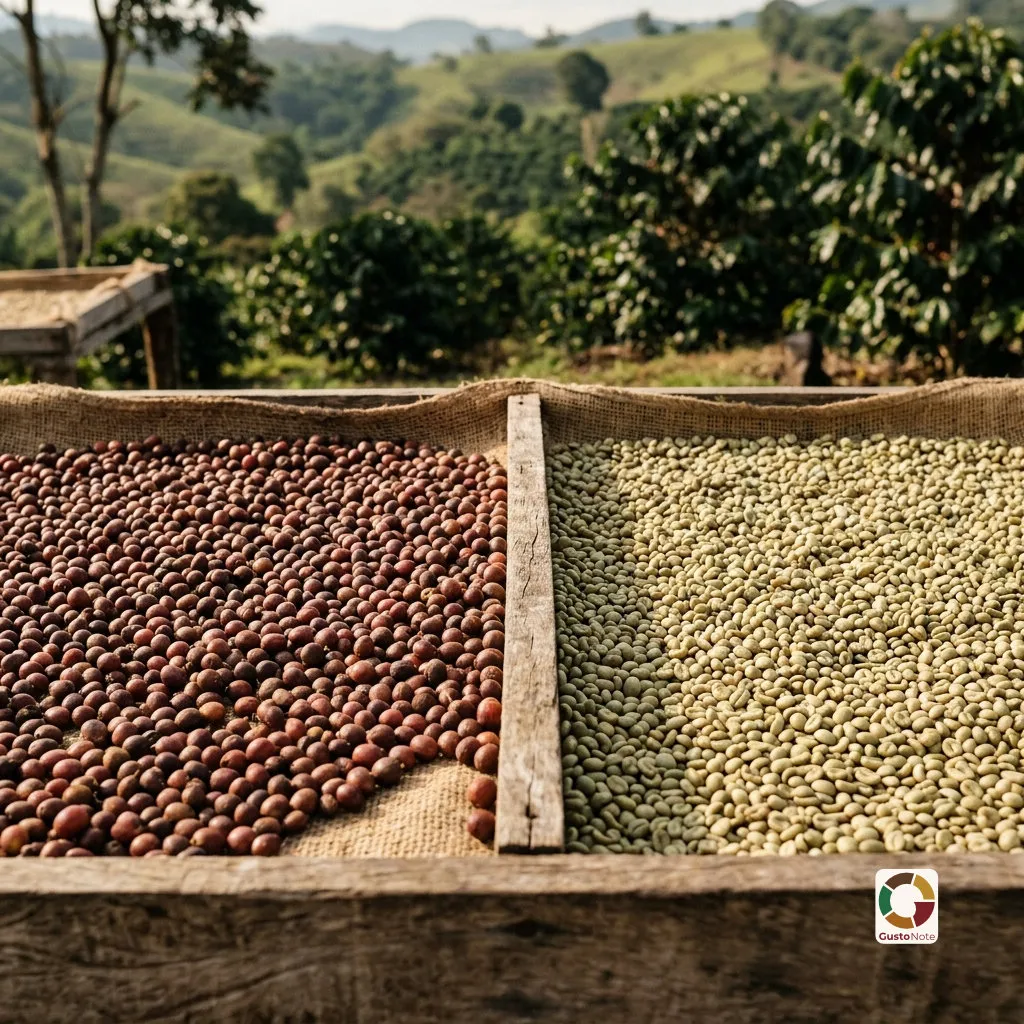
Coffee processing - washed, natural, honey and where the flavour differences come from
The same coffee fruit gives a clean, fruity or sweet cup depending on processing. How the washed, natural and honey methods differ, why you can taste it, and how to read it on the bag.
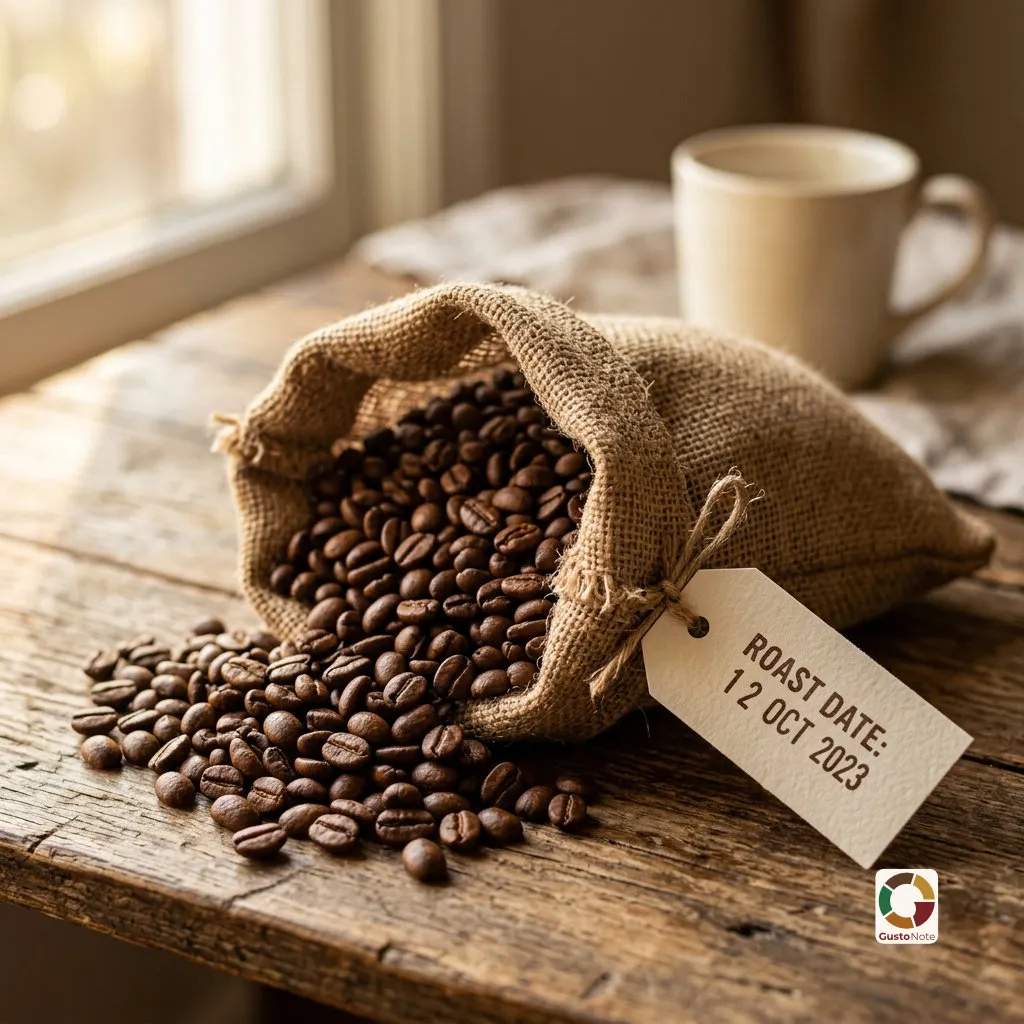
Coffee freshness - why the roast date matters more than the best-before
Coffee does not spoil like milk, it loses aroma. Why the roast date matters more than a distant best-before, when beans taste their best, and why too fresh can also be a problem.
Degassing and CO2 - why freshly roasted coffee needs to rest
Freshly roasted coffee is not best right away. Trapped CO2 bubbles, spoils extraction and gives a sour flavour. Learn about degassing, the bloom and why coffee needs a few days of rest. A guide with a table.
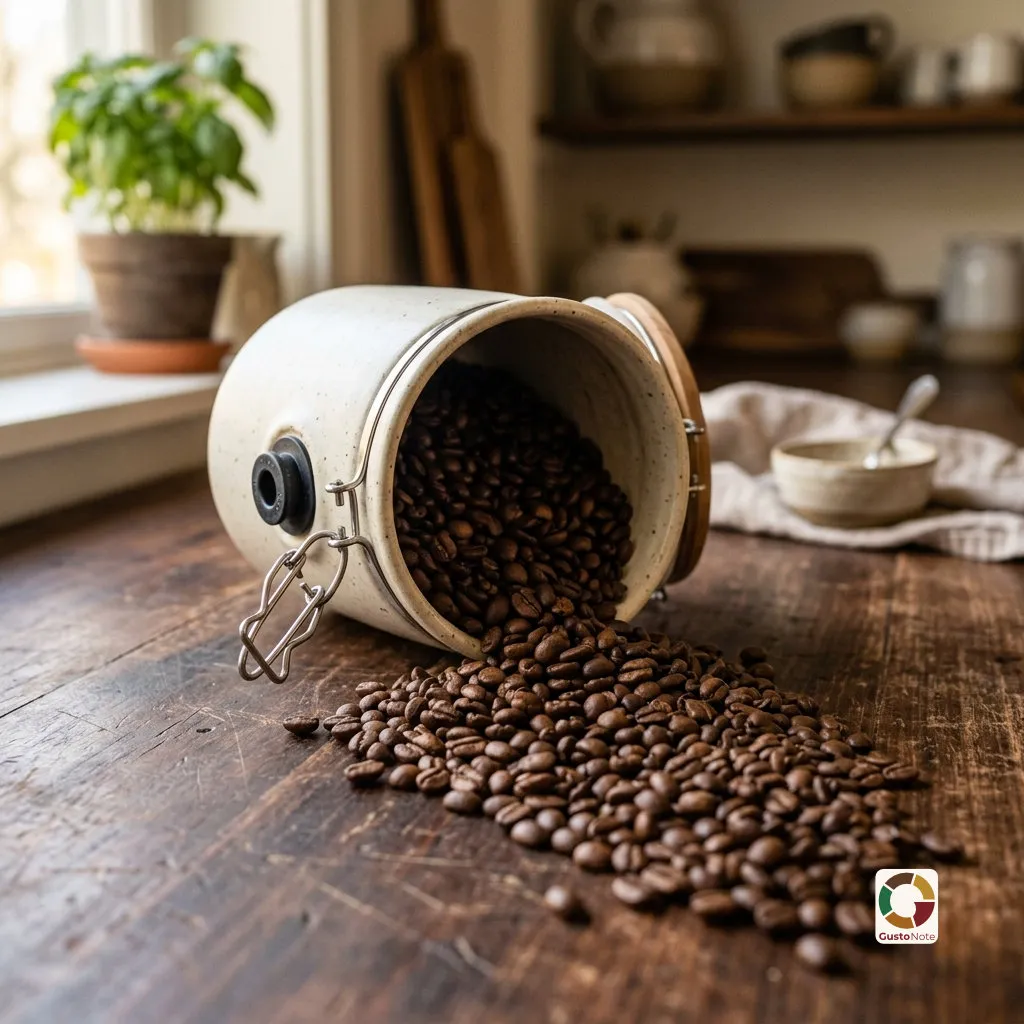
How to store coffee so it keeps its aroma
Freshly roasted coffee loses flavour faster than you think. The four enemies of the bean, why the fridge and freezer are usually a bad idea, and why whole beans keep better than ground coffee.
Instant coffee: how it is made and whether it can be good
Instant coffee is made by drying brewed coffee: by spray drying or freeze drying. Get to know the difference between the two methods, why freeze-dried keeps more aroma and whether instant coffee can really be good. A guide with a table.
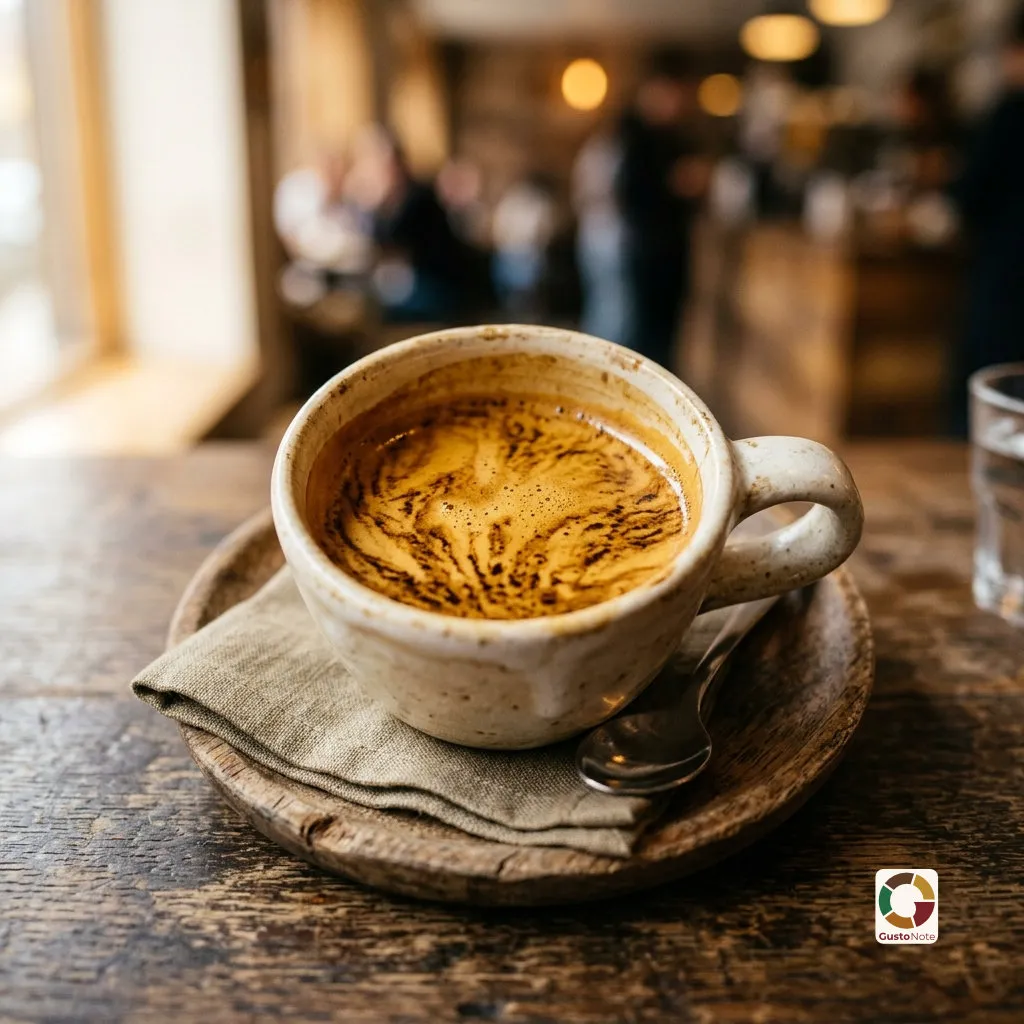
Espresso crema - what it is and what it really tells you
The golden foam on espresso inspires a cult following, but it tells you less than you think. Where crema comes from, why thick crema does not always mean good coffee, and what it really reveals about freshness and brewing.
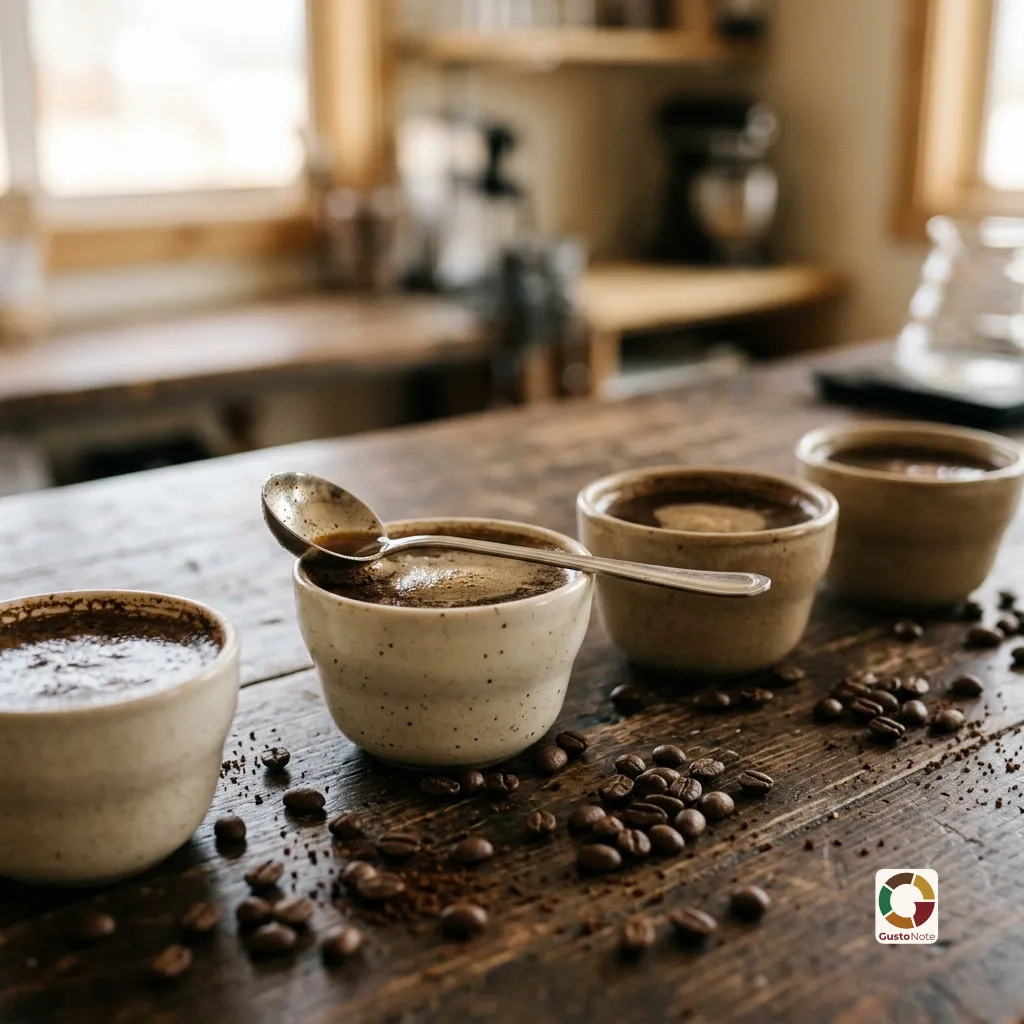
The coffee tasting profile - acidity, sweetness, body and aftertaste
Professionals judge coffee on several axes at once, just like the SCA cupping form. What acidity, sweetness, body and aftertaste mean, where they come from, and how to separate them in your own cup.
What is specialty coffee - and what 80 points means
Specialty coffee is not a marketing gimmick but a concrete line: 80 points out of 100 on the SCA scale. Where the number comes from, who grades coffee and how, and whether pricier means better.
The price of coffee: the C market, fair trade, direct trade
Who sets the price of coffee? Learn about the C market - the world benchmark for arabica, the mechanism of premiums and differentials, and the difference between fair trade and direct trade. How much the farmer really gets and whether a certificate means better coffee. A guide with a table.
The 2001 C-price crisis - how cheap robusta ruined millions of farmers
In 2001 the price of coffee fell to its lowest level in decades, ruining millions of small farmers around the world. A surge in production in Vietnam flooded the market with cheap robusta, but the causes were deeper and structural. Here is the story of one of the most serious crises in the history of coffee.
Why specialty coffee costs - the value chain
Why is specialty coffee more expensive than supermarket coffee? Trace the value chain from seed to cup: farm, processing, export, import, roastery and cafe. See where the margin really forms and how much the farmer gets. A guide with a table.
Black Ivory - coffee digested by elephants and one of the most expensive in the world
Black Ivory is coffee from beans passed through the digestive system of elephants. It costs around 3000 dollars per kilogram, and 33 kg of cherries yields barely a kilogram. Here is how it is made, why it is so expensive and what sets it apart from kopi luwak.
Kopi luwak - the dark side of the worlds most famous coffee
Kopi luwak, coffee from beans digested by civets, passes for a luxury, but its history is dark. Most of it comes from animals tormented in cages, and a large part of the market is fake. Here is the whole truth about this coffee and how its authenticity is checked.
Jacu - the bird that produces one of the world most expensive coffees
Jacu coffee is made from cherries eaten and excreted by the Brazilian jacu bird. It is a more ethical version of animal coffee, because the birds are free rather than caged like civets. Here is the story of how a former plantation pest became the author of a coffee priced at hundreds of dollars per kilogram.
Lloyds of London was born at a coffee house table
The most famous insurance market in the world did not start in a bank but in a seventeenth-century coffee house. From Edward Lloyds shipping news grew modern marine insurance. Here is how a coffee house changed the history of trade and finance.
Gabriel de Clieu - one coffee seedling that changed the Caribbean
A French officer shared his water ration on a ship with a coffee seedling to save it. From that single plant on Martinique grew tens of thousands of trees, the ancestors of Caribbean coffee. Here is the story of a heroic voyage and how one seedling changed the world of coffee.
Baba Budan and the seven beans - how smuggling broke Yemens coffee monopoly
In the seventeenth century the Sufi Baba Budan smuggled seven live coffee beans from Mecca hidden in his beard, breaking Yemens monopoly. From them Indian coffee was born. Here is the story of a daring smuggle and how seven seeds changed the course of coffee history.
The coffee ban in Mecca 1511 - when coffee was put on trial
In 1511 in Mecca coffee was literally put on trial. A local official convened a council to decide whether coffee was permitted, and introduced a ban. It did not last long. Here is the story of the first attempt to ban coffee, its religious and political causes and the ending.
Frederick the Greats war on coffee - the manifesto and the coffee sniffers
In 1777 the Prussian king Frederick the Great proclaimed that his subjects were to drink beer, not coffee. He even appointed special sniffers to track down illegal coffee roasting by smell. Here is the story of this peculiar war on coffee, its economic causes and the ending.
Erichs Krönung - the East German coffee crisis and its unexpected link to Vietnam
In 1977 a coffee crisis struck East Germany. The government mixed coffee with pea flour, and the resulting substitute was mockingly called Erichs Krönung. To secure supplies, East Germany invested in Vietnamese plantations, helping to create today robusta power. Here is the story of coffee in the shadow of the Cold War.
The Boston Tea Party turned America into a coffee country
After the protest in Boston in 1773, drinking British tea became unpatriotic in the colonies, and coffee turned into a statement of American identity. Here is the story of how a political revolt decided, for centuries, that Americans would choose coffee over tea.
Beethoven counted exactly 60 beans for a cup of coffee
It is said that Ludwig van Beethoven counted exactly 60 beans for every cup of coffee, and a mistake by one made him start over. This ritual, known from a single biography, sheds light on a meticulous, obsessive streak in his personality. Here is the story of the coffee habit of one of the greatest composers.
The history of coffee: Ethiopia, Yemen, coffeehouses, colonialism
Where did coffee come from? Trace its journey from the wild bushes of Ethiopia, through the Sufi monasteries of Yemen and the first coffeehouses of Istanbul, to the colonial plantations of the Dutch and French and the power of Brazil. A guide with a table.
Cappuccino only before noon - the iron Italian rule
In Italy cappuccino and every milky coffee are drunk only in the morning, never after a meal, and ordering one after lunch is considered a faux pas. Here is where this rule comes from, what lies behind the belief that milk harms digestion, and how strictly you really need to follow it.
Espresso standing at the bar - the Italian al banco versus al tavolo
In an Italian bar espresso is drunk quickly, standing at the counter, and sitting at a table often means two or three times the price for the same coffee. Here is where the difference between al banco and al tavolo comes from, how to order coffee like a local, and why the haste is not a lack of culture but part of it.
Say latte in Italy and you get a glass of milk
In Italy latte simply means milk, so ordering un latte gets you a glass of cold milk. You have to ask for caffe latte or latte macchiato. How to order coffee in Italy, what un caffe means, how macchiato differs from latte macchiato, and how not to look like a tourist at the bar.
Swedish fika - why skipping the coffee break is bad manners
Fika is a Swedish ritual of a shared break for coffee and something sweet, usually twice a day. Working through fika is seen as antisocial, and at the table the CEO sits with the youngest intern. Here is what this institution is about, why it is so important, and what it says about Swedish culture.
Tipping at a coffee shop: why it is the norm in the US but only rounding up in Europe
Tipping at a coffee shop works differently on the two sides of the Atlantic. In the US it is almost the norm, in Europe usually just rounding up, and in France the service is included (service compris). Where the difference comes from, how much to leave when traveling, and how not to look either stingy or naive by overpaying out of habit.
The Viennese Kaffeehaus - do not call the waiter, say Herr Ober
In a Viennese coffeehouse you do not call the waiter just any way but address him as Herr Ober, and after a single coffee you may sit for hours. Here is the etiquette of the Viennese Kaffeehaus, what Melange and Einspanner mean, why a glass of water is served, and why time here belongs to the guest.
Greek coffee: the small cup is not a shot, and pame gia kafe means lets talk
Greek coffee is small but not downed in one go like a shot - you sip it slowly, and you do not stir or drink the grounds at the bottom. And pame gia kafe often means lets meet up, not literally the coffee. How to drink Greek coffee, why it is a ritual that lasts hours, and how not to look like a tourist.
Salt coffee as a test of the groom - a Turkish engagement tradition
In the Turkish engagement tradition the bride serves her future husband coffee with salt instead of sugar. It is a test of character: if he drinks it without complaint, with a smile, he proves his patience and devotion. What the kiz isteme ceremony is, what the salt symbolizes, and how coffee is woven into a Turkish engagement.
Same faux pas, different country - a map of coffee etiquette around the world
A cappuccino after lunch in Italy, downing a Greek coffee in one go, refusing coffee in Ethiopia - the same gesture can be a faux pas in one country and the norm in another. A guide to coffee faux pas around the world: where not to do what, why customs differ so much, and how not to look like a tourist over a cup of coffee.
How to read a specialty coffee label - what it tells you
Origin, variety, processing, altitude, roast date. How to read a specialty coffee bag label and what is really worth checking. Every piece of information reveals how the coffee will taste.
Coffee as a gift - how to choose so you hit their taste
Coffee is a great, personal gift if you know how to choose. What coffee and gear for a beginner and for a connoisseur, what to add to the set and how to match the gift to the brewing method.
Coffee subscription - is it worth it and for whom
Fresh coffee to your door every month? How a coffee subscription works, its pros and cons, who it pays off for and who not. Freshness, variety, price and convenience. An honest guide, no spin.
Sugar in coffee - why good coffee does not need it
Adding sugar out of habit? Why we add sugar to coffee, what it really does to the taste and why good, well-roasted coffee does not need it. No judging, just an explanation.
Is sugar or syrup in specialty coffee an insult to the barista? A myth to bust
Afraid to add sugar to your specialty coffee because you will feel judged? It is a myth. Adding sugar or syrup is not an insult to the barista - drink your coffee how you like. What really makes a barista job harder, why a good cafe does not judge your order, and how to order without embarrassment.
How much caffeine is in coffee and when to drink it
Does espresso have more caffeine than filter coffee? Not necessarily. How much caffeine a cup holds, how long it works and how late you can drink coffee and still sleep. Numbers and practice.
Caffeine as a drug for bees - how plants manipulate pollinators
Some plants add caffeine to their nectar in a dose below the bitterness threshold, and bees that taste it remember the flowers scent better and come back. It is not a gift but a subtle manipulation. Here is what scientists discovered and what it says about our own coffee.
Coffee, sleep and chronotype - when to really drink it
When is it best to drink coffee so as not to spoil your sleep? Learn the adenosine mechanism, the effect of coffee on sleep architecture, the role of cortisol and chronotype and the difference between fast and slow metabolisers. Practical timing strategies. A guide with a table.
Does coffee dehydrate you - busting the myth
For decades we have heard you must drink water with coffee because it dehydrates. What does science say? Coffee in moderation hydrates, not dehydrates. Where the myth came from and when it can harm.
Decaf coffee - how caffeine is removed and is it worth it
How is coffee without caffeine actually made? Meet the methods: Swiss Water, CO2 and solvent. How much caffeine remains, whether decaf tastes worse and who it is a good choice for.
Coffee and health - what science really says about the heart, sleep and lifespan
Does coffee harm or help? The latest research is surprisingly positive: moderate drinking is linked with a longer life and a healthier heart. What science confirms and what to avoid.
Why coffee upsets your stomach - and how to fix it
Coffee can irritate the stomach, cause heartburn or send you running to the toilet. Why it happens, the role of acids and caffeine, and how to drink coffee so it does not harm your gut.
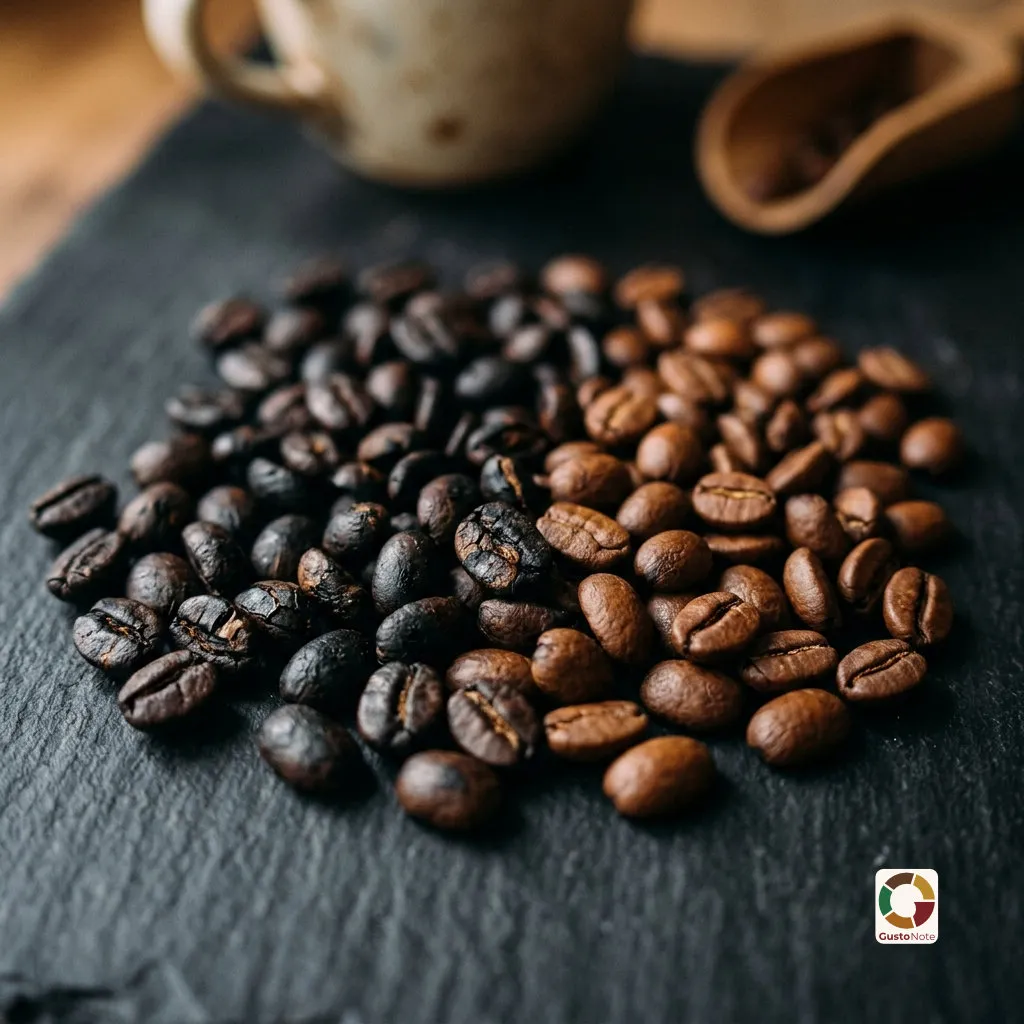
Coffee defects - how to spot burnt, stale and faulty coffee
Not every bad coffee is a matter of taste. How to tell a real defect from a preference, where notes of burning, staleness and fermentation come from, what the potato defect is, and how to separate a bean fault from a brewing fault.
Coffee roast defects: quakers, baked, scorched - and how to spot them
Even good beans can be ruined in the roast. Learn the main defects: quakers (unripe beans), baked (too slow a roast), scorched (burning) and tipping. Where they come from and how to sense them. A guide with a table.
Sustainability: water, waste, grounds, packaging
What is the real environmental footprint of coffee? Learn its water and carbon footprint, the problem of deforestation, processing waste and packaging, the second life of spent grounds and what you can do as a conscious consumer. A guide with a table.
Espresso under the microscope: emulsion, oils, 9 bar pressure
What really happens in espresso? Learn the physics and chemistry of extraction: the role of 9 bar pressure, the emulsion of water-insoluble oils, dissolved CO2 and why espresso differs from filter coffee. A guide with a table.
Blend vs single origin - why coffee is blended
Coffee from one source or a mixture of many? Learn the two philosophies: single origin celebrating terroir and blends betting on consistency, balance and resilience to the season. Find out why blends rule in espresso and what to choose. A guide with a table.
Grinding fresh - why it changes the flavour so much
Why is it worth grinding coffee just before brewing? After grinding, the bean surface grows thousands of times, accelerating oxidation and the escape of CO2 and aromas. Learn what happens in the minutes after grinding and how it affects flavour. A guide with a table.
Drying coffee: patio, African raised beds and mechanical dryers
After processing, coffee has to dry, and the way of drying strongly affects flavour. Get to know three methods: concrete patio, African raised beds and mechanical dryers. Learn why raised beds give cleaner, fruitier coffee and why haste harms. A guide with a table.
Monsooned Malabar - the coffee whose flavor was born from an accident
Monsooned Malabar is a coffee whose flavor was born from a shipping accident. Long ago the beans aged in humidity during months-long voyages to Europe. When steamships killed the effect, Indians began recreating it deliberately. Here is the story of this remarkable coffee.
Sorting and screen size: how green coffee is graded
Before coffee reaches the roastery, the green bean is sorted and graded. Get to know the screen system (size in 1/64 of an inch), density sorting and defect counting. Learn how the quality of the raw material is assessed and what specialty coffee means. A guide with a table.
Peaberry and maragogype: coffee bean anomalies and their flavour
Peaberry is a round bean, when only one develops in the cherry, and maragogype is a giant elephant bean. Get to know these two natural anomalies of coffee, learn how they form, whether they really taste different and whether they are worth paying extra for. A guide with a table.
Cascara and coffee leaf: what beyond the bean
The coffee plant is not only the bean. Cascara is an infusion of the dried coffee cherry husk, and the coffee leaf gives its own tea. Get to know these products beyond the bean, their flavour, caffeine content and how they went from waste to a valued drink. A guide with a table.
Qishr - the first coffee was an infusion of husks, not beans
Before people drank an infusion of roasted beans, Yemenis brewed the husks of the coffee fruit with ginger. Qishr is a light, spiced drink that was a forerunner of coffee. Here is the story of this forgotten drink, its taste and how the husks became a frugal alternative to the precious bean.
Kuti - coffee leaf tea, a forgotten drink older than the cascara fashion
Kuti is an infusion from the leaves of the coffee plant, drunk for centuries in Ethiopia and other corners of the world. It is lighter and lower in caffeine than coffee, and older than today fashion for cascara. In the European Union it was authorized as a traditional food only in 2020. Here is the story of this remarkable drink.
Agtron and measuring the degree of roast
Agtron is an objective scale for measuring the degree of coffee roast, based on light reflectance. The darker the bean, the lower the number. Learn how the Agtron scale works, how it relates to SCA roast levels and why it replaced eyeballing. A guide with a table.
Caffeine: coffee vs tea vs yerba mate vs cacao - how much and how it acts
The same caffeine acts completely differently in coffee, tea, yerba mate and cacao. Learn the caffeine content of each drink, the role of L-theanine and theobromine and why coffee gives a sharp hit and tea a calm alertness. A guide with a table.
Bitterness: the chemistry of bitter taste in coffee, tea, beer and wine
Bitterness links coffee, tea, beer and wine, but its sources differ: hop iso-alpha-acids, caffeine, catechins and polyphenols. Learn the chemistry of bitter taste in four drinks, the difference between bitterness and astringency and how to come to love it. A guide with a table.
Brewing methods
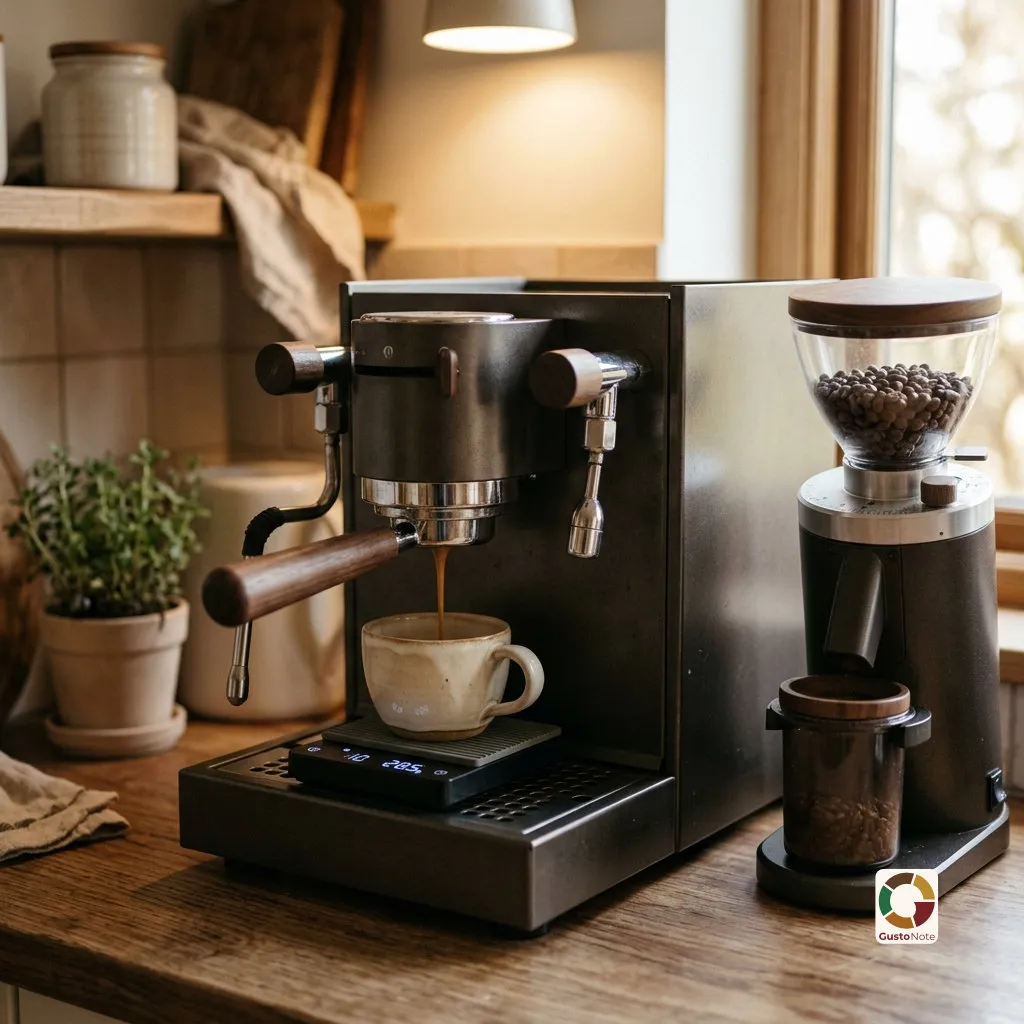
Home espresso - where to start
Home espresso is not a lottery but a few measurable variables. What you really need to begin, why the grinder matters more than the machine, what dose, yield and time mean, and how to dial in the flavour step by step.
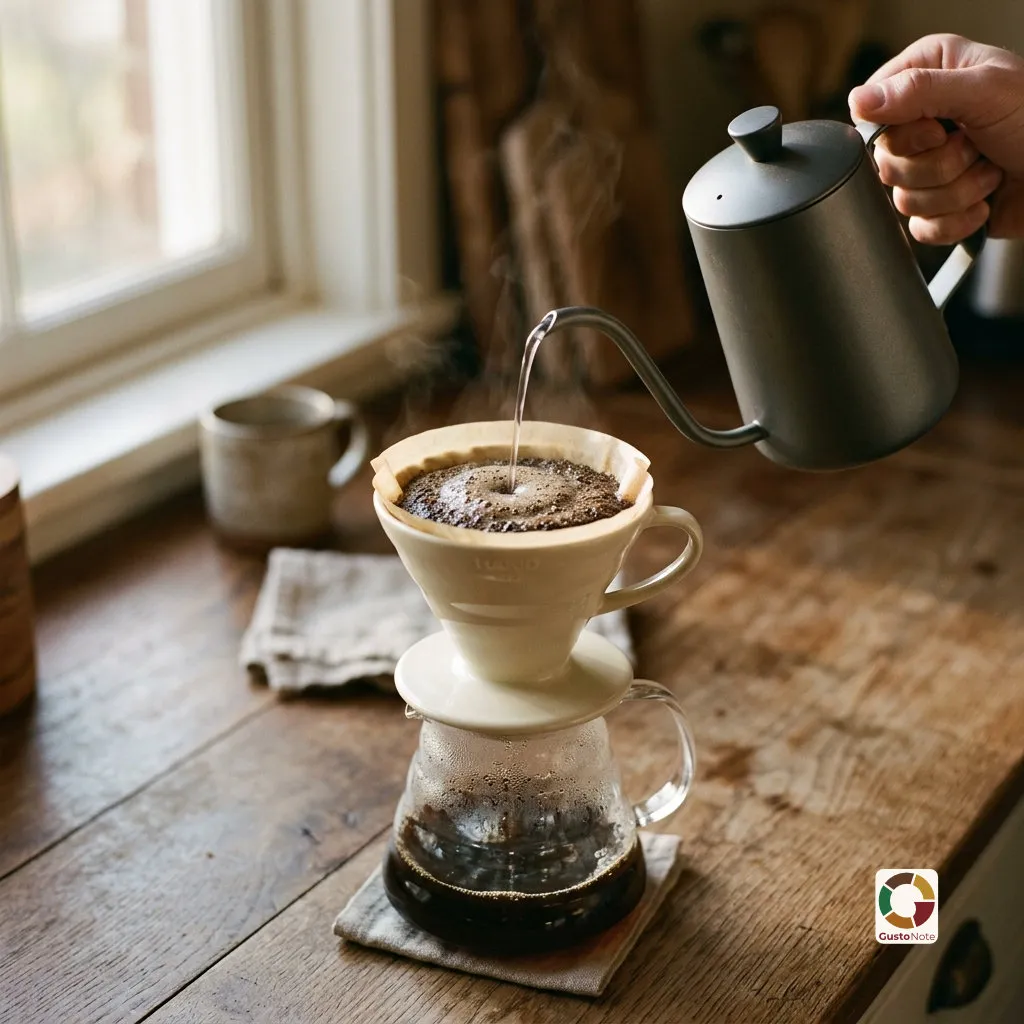
Pour-over V60 and Chemex - how to brew coffee step by step
The pour-over method gives a clean, clear coffee in which you can hear every nuance. What ratio, grind and temperature, what the bloom is, how to pour the water properly, and how the V60 differs from the Chemex.
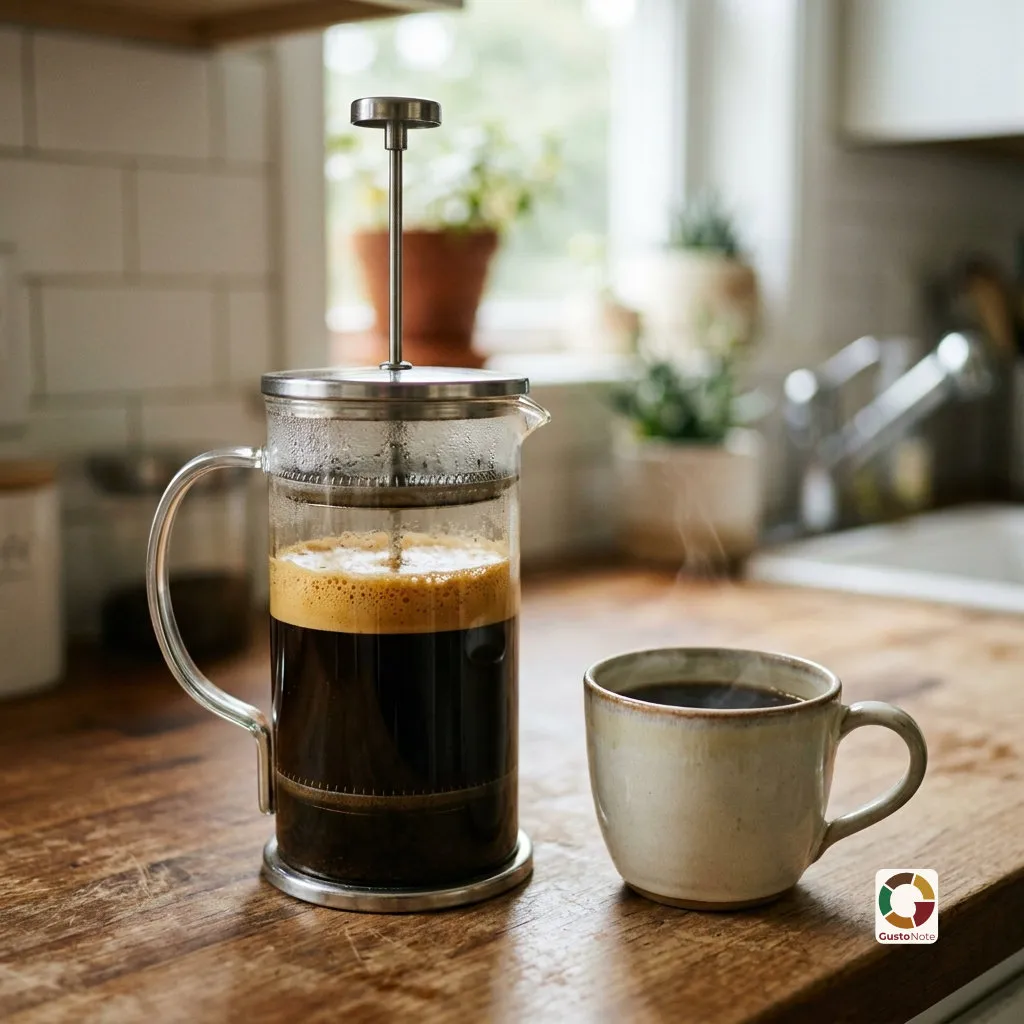
French press - the simplest road to good coffee
The French press is the simplest piece of kit that makes a full, rich, aromatic coffee. What ratio, grind and time, why the metal mesh gives a different body than paper, and how to brew without sediment using the Hoffmann method.
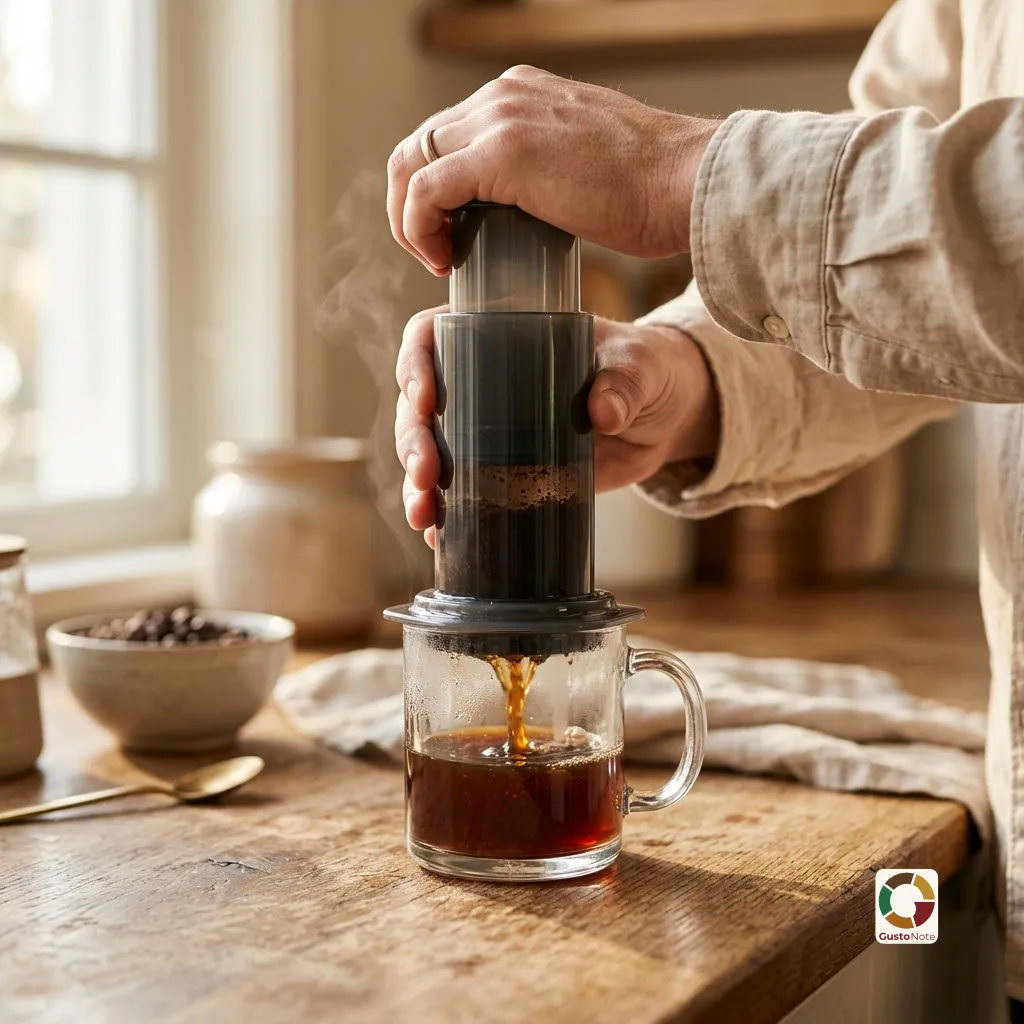
AeroPress - one device, a hundred recipes
The AeroPress is the most versatile brewer in the world: from an espresso-style concentrate to a clean, tea-like coffee. How it works, how the standard method differs from the inverted, what ratios, and why there is no single best recipe.
The moka pot - how to brew and not burn your coffee
The Italian moka pot makes a strong, full coffee, but it is easy to ruin with bitterness. How the moka works, why it is not real espresso, and seven rules to make the coffee come out sweet rather than burnt.
Turkish coffee - brewing in a cezve step by step
Turkish coffee is the oldest brewing method, unfiltered, in a small pot called a cezve. How finely to grind, what ratio, why you must never let it boil, and how to get the characteristic foam and thick body.
Syphon and AeroPress - the physics of brewing methods
The syphon brews coffee with vacuum and water vapour, the AeroPress with air pressure. Learn the physics of the unusual methods: how the vacuum syphon works, how it differs from the AeroPress and what links them with gravity and immersion. A guide with a table.
Percolation versus immersion: two families of brewing methods
All coffee brewing methods fall into two families: percolation (water flows through coffee, like pour over) and immersion (coffee steeps in water, like French press). Get to know the difference, how it affects flavour and which to choose. A guide with a table.
Coffee with food: pairing with desserts and dishes
Coffee is not only a drink in itself - it pairs wonderfully with food. Learn the rules of pairing coffee with desserts, chocolate and cheese, how to match the roast level to the dish and why coffee and chocolate are an ideal duo. A guide with a table.
Espresso versus filter - why the same coffee tastes different
The same beans make a completely different coffee as espresso and as pour-over. Where the difference comes from, why pressure changes everything, how body and acidity differ, and why roasters sell separate espresso and filter coffees.
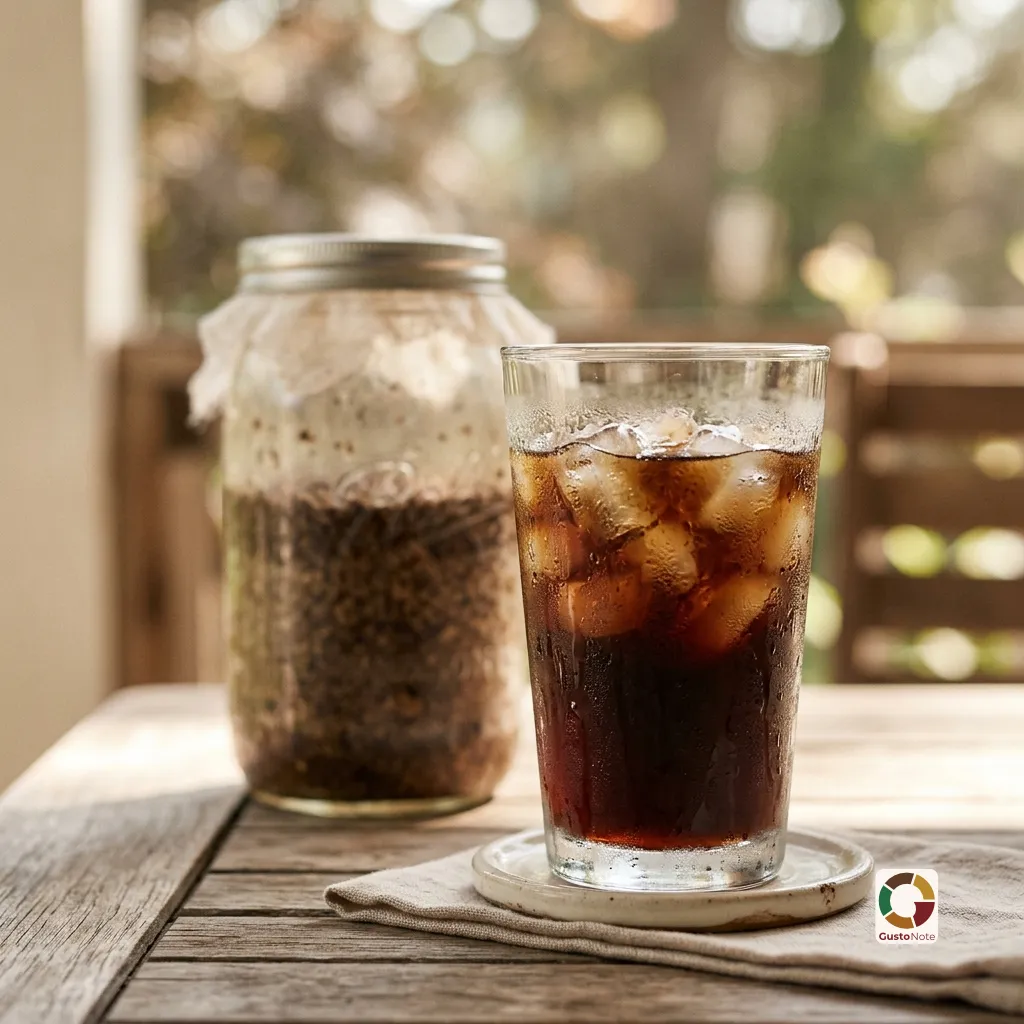
Cold brew - cold coffee that is not bitter
Cold brew is not espresso over ice. Cold water and a dozen hours give coffee that is sweet, smooth and low in acidity. Ratios, time, how to make it at home and how it differs from iced coffee.
Cold brew vs flash brew - two roads to iced coffee
Iced coffee is made two ways: cold brew (slow extraction in cold water) and flash brew, that is Japanese iced (hot brewing straight onto ice). Learn the difference in flavour, acidity and aroma. A guide with a table.
Nitro coffee - coffee with nitrogen, like Guinness
Nitro coffee pours from a tap like Guinness, cascades in the glass and tastes velvety and sweet without sugar. What coffee with nitrogen is, how the cascade and the widget work, why nitrogen gives creaminess and how to make it at home.
Milk steaming and latte art from scratch - a beginners guide
How to steam milk like a barista and make your first design on coffee? Microfoam step by step: aerating, texturing, temperature and your first latte art. Without the mystery.
Flat white, latte, cappuccino, cortado - what is the difference
The same ingredients, four different coffees. Flat white, latte, cappuccino and cortado explained: espresso-to-milk ratios, amount of foam, size and taste. Finally order with confidence.
Plant milk for coffee - which does not curdle and why
Oat, soy, almond, coconut. Which plant milk does not curdle in coffee, why soy likes to split and how to prevent it. A practical guide to plant milks for coffee.
Espresso pressure profiling - lever, flow control and the brew curve
Pressure profiling is changing the pressure during espresso extraction. Learn the phases (pre-infusion, peak, decline), lever machines, flow control and why declining pressure gives a sweeter, less astringent espresso. A guide with a table.
Channeling and WDT - the secret of even espresso
Channeling is the enemy of even espresso extraction: water finds cracks and shoots a shortcut. Learn the causes of channeling, the WDT technique (needle distribution) and how an even puck gives a sweeter shot. A guide with a table.
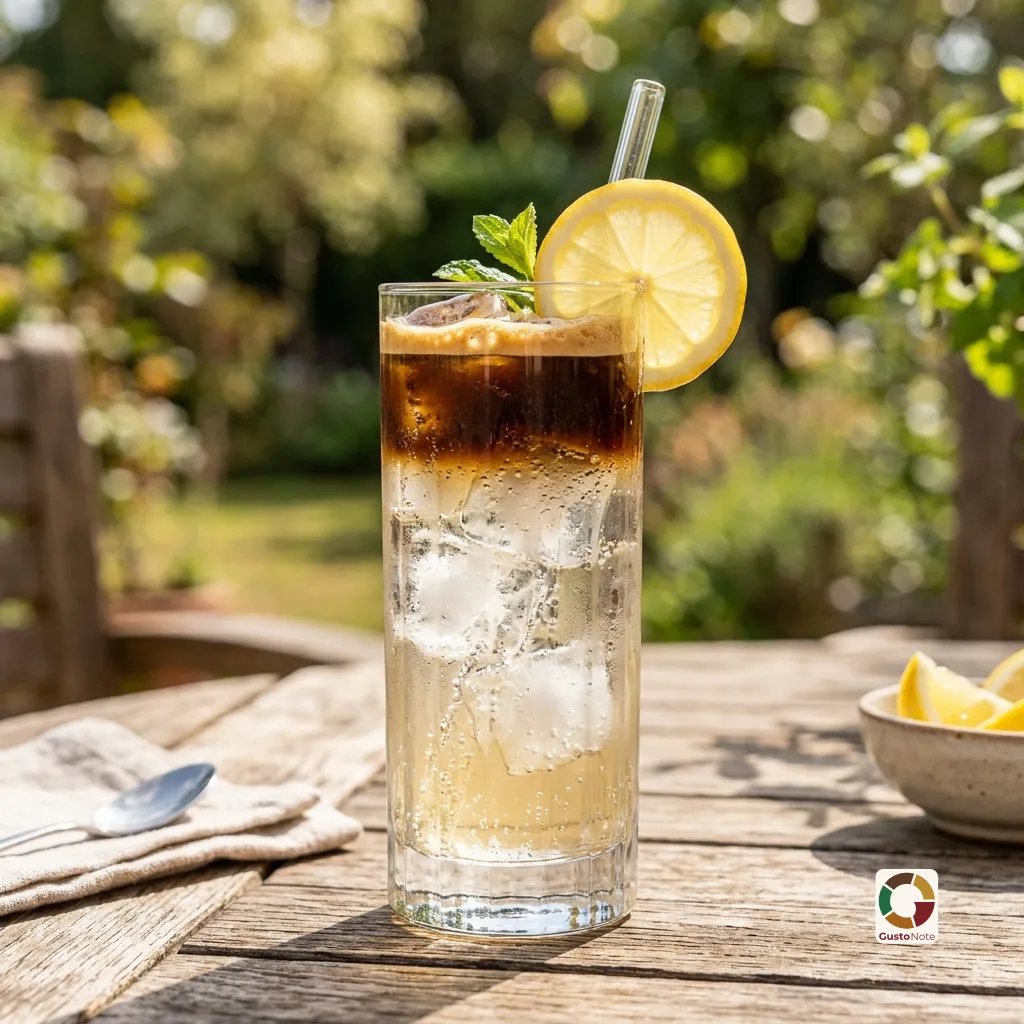
Summer iced coffee - espresso tonic, iced latte and cold brew
Hot days call for cold coffee. The best summer coffee drinks: refreshing espresso tonic, iced latte, cold brew. How to make them at home and how they differ. A practical guide for the heat.
Coffee cocktails - espresso martini and irish coffee
Espresso martini and irish coffee are two classics that pair coffee with alcohol. Where they came from, why crema makes the espresso martini, why cream floats on irish coffee and how to make both well at home.
Gear
Coffee grinder - the most important purchase, burr versus blade
A good grinder does more for your coffee than an expensive machine. Why grind consistency decides the flavour, how a blade grinder ruins coffee, how conical and flat burrs differ, and why this is where to invest.
How to choose a home espresso machine - a no-nonsense guide
Choosing an espresso machine is not about the number of bars but above all about the grinder, stable temperature and whether you drink straight espresso or milk drinks. Manual, automatic, single or dual boiler, PID and why the grinder matters more than the machine.
A scale and a gooseneck kettle - what you really need
Good pour-over coffee does not need expensive gear, but two things change everything: a scale and a gooseneck kettle. Why controlling weight and water flow decides the flavour, what temperature is right and what you can genuinely do without.
How to clean an espresso machine and grinder - flavour hidden in cleanliness
The most common cause of bitter, rancid coffee is not the beans but a dirty machine and grinder. What backflushing is, how to clean the burrs, why coffee oil goes rancid and how a cleaning schedule makes the same coffee start to taste better.
Coffee roasters: drum versus hot air
Coffee is roasted in a drum roaster or a hot air (fluid bed) roaster. The drum combines conduction and convection, giving body and depth, while hot air gives a cleaner, brighter profile. Get to know both kinds of roaster, the differences in heat transfer and their influence on flavour. A guide with a table.
Paper versus metal filter - cafestol, oils and flavour
A paper filter traps oils and cafestol, the cholesterol-raising compound; a metal filter lets them through. How it affects flavour and health, how much cafestol is really in filter coffee versus French press, and which filter to choose.
Origins
Ethiopian coffee - the birthplace and floral profiles
Ethiopia is the homeland of arabica coffee, a country of extraordinary flavour diversity: from floral, citrusy Yirgacheffe to wild, blueberry natural coffee. Where the goatherd legend comes from, what heirloom varieties are and how washed versus natural processing changes the flavour.
The Ethiopian coffee ceremony (buna): ritual and meaning
The Ethiopian coffee ceremony, called buna, is a ritual lasting 2-3 hours: roasting the beans, grinding, brewing in a clay jebena and three rounds of brew (abol, tona, baraka). Learn the course, the meaning of the three rounds and the cultural weight of this tradition. A guide with a table.
Yemen: the cradle, mocha and coffee from mountain terraces
Yemen is the cradle of the coffee trade - it was from the port of Mocha that coffee set out into the world. Today Yemeni coffees from ancient mountain terraces, naturally dried, are famed for their wild, wine-like, spicy character. Get to know the history, terroir and flavour of coffee from Yemen. A guide with a table.
Arabic coffee gahwa - shake the cup when you have had enough
With Arabic coffee the host pours endlessly until you gently shake the cup to signal that you thank them. Here is the ritual of gahwa, the hospitality of the Gulf inscribed by UNESCO, why it is not done to refuse the coffee, and how to behave as a guest so as not to commit a faux pas.
Latin American coffee - Colombia, Brazil, Guatemala
Latin American coffee is the foundation of what most people consider the taste of coffee: chocolate, nuts, caramel and friendly balance. How elegant Colombia differs from heavy Brazil and complex Guatemala and why it is a great starting point.
African coffee - Kenya, Rwanda and berry acidity
Coffees from East Africa, especially Kenya and Rwanda, are among the most expressive in the world: bright, wine-like acidity, blackcurrant and berries. What the SL28 variety, double fermentation and the AA grade are and how Kenya differs from floral Rwanda.
Asian coffee - Sumatra, India and wet-hulled processing
Coffees from Asia, especially Sumatra, are the most earthy and full-bodied in the world: low acidity, notes of herbs, wood and spice. What wet-hulled processing is, where Indian monsooned coffee comes from and why these coffees taste completely different from African ones.
Geisha - the most expensive coffee in the world and where its fame comes from
Geisha can cost over 30,000 dollars per kilo. Where it comes from, why it smells like perfume, why it is so expensive and whether it is worth trying once.