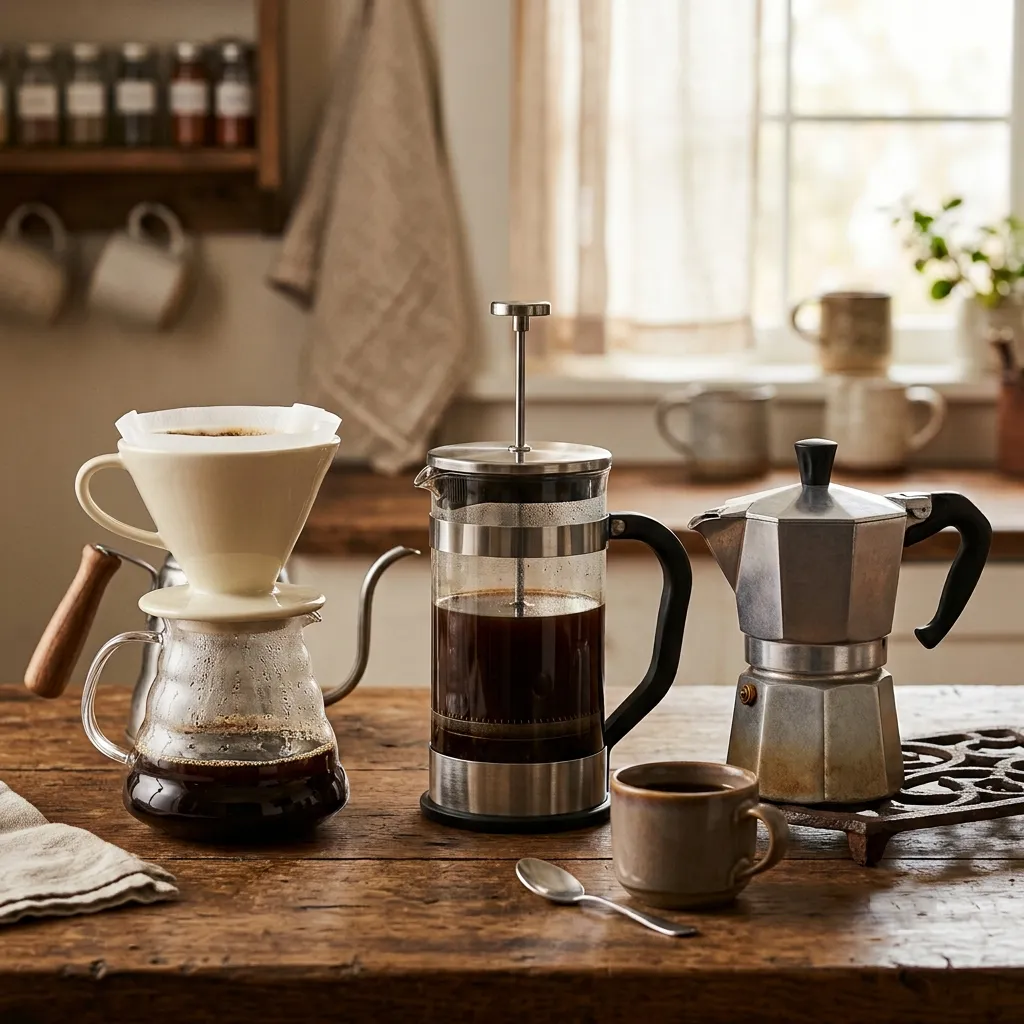
Coffee brewing methods at home - how they change the taste
The same coffee can taste completely different depending on how you brew it. Espresso, pour-over, French press, moka pot - each method pulls something different from the beans. If you buy good coffee and it still comes out flat in the cup, the problem is often not the beans but the method. Here is a short guide.
Pour-over (dripper, e.g. V60)
Hot water pours through the coffee and a paper filter. The filter holds back oils and fine particles, so the brew comes out clean, clear and light. This is the method that best shows aromas and acidity - the fruity, floral and tea-like notes of a light roast. If you want to feel how a coffee from Ethiopia differs from one from Brazil, start with pour-over.
French press
Coffee is steeped in water and, after a few minutes, separated with a metal mesh. The mesh lets oils and fine particles through, so the brew is fuller, heavier and rounder, but less clear. Great for stronger, chocolate-and-nut coffees. It is the simplest method to start with - hard to get wrong.
Espresso
Water under high pressure passes through tightly tamped coffee in a few seconds. The result is a small, intense, dense shot with crema. Espresso amplifies everything: sweetness, bitterness and body. It does, however, demand equipment and practice - grind size and tamping can swing the result from delicious to bitter.
Moka pot
The classic Italian stovetop pot. It gives a strong, intense brew, closer to espresso than pour-over, though without crema. Cheap and simple, but it is easy to overheat the coffee and pull out bitterness - take it off the heat the moment it starts to gurgle.
What else decides the taste
Whatever the method, a few things make a difference:
- Grind size - fine for espresso, coarse for the French press. The wrong one gives either bitterness (too fine) or wateriness (too coarse).
- Water temperature - around 92-96 degrees. Boiling water straight from the kettle scorches the coffee and brings bitterness.
- Ratio - roughly 60 grams of coffee per litre of water, then adjust to taste.
- Freshness - coffee is at its best a few weeks after roasting, not after a year in the cupboard.
Match the method to the coffee
There is no single best method, only the best one for a given coffee and your taste. Light, fruity beans bloom in a pour-over. Darker, chocolatey ones feel better in a moka pot or espresso. It is worth having two methods and playing around.
Write down what works
With so many variables - bean, method, grind, temperature, time - it is easy to lose track of what made the best cup. In GustoNote you can note each coffee and brewing method, mark the notes on the flavour wheel, and rate acidity, sweetness, body and finish. After a few entries you have your own cheat sheet: which coffee, which method, how many grams - and you stop guessing over your morning cup.