Coffee defects - how to spot burnt, stale and faulty coffee
Your coffee came out unpleasant and you do not know whether to blame the bean, the roast, the brewing, or simply your taste. This is a common problem, because the coffee world mixes up two different things: real defects, meaning objective errors, and preferences, meaning what someone simply does not enjoy. A bright, fruity coffee that seems too sour to someone is not faulty, just not to their taste. A burnt, earthy or rancid coffee is a genuine defect. The ability to tell them apart saves you from blaming good coffee for your own preferences and from drinking truly spoiled beans.
Defect versus preference
First the key distinction. A defect is a trait that is objectively out of place: the bitterness of over-roasting, the acetic acid of fermentation, mustiness, papery flatness. A preference is simply a profile that does not suit someone, for example a high, citrusy acidity or a light, tea-like body. The fact that someone prefers chocolatey, full coffees does not make bright, fruity ones faulty. I cover this acidity, which many confuse with a fault, in why good coffee tastes sour.
Roast defects
The most common and easiest to catch defects are born at the roastery:
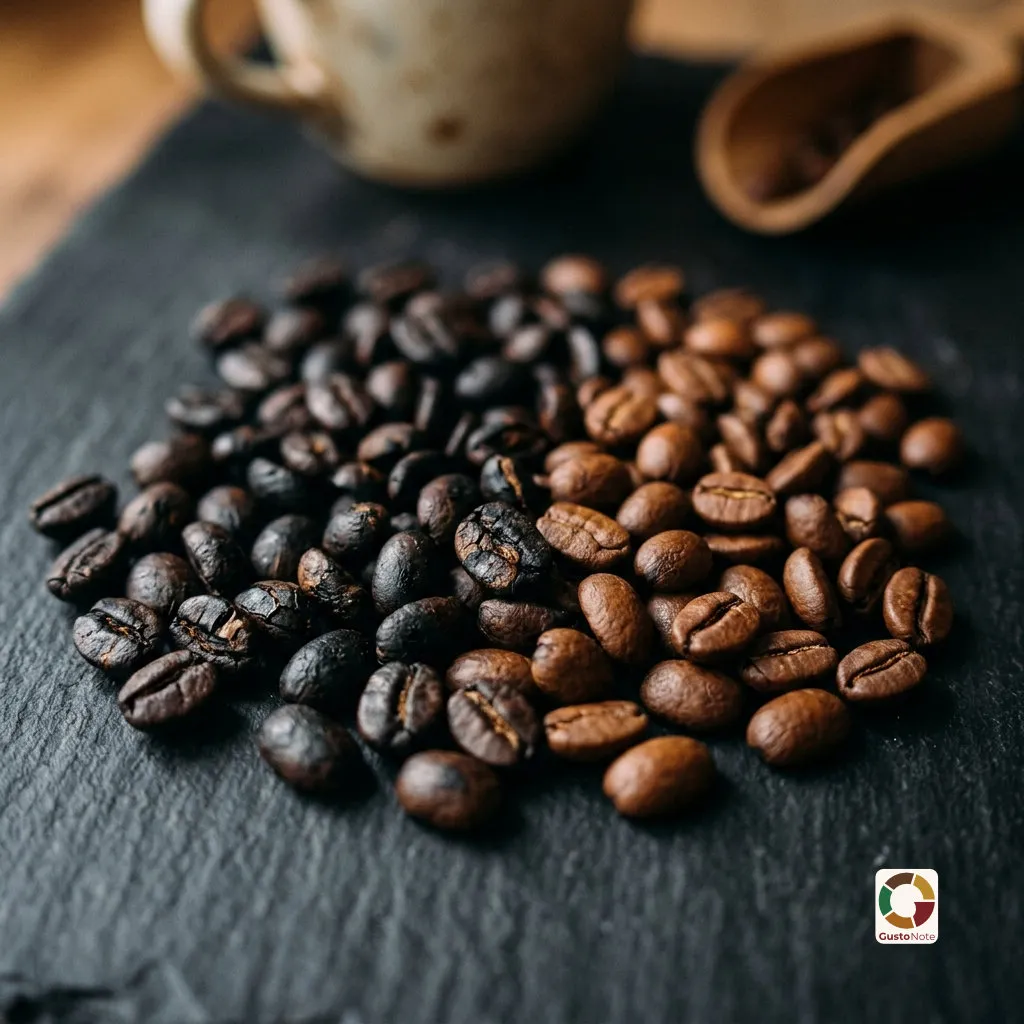
- Over-roasting is too dark, too long a roast. The coffee becomes bitter, ashy, carbony, loses acidity, sweetness and origin character. Everything starts to taste similarly burnt, regardless of the bean. I cover roast levels in coffee roast levels.
- Under-roasting is a roast stopped too early. The coffee is then grassy, nutty in a bad sense, sour-sharp, astringent, with a raw, vegetal note.
- A baked roast is too slow or dragged-out. Despite the dark colour the coffee is flat, dull, papery, without sweetness or brightness, as if the life had been baked out of it.
- Scorching is too violent a roast that burns the edges of the beans, giving smoky, sharp, bitter notes despite a lighter interior.
Bean and processing defects
Some defects come from the farm and processing, before the bean reaches the roastery:
- Quakers are unripe beans that do not roast properly. They stay pale and give a taste of peanuts and cardboard.
- The potato defect, found in East African coffees, especially from Rwanda and Burundi, gives a clear smell and taste of raw potato or damp earth. A single faulty bean is enough to ruin a whole cup. It comes from a certain insect feeding on the coffee fruit.
- A fermenty note is the result of poorly handled processing, when the fruit fermented too long. It gives a taste of vinegar, onion, overripe, pickled fruit.
- Phenolic and musty notes are usually down to mould or poor storage of the green coffee, giving a medicinal, chemical, cellar-like aftertaste.
- Old green coffee, or past crop, tastes of wood, jute, sacking, and is flat and faded.
I cover how origin and processing shape flavour in coffee processing.
Staleness, or old coffee after roasting
This is the most common defect at home, and we often inflict it on ourselves. After roasting, coffee gradually loses aroma in contact with oxygen. Old, stale coffee is flat, cardboard-like, devoid of smell. On top of that, dark-roasted, oily beans go rancid over time, giving the taste of old, spoiled fat. That is why the roast date matters, not a distant best-before, which I cover in coffee freshness and how to store coffee.
Bean fault or brewing error
Before you blame the bean, check the brewing, because many off-flavours are born in the cup. A simple two-pole rule helps here:
- Over-extraction gives bitterness, harshness, dryness and a hollow, woody note in the finish. It comes from grinding too fine, brewing too long or water that is too hot.
- Under-extraction gives sourness, a sharp, salty, thin taste and a lack of sweetness. It comes from grinding too coarse, brewing too short or water that is too cool.
If the coffee is bitter, try grinding coarser or shortening the brew, if sour and thin, grind finer or brew longer. Only when the taste is still off despite correct brewing should you suspect the bean. I cover the role of grind in coffee grind size.
How to practise detecting defects
The best way to learn defects is through conscious comparison. Brew a fresh, well-roasted coffee next to one that has sat open for months, and the difference between a living and a dead cup becomes obvious. In GustoNote you mark the defects you catch for every coffee and add your own notes, and after a few dozen entries you will see which off-flavours keep returning and whether they come from the bean, the freshness, or your way of brewing. It turns a general bad into a specific diagnosis, so next time you hit better, both when buying and when brewing.