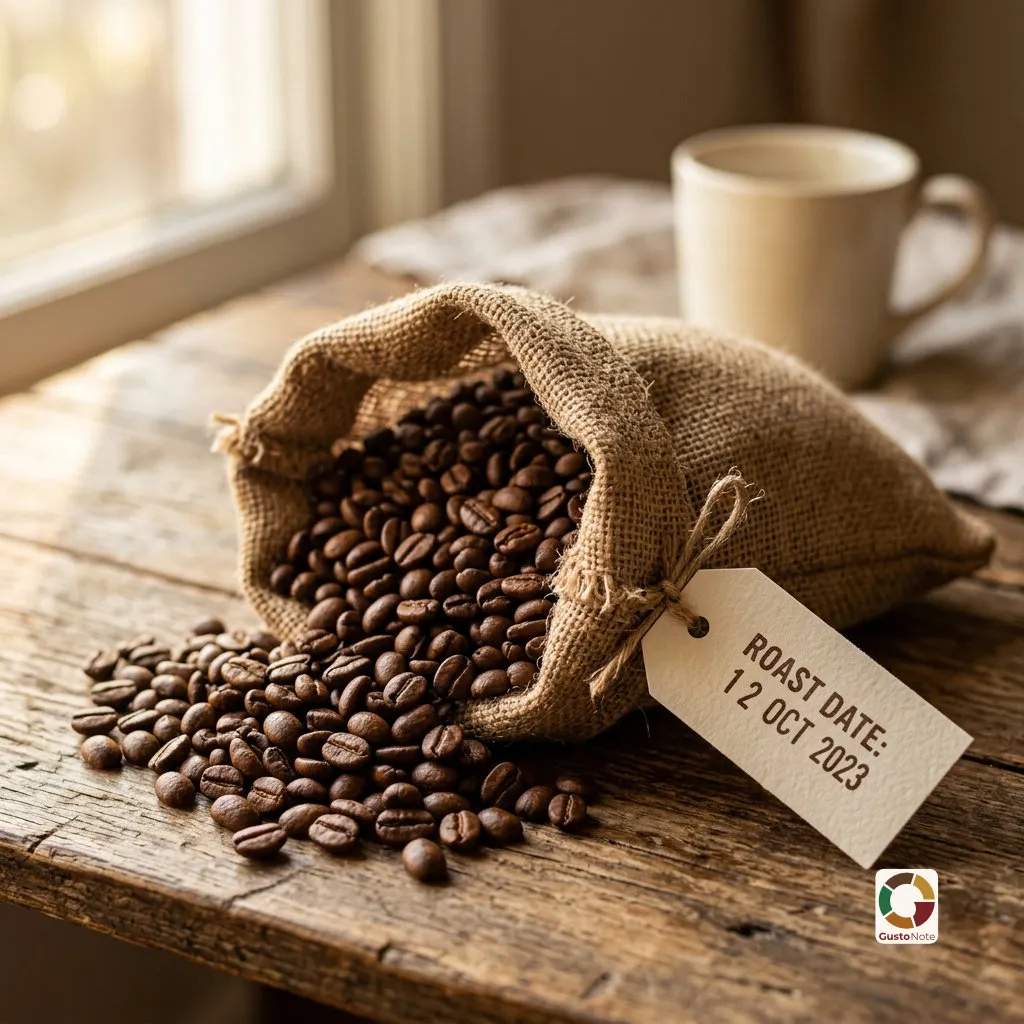
Coffee freshness - why the roast date matters more than the best-before
You buy good coffee, and at home it comes out flat and characterless. Before you blame the grinder or the machine, check one thing: when the beans were roasted. With coffee, freshness is the difference between a lively cup and a dead one, and most people never look at it.
Roast date, not best-before
The bag of cheap coffee usually shows a distant best-before, say two years. That is misleading. Coffee does not become unsafe for a long time, but it loses aroma far sooner. That is why good roasters print a roast date, not just a best-before. It is what tells you how much life is left in the beans.
What happens to beans over time
During roasting, hundreds of volatile aroma compounds and a lot of carbon dioxide form inside the bean. After roasting, the bean slowly releases that gas and at the same time loses aroma, especially in contact with oxygen. The older the bean, the less smell and the more of a flat, cardboard note. This is the natural fading of aroma, not spoilage.
When coffee tastes its best
There is a sweet spot:
- The first days after roasting the bean is so saturated with carbon dioxide that it can be hard to brew evenly (it swells a lot, the taste can be sharp). Which means too fresh is not ideal either.
- Roughly from one week to a few weeks after roasting, coffee is at its peak - full, balanced, aromatic.
- After a few months the aroma clearly drops, even if the best-before is still far off.
That is why it is worth buying only as much as you will drink in a few weeks, not a half-year stash.
How to keep it fresh
The enemies of the bean are air, moisture, heat and light. Keep coffee in an airtight, opaque container, in a cool, dry place, and grind only before brewing - ground coffee loses aroma in minutes, not weeks. I cover how grind size changes the flavour in coffee grind size.
Note it and compare
In GustoNote you note the roast date and your impressions for every coffee, and after a few entries you will see yourself in which freshness window your favourite beans taste best. I describe where coffee gets its character in the first place in where coffee gets its flavour.