Coffee processing - washed, natural, honey and where the flavour differences come from
Two coffees from the same farm, from the same variety, can taste completely different. One is clean and citrusy, the other bursts with berries. The most common reason is processing, the way the bean was extracted from the coffee fruit. It is one of the strongest and least known switches of flavour.
Why process at all
The coffee bean sits inside a fruit, surrounded by pulp and a sticky, sweet mucilage. It has to be taken out and dried. How much of the fruit stays on the bean during drying, and for how long, changes the flavour. Hence three main methods. I describe the whole route from shrub to bean in how coffee is made.
Three methods and their flavour
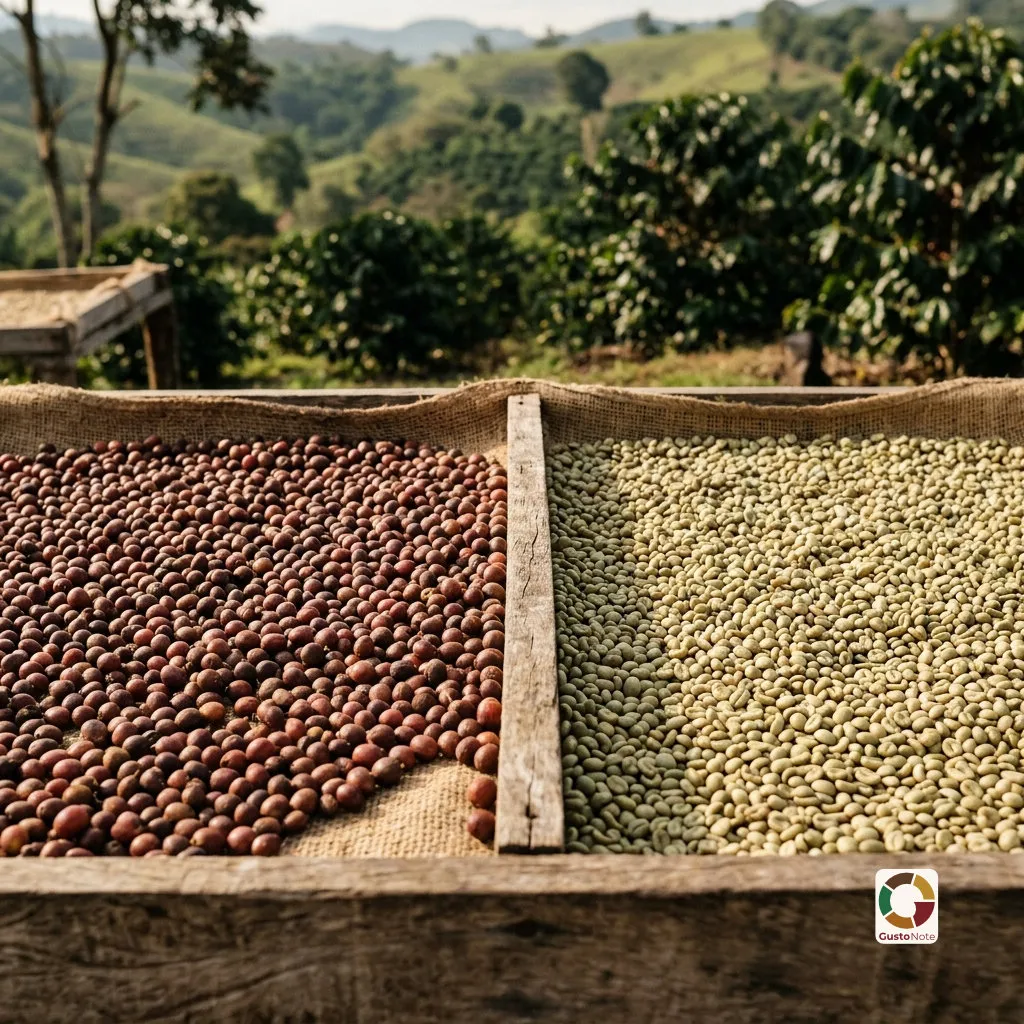
- Washed - the pulp and mucilage are removed before drying, usually in water. The bean dries clean. The result is a transparent coffee with clear acidity and a clean origin profile. Nothing masks the character of the bean.
- Natural - the fruit is dried whole, with the bean inside, and the fruit flavour seeps into the seed. The result is an intense, sweet coffee with notes of berries, wine and dried fruit. Wilder and less predictable.
- Honey - the middle road. The skin is removed but some mucilage stays on the bean during drying. The result is more sweetness and body than washed, but more clarity than natural. The name comes from the sticky mucilage, not a honey taste.
Why you can taste it
The more fruit contacts the bean during drying, the sweeter and fruitier the coffee, but also the less predictable. Washed shows the clean character of the origin, natural adds a fruity layer of its own. That is why the same coffee can be two different drinks. If the acidity of a washed coffee surprises you, see why good coffee tastes sour.
Read it on the bag
A good roaster prints the processing method on the packaging next to the origin and variety. It is one of the first hints of what to expect. For more on where coffee gets its flavour, see where coffee gets its flavour.
Note it and compare
In GustoNote you note the processing method and profile of every coffee, and after a few dozen entries you will see whether you prefer clean washed or fruity natural. It is the fastest way to stop buying blind.