The coffee tasting profile - acidity, sweetness, body and aftertaste
Coffee is not just strong or weak. Professional tasters judge it on several axes at once, using the cupping form developed by the Specialty Coffee Association, where specialty coffee is coffee that scores 80 points or more out of a hundred. Four of these axes are the easiest to bring home, and they form the skeleton of any coffee’s profile: acidity, sweetness, body and aftertaste. Once you learn to separate them, you stop saying only good or bitter and start understanding what specifically you enjoy in a coffee, and choosing beans for your taste on purpose.
Acidity - the brightness and life of coffee
Acidity is the lively, refreshing quality that makes coffee feel juicy rather than flat. It is not a fault and not the same as spoiled, sour coffee. Good acidity is sweet, clean and has a specific character:
- Lemon and orange is citric acid, common in East African coffees.
- Apple, tart is malic acid, giving the impression of juicy green apple.
- Phosphoric acid gives a more sparkling, vivid brightness, associated with the best Kenyan coffees.
Where does it come from? The higher coffee grows, the more slowly the fruit ripens, the denser the bean and the higher, more interesting the acidity. That is why high-altitude coffees from Ethiopia or Kenya are so bright and fruity. Washed processing preserves more acidity, and a light roast brings it out. I expand on this in why good coffee tastes sour.
Sweetness - the foundation of good coffee
Sweetness in coffee comes not from added sugar but from sugars developed in the ripe fruit and from caramelisation during roasting. It balances acidity and bitterness, making coffee pleasant rather than sharp. High sweetness is a sign that the cherries were picked ripe and well processed. Natural processing, in which the bean dries inside the whole fruit, usually gives more sweetness and fruitiness than washed. A lack of sweetness often gives away unripe beans or defects, and bitter, dried-out coffee is usually the result of over-roasting. I cover how processing shapes flavour in coffee processing.
Body - weight and texture in the mouth
Body is the sense of weight and texture of the coffee on the tongue, independent of flavour. One coffee is light and tea-like, another dense, creamy, almost juicy or syrupy. It is built by the content of oils and dissolved substances and the fine particles suspended in the brew. Three things affect body:
- Origin and variety. Coffees from Sumatra or with some robusta usually have a fuller, heavier body, Ethiopian coffees tend to be lighter and more delicate.
- Roast level. A darker roast gives a fuller, oilier body.
- Brewing method. This is key. A French press and espresso let oils and fines through, giving a full, dense body. A pour-over through a paper filter, like a V60 or Chemex, traps the oils, giving a clean, clear, lighter cup. So the same coffee can have a completely different body depending on the equipment, which I cover in coffee brewing methods.
Aftertaste - what remains
The aftertaste, what you feel after swallowing, separates an average coffee from an outstanding one. In good coffee the flavour does not cut off suddenly but lingers and sometimes changes, for example from chocolatey to sweet or from fruity to floral. A long, clean, pleasant aftertaste is a sign of class. A short, dry, bitter or astringent aftertaste gives away lower quality or brewing errors. You judge the aftertaste by paying attention to what happens in your mouth for a dozen or so seconds after the sip.
How to put it all together
These four axes work together, and it is their balance that decides the pleasure. A great coffee is not the one with the highest acidity or the fullest body, but the one in which acidity, sweetness, body and aftertaste play together. That is why tasters rate each axis separately and then their balance.
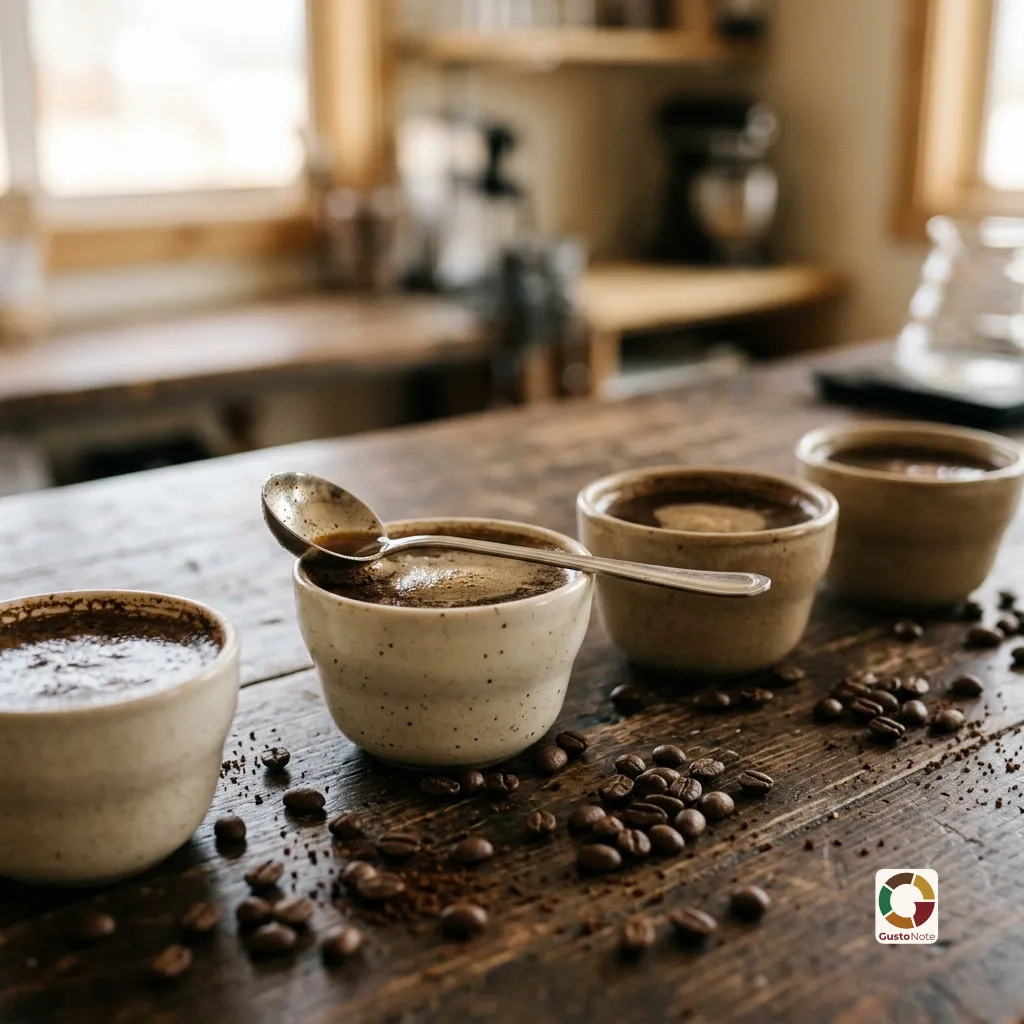
The best way to build a feel for these axes is the cupping method: brew two coffees side by side and rate them in turn, first acidity, then sweetness, body and aftertaste. I describe it step by step in home coffee cupping. In GustoNote you rate each of these axes for every coffee on separate scales, and after a few dozen entries you will see which profile really suits you: whether you lean toward bright, fruity coffees with high acidity, or sweet, full, chocolatey ones. It turns a vague I like this coffee into a specific recipe for the bean you will buy next time without risk. I describe where coffee character comes from in the first place in where coffee gets its flavour.