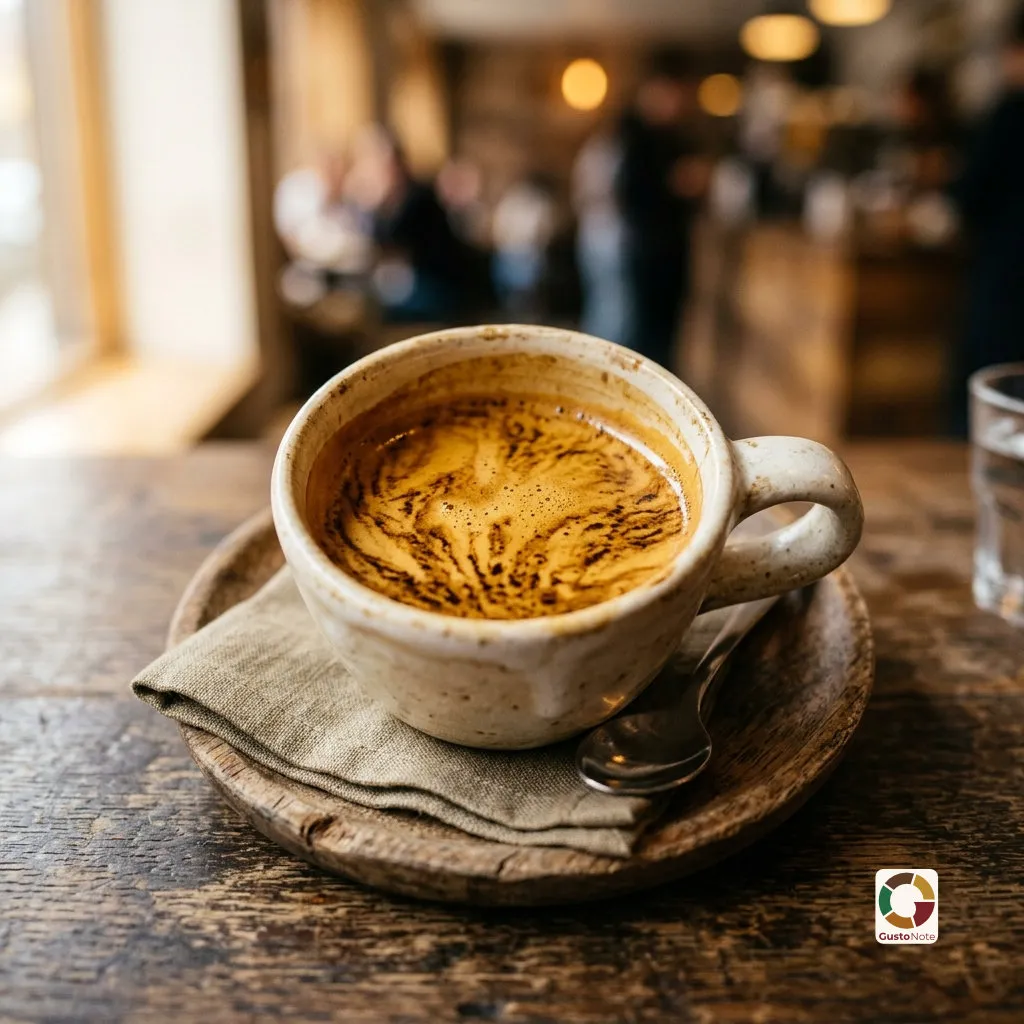
Espresso crema - what it is and what it really tells you
Crema, the golden-brown foam on top of an espresso, has risen to a symbol of good coffee. Barista photos tempt with thick, tiger-striped crema, and many people judge an espresso by it. The problem is that crema tells you less than is commonly believed. It is worth knowing what it really reveals and what is a myth.
Where crema comes from
Espresso is brewed under high pressure that forces hot water through a compressed bed of finely ground coffee. Under pressure the water draws oils and dissolved carbon dioxide from the coffee, and at the sudden drop in pressure on the way out the gas is released as tiny bubbles wrapped in oils and coffee particles. This emulsion is the crema. I explain where that carbon dioxide in the bean comes from in coffee freshness.
What crema really tells you
Crema carries a few genuine signals, but you have to read them carefully:
- Freshness - freshly roasted coffee has more carbon dioxide, so it gives more crema. A lack of crema often gives away old, flat coffee.
- Pressure and brewing - a good crema suggests the extraction ran at the right pressure.
- Bean type - robusta gives much thicker and longer-lasting crema than arabica, which is why classic Italian blends with some robusta have an impressive crown.
Why thick crema does not always mean good coffee
Here the myth starts to fall apart. Very thick, dark crema does not guarantee great flavour:
- It often comes from robusta or dark roasting, which give plenty of crema but not necessarily the most interesting taste.
- A light-roasted specialty arabica can give a thin, pale crema while being outstanding in the cup.
In other words, crema says something about freshness and brewing, but little about flavour quality. What matters is what you taste, not what you see. I describe where coffee character comes from in the first place in where coffee gets its flavour.
Note it and compare
In GustoNote you note the look of the crema, the bean and the flavour impressions for every espresso, and after a few entries you will see for yourself whether thick crema really goes hand in hand with better taste for you, or whether they are two separate things. I cover the differences between methods in coffee brewing methods.