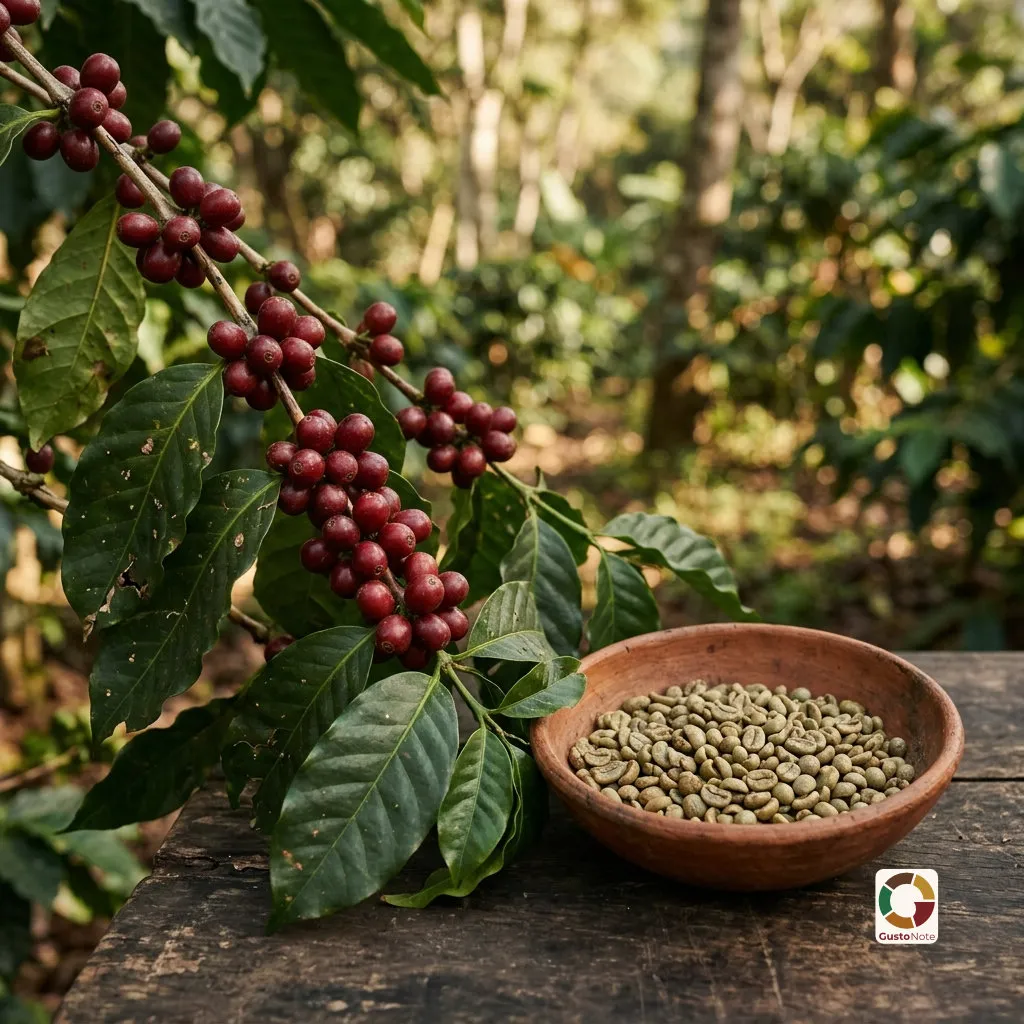
How coffee is made - from fruit to bean
Most people meet coffee only as a brown, roasted bean. Long before that, it is a red fruit on a shrub somewhere in the tropics, picked by hand and processed in a way that decides half the flavour. The more you know about that journey, the better you understand what is in your cup.
Coffee is a fruit seed
A coffee bean is the seed of the coffee fruit, called a cherry for its red colour. Each cherry usually holds two beans. So what we roast and grind is really the seed of a fruit that ripened on the shrub. That explains where the fruit notes in good coffee come from.
The journey from shrub to bean
- Growing - coffee grows in the tropical belt around the equator, ideally high in the mountains. Higher altitude means slower ripening and more flavour.
- Harvest - the best coffees are picked by hand, choosing only ripe, red cherries. Machine picking is cheaper but mixes ripe with unripe.
- Processing - the bean has to be extracted from the cherry. The washed, natural or honey method shapes the final flavour enormously.
- Drying and hulling - the beans are dried to a safe moisture level, then the husk is removed. The result is raw, green coffee.
- Roasting - only now, usually close to the customer, does the green bean turn brown and aromatic. I cover this step in coffee roast levels.
Why you can taste it in the cup
Origin, variety and processing decide the flavour more than the roast itself. That is why a coffee from Ethiopia can smell of berries, while one from Brazil smells of nuts and chocolate. I expand on this in where coffee gets its flavour.
Write down what you drink
In GustoNote you note the origin, variety and processing of every coffee, and after a few dozen entries you will see which style of growing and preparation hits your taste most often. It is the fastest way to turn random drinking into a conscious choice.