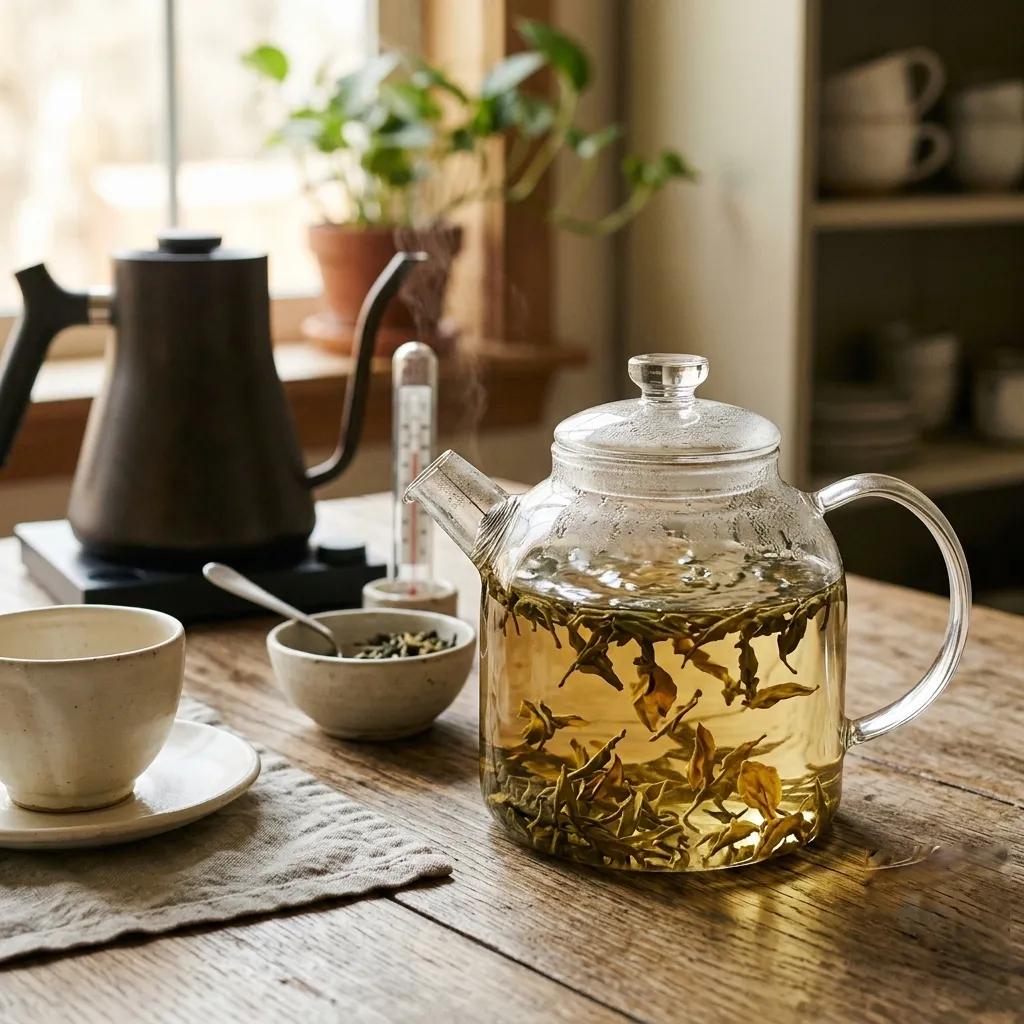
How to brew tea - temperature and time for every type
The most common reason tea comes out bitter and astringent is simple: we pour boiling water on it and leave it too long. Yet different teas like different temperatures and times. Once you match them, the same tea can change from bitter to sweet and aromatic. Here is a simple cheat sheet.
Why it matters
Tea leaves contain tannins and caffeine. Water that is too hot and steeping that is too long pull out too much of them, hence the bitterness and drying astringency. More delicate teas have thinner leaves and fewer tannins, so boiling water literally scorches them. A simple rule: the more delicate the tea, the cooler the water.
White
The most delicate. Water around 70-80 degrees, steep 2-3 minutes. Subtle, floral, slightly sweet - boiling water kills its finesse.
Green
The classic victim of boiling water. Water 70-80 degrees, steep 1-2 minutes. Brewed too hot it turns bitter and grassy. Done right it is fresh, sweet, sometimes nutty or marine.
Oolong
Between green and black, very rewarding. Water 85-95 degrees, steep 2-3 minutes. It can give notes from floral to roasted and caramel. It handles multiple infusions well - brew the same leaves several times.
Black
The most robust. Water 90-100 degrees, steep 3-5 minutes. Full, strong, malty. Here boiling water is fine, but you can over-bitter it too if you leave the leaves in longer.
Herbal and fruit
Infusions of herbs and fruit, technically not tea, like boiling water and long steeping, even 5-7 minutes. They will not turn bitter, and they need time to release their flavour.
A few rules to finish
- Do not pour boiling water on everything straight from the kettle. After it boils, wait a moment or add a little cold water.
- Take the leaves or bag out on time - tea left in the water turns bitter.
- Brew good leaves several times, especially oolong and green.
- Not sure about the temperature? The darker the tea, the hotter.
Write down your settings
Every tea has its sweet spot: temperature, time, amount of leaves. It is easy to lose it from one to the next. In GustoNote you can note each tea along with the water temperature and steeping time, mark the notes on the flavour wheel and rate astringency, sweetness, body and finish. After a few entries you have a ready, personal cheat sheet - which tea, how many degrees, how many minutes - and you never drink bitter tea by accident again.