Tea guide
Where to start
New to the topic? Read these in order, step by step:
- 1White, green, oolong, black - all tea comes from one bush
- 2How tea is made - from leaf to cup
- 3What oxidation is and why it divides teas
- 4How to brew tea - temperature and time for every type
- 5The tea tasting profile - aroma, body, astringency and aftertaste
- 6Caffeine in tea - why it energises differently than coffee
All articles
Basics and process
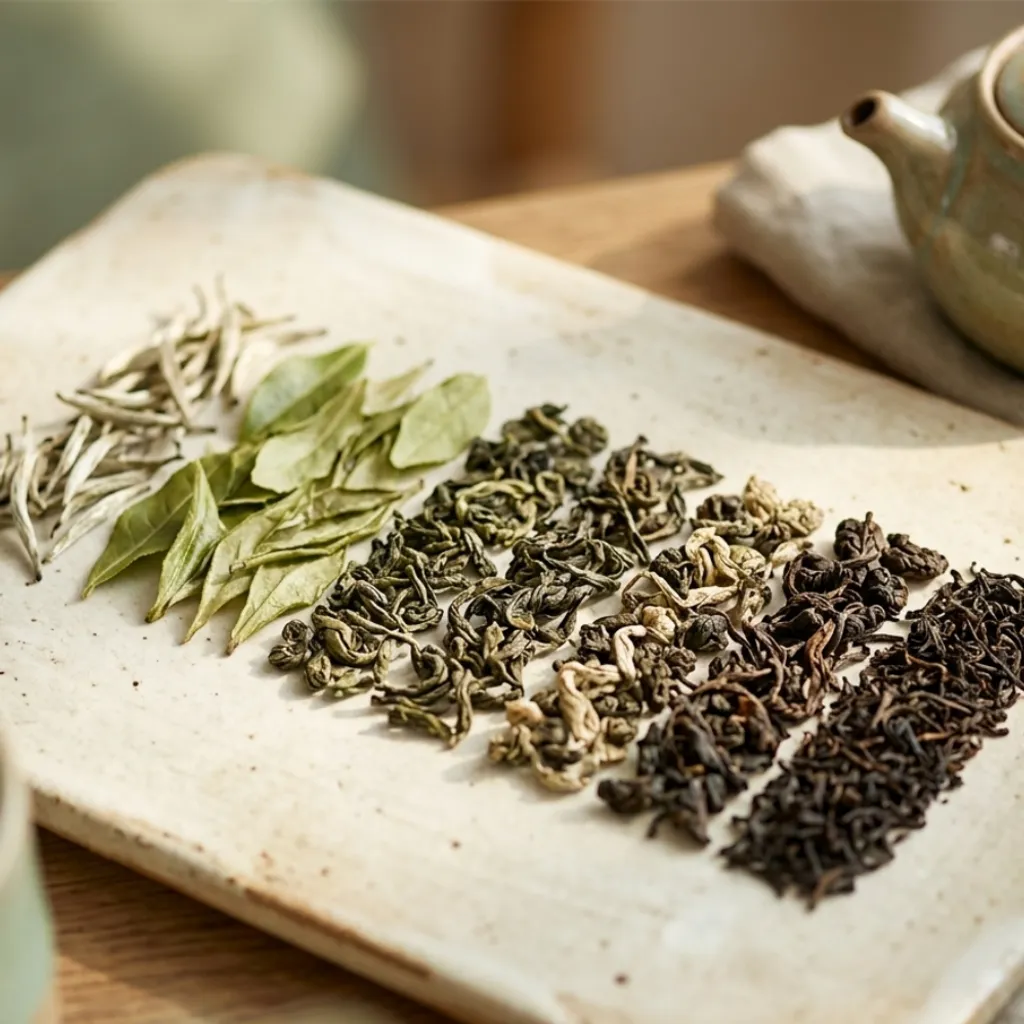
White, green, oolong, black - all tea comes from one bush
White, green, yellow, oolong, black and pu-erh are not different plants but one bush, Camellia sinensis. What sets them apart is how far the leaf is oxidised. A guide to the types of tea and their flavours.
Camellia sinensis - sinensis vs assamica, two varieties of one plant
All the world tea comes from one plant, but it has two main varieties. Sinensis vs assamica: leaf size, climate, flavour and which teas they suit. Where delicate green and strong black come from.
Tea cultivars - why they decide the flavour
Yabukita, Tieguanyin, Rou Gui: what a tea cultivar is and why the choice of variety decides the flavour even before processing. How one clone shapes the aroma of green, oolong and black.
Tea terroir - how altitude, mist and soil shape the flavour
Why high mountain tea is prized. Altitude, mist, clouds and soil: how terroir concentrates amino acids and umami while reducing bitterness. Where the sweetness and depth of the best teas come from.
Tea shading - the chemistry of umami in gyokuro, matcha and kabuse
How shading the bush before harvest raises L-theanine, lowers catechins and gives a deep, umami flavour. Gyokuro, matcha and kabuse: how many days in shade and where that sweet, brothy depth comes from. A guide with a table.
Imperial pluck - two leaves and a bud, the tea plucking standard
Why the best tea is picked as a bud and two youngest leaves. Plucking standards, fine plucking and the imperial pluck: how leaf age decides aroma, bitterness and quality. A guide with a table.
Tea flushes and seasons - how the time of harvest changes the flavour
First flush, second flush, autumn harvest: why the same plantation gives a different tea in spring, summer and autumn. Where the delicacy of spring and the muscatel of summer come from. A guide with a table.
Climate dilutes the flavor of tea - the monsoon effect and the quantity-quality tradeoff
In the rainy season more tea grows, but its flavor weakens. Heavy rains accelerate leaf growth but dilute catechins and caffeine by as much as half. Here is what the dilution effect is, why it hits farmers and what it says about the link between weather and flavor.
Withering - the first step from which every tea begins
Wilting the leaf is not waiting but activation. How withering evaporates water, wakes enzymes and creates sugars and aromas. Why white tea withers 3 days and black a dozen-odd hours. A guide with a table.
Orthodox vs CTC - how the way of rolling changes a tea infusion
Whole leaf or granules? Orthodox versus CTC: how rolling and crushing the leaf decides the complexity, strength and purpose of tea. Where the subtlety and the strength of tea bags come from. A guide with a table.
Fixing (kill-green) - how oxidation is stopped and why green tea stays green
Pan-firing or steam? Fixing deactivates the enzymes and decides that green tea stays green. Pan-fired versus steamed: where the roasty Chinese and grassy Japanese flavour come from. A guide with a table.
Oolong roasting (roast) and its levels - from floral to chocolatey
Roasting (hong bei) is the second dimension of oolong after oxidation. Light, medium and heavy roast change the flavour from floral to chocolate-smoky. The charcoal tradition and yancha - a guide with a table.
Microbial post-fermentation in heicha - how microbes make dark tea
Heicha, that is dark tea, matures thanks to microbes - bacteria, yeasts and fungi. Learn about post-fermentation, pile fermentation (wo dui) and golden flowers. Where the earthy, forest flavour of puerh and liu bao comes from - a guide.
L-theanine, caffeine, catechins (EGCG) - the trio of tea
Why does tea stimulate differently from coffee - calmly and without the jitters? A trio decides: L-theanine (umami and calm), caffeine (energy) and catechins like EGCG (astringency and antioxidants). How they work together - a guide with a table.
L-theanine - 200 mg of zen, or why tea calms differently than coffee
L-theanine is an amino acid found almost exclusively in tea that quiets the mind and supports alpha brain waves linked to calm concentration. This is why tea stimulates more gently than coffee. Here is how L-theanine works and why Zen monks drank matcha long before EEG was discovered.
Theaflavins and thearubigins - where the colour and strength of black tea come from
Why is black tea coppery-red and strong? From catechins during oxidation two compounds form: theaflavins (brightness, briskness) and thearubigins (colour, body). How together they make the flavour of black - a guide with a table.
Tea aroma compounds: geraniol, linalool - where the floral comes from
Where does the floral scent of tea come from? Volatile compounds answer: geraniol with a rose note, linalool with a lily note and other terpenes. Learn the role of glycosides and processing, why oolong and black tea can be so floral. A guide with a table.
Tea blends vs single origin
Tea from one garden or a mixture of many? Learn the two philosophies: single origin celebrating terroir and vintage variation, and blends betting on consistency and balance. Find out why tea is blended and what to choose. A guide with a table.
Tea off-flavours - mustiness, over-roasting, age
Tea has faults too. Learn the main off-flavours: mustiness from bad storage, over-roasting from excessive firing and notes of age from loss of freshness. How to recognise them and when it is a fault and when a feature. A guide with a table.
Why your tea tastes bitter (and how to fix it)
Your tea comes out bitter and astringent, so you drown it in sugar? It is almost never the tea - it is the brewing. A relaxed, practical guide to finally brewing and tasting tea.
Why green tea turns bitter - the chemistry of catechins and temperature
Green tea can turn unpleasantly bitter, especially when you pour boiling water over it or leave it too long. Catechins and temperature are to blame. Here is what happens to tea in chemistry and why brewing with cooler water saves the flavor.
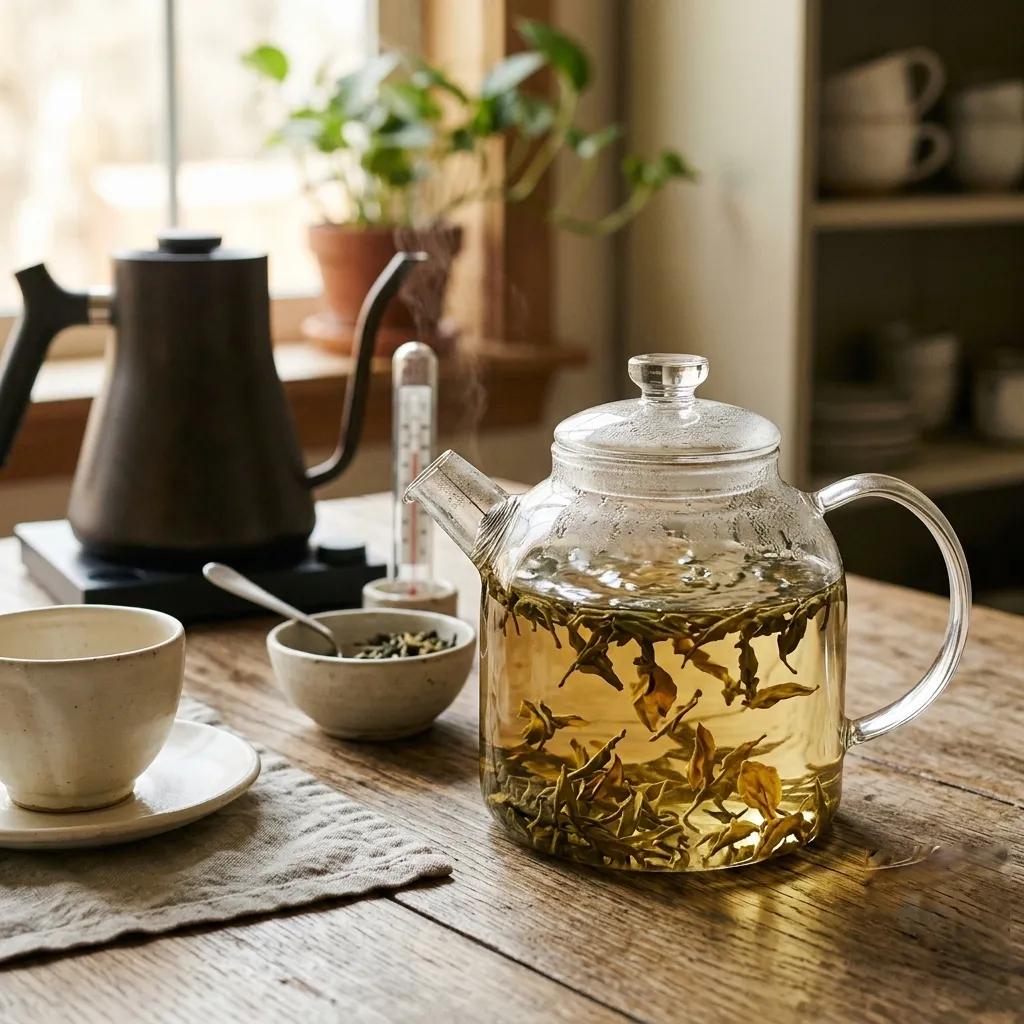
How to brew tea - temperature and time for every type
Boiling water and over-steeping are the most common reasons for bitter tea. Temperature and time for white, green, oolong, black and herbal - a simple cheat sheet.
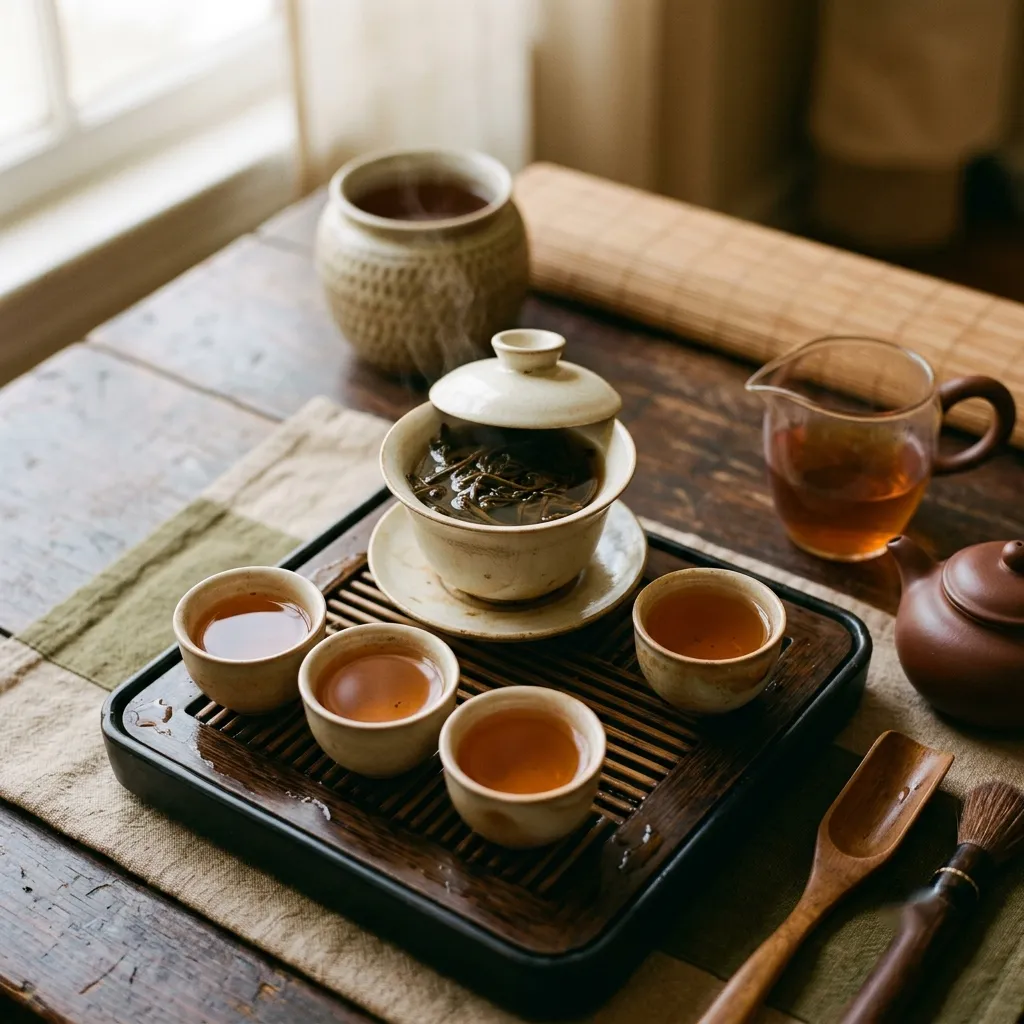
One tea, many infusions - how to steep loose leaf again and again
Good loose-leaf tea is worth several brews from the same leaves, and each infusion tastes different. How to steep multiple times, short and without special gear.
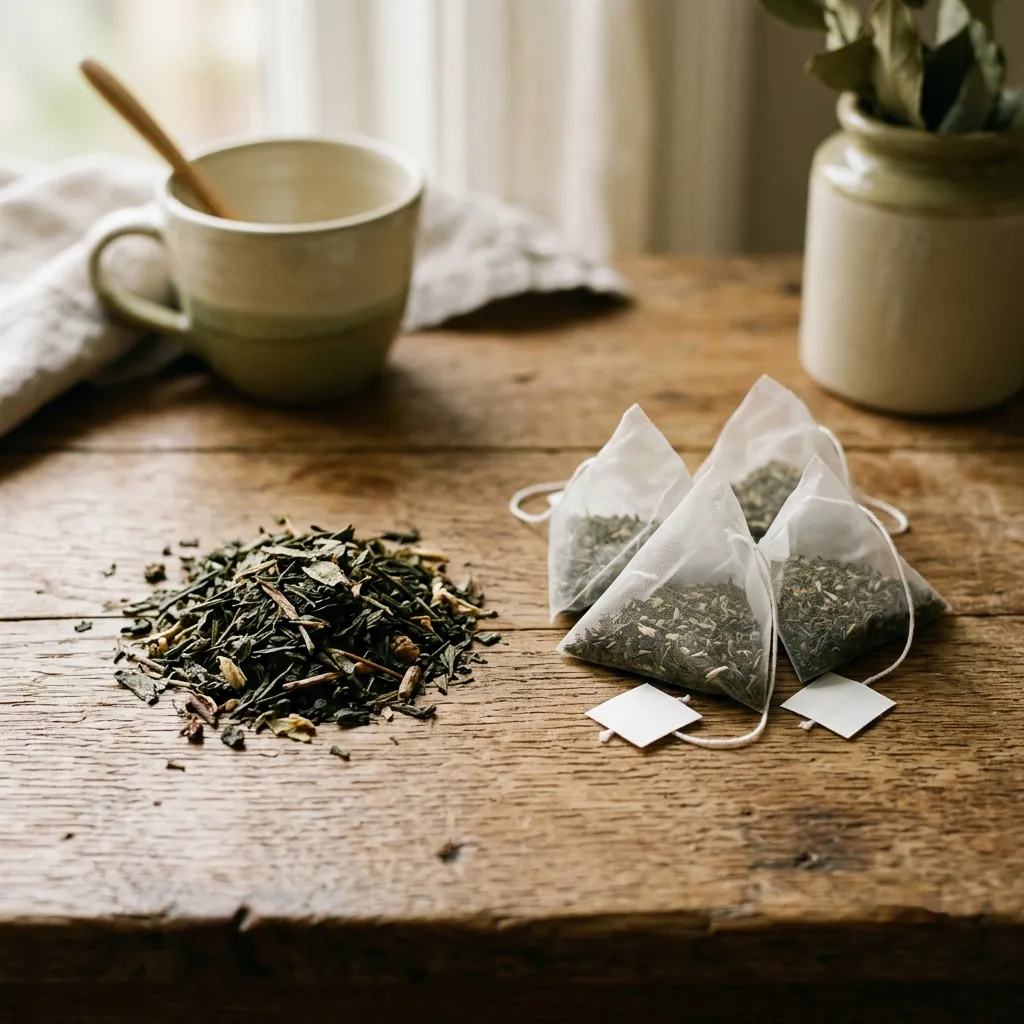
Leaf or bag - does loose tea really taste better
Does loose tea really taste better than a bag, or is it just snobbery? What is inside tea bags, why leaves need room, and when a bag is enough.
Caffeine in tea - why it energises differently than coffee
Tea has caffeine, but it works more gently and lasts longer than in coffee. The reason is L-theanine and how you brew. How much caffeine in green, black and matcha, and how to control it.
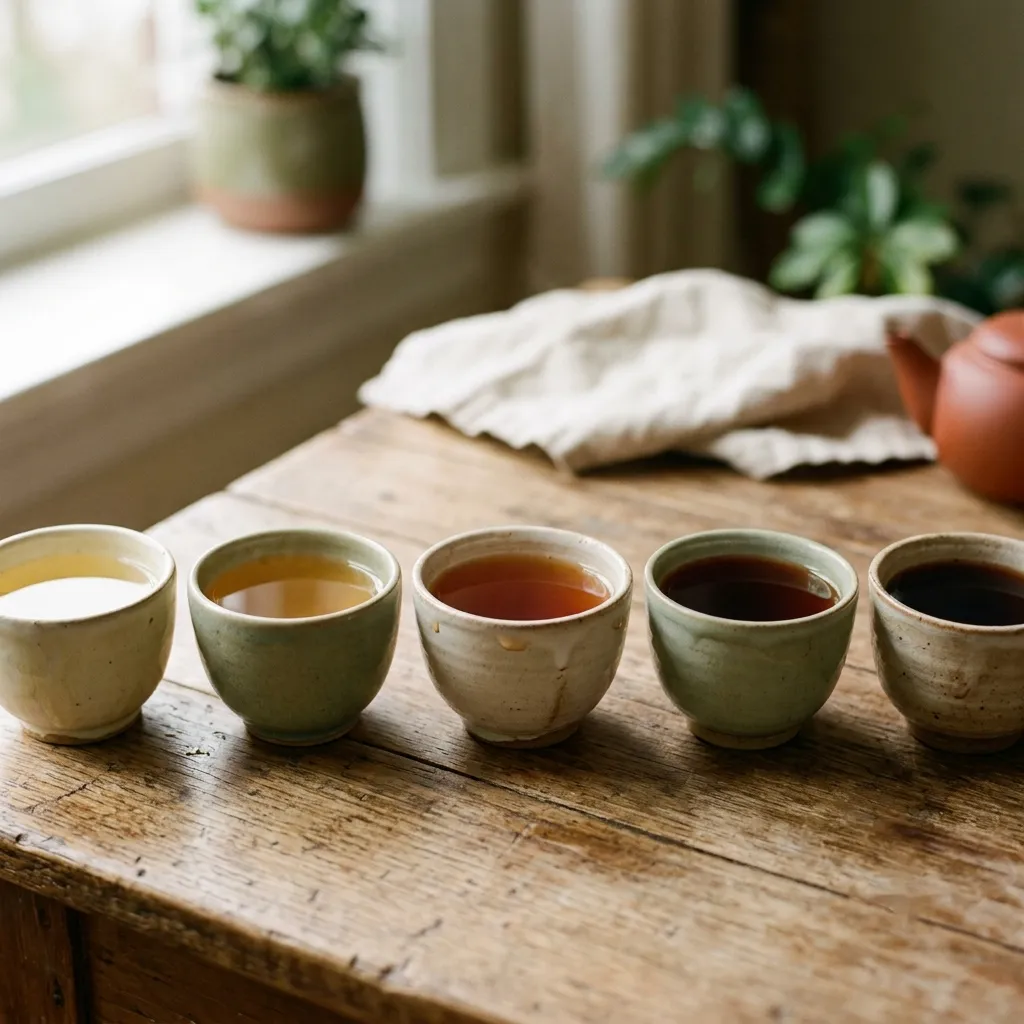
How to taste tea side by side - a home comparison
You learn the most about tea when you brew several side by side under the same conditions. How to set up a comparative tasting at home, in what order, and what to look for in the cup.
Professional tea cupping - how tea is assessed in the industry
How do professional tasters assess tea? Learn professional cupping: the ISO 3103 standard, the tasting set, the slurping technique and the taster vocabulary (brisk, malty, pungent). How the leaf and the liquor are assessed. A guide with a table.
Tocha - medieval Japanese tea-guessing tournaments
In medieval Japan gambling tournaments were held in which tasters tried to guess the origin of tea. Tocha combined tasting, bets and opulence, until the authorities banned it. Here is the story of these contests and their link with the tea ceremony.
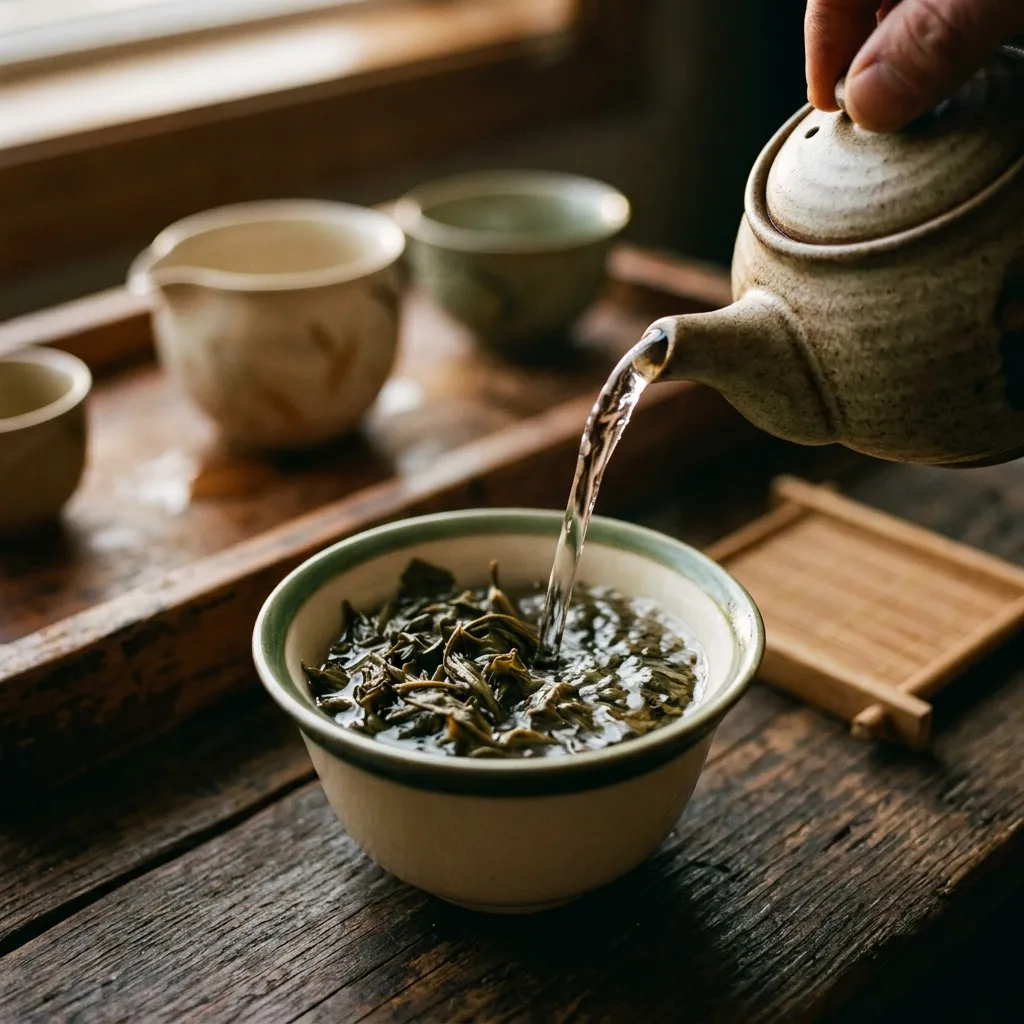
Should you discard the first steep of tea? The rinse myth
A rule goes around that you always pour out the first infusion - for hygiene or to remove caffeine. The truth: with most teas you are pouring away the best flavour. When rinsing makes sense and when it is a waste.
Sticking out your pinky at tea is not elegance, but a faux pas
Contrary to pop culture, sticking out your little finger while drinking tea is not a sign of class but of pretentiousness, which Emily Post herself deemed improper. Here is where this fashion came from, why today it makes you a poser, and how to really hold the cup with class.
Monkey picked - the myth of monkeys that supposedly picked tea
There is a story that the best tea was picked by trained monkeys. It is a myth deliberately invented by merchants to boost sales in the West. Monkeys never picked tea. Here is where this myth came from, what the name monkey picked really means and how it survived for centuries.
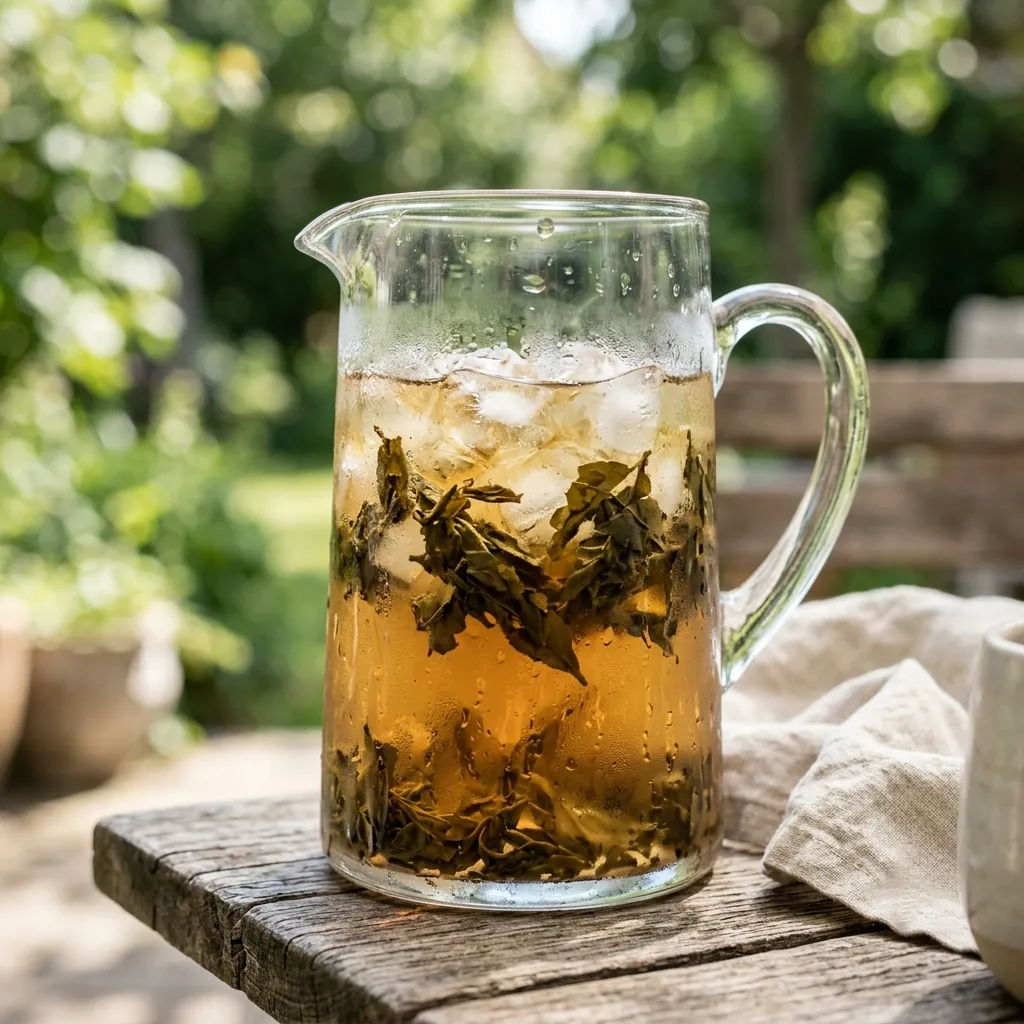
Iced tea done cold - cold brew that never turns bitter
Homemade iced tea often comes out bitter and cloudy. Cold brewing solves it overnight: a sweet, clear, low-bitterness infusion with no sugar. Ratios, time and which teas to choose.
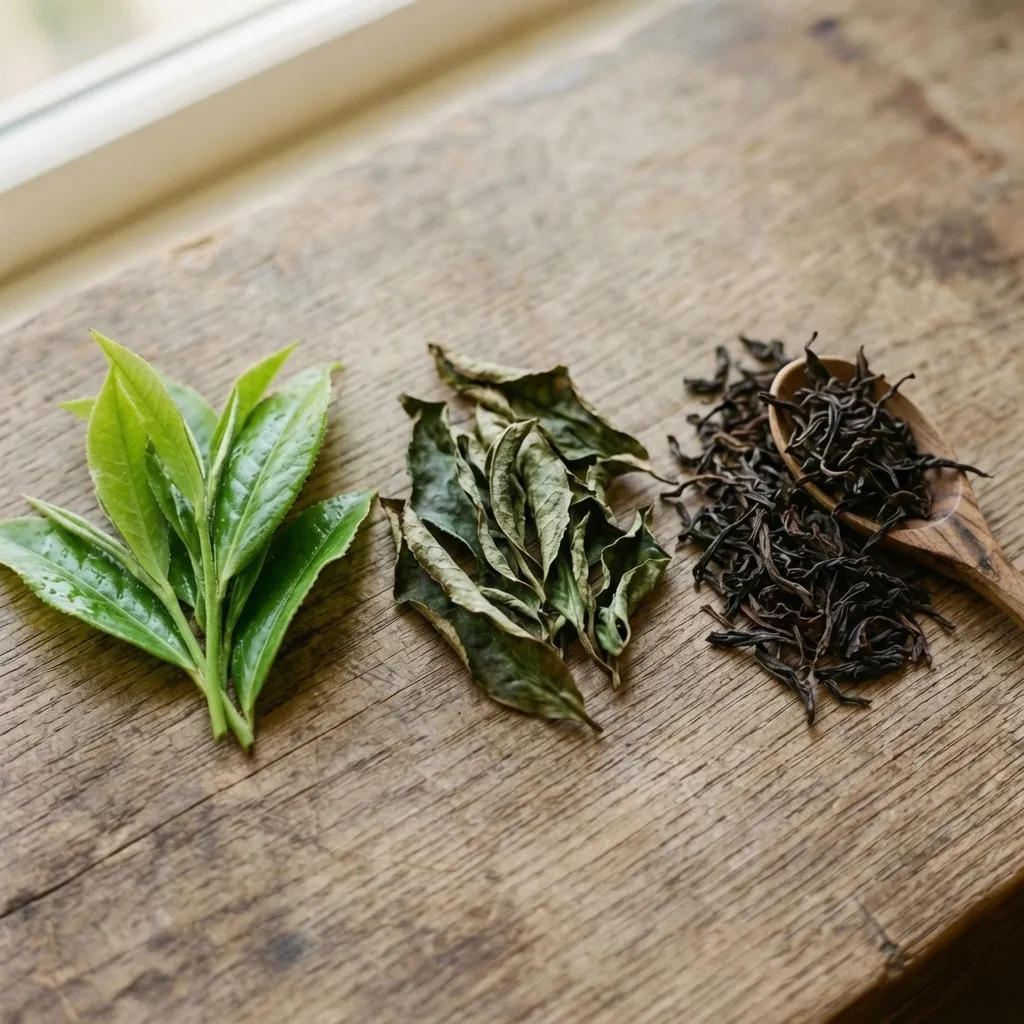
How tea is made - from leaf to cup
White, green, oolong, black and pu-erh all come from the leaves of one shrub. Five steps of production and the one that decides everything, oxidation. Where the flavour of tea is born.
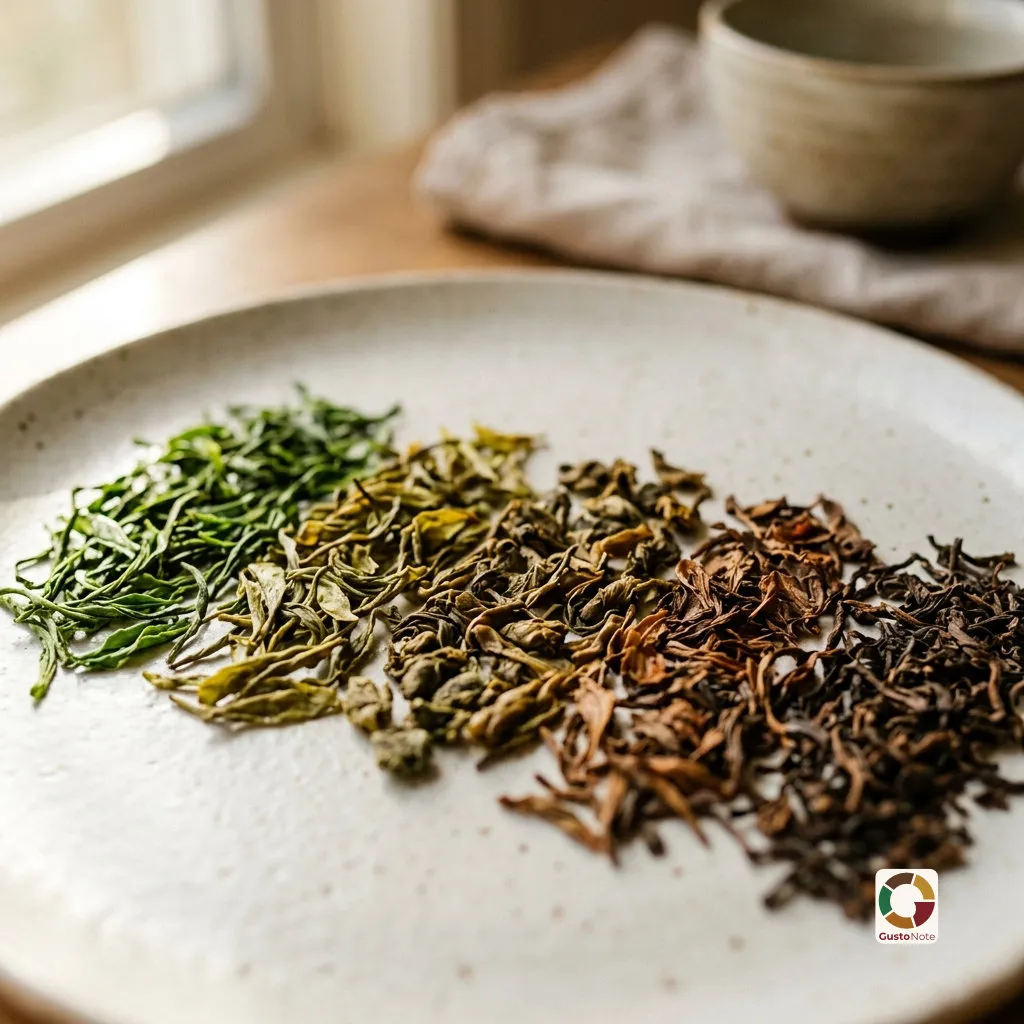
What oxidation is and why it divides teas
One process decides whether a leaf becomes green, oolong or black tea. What oxidation is, why it is not the same as fermentation, and how to taste it in the cup.
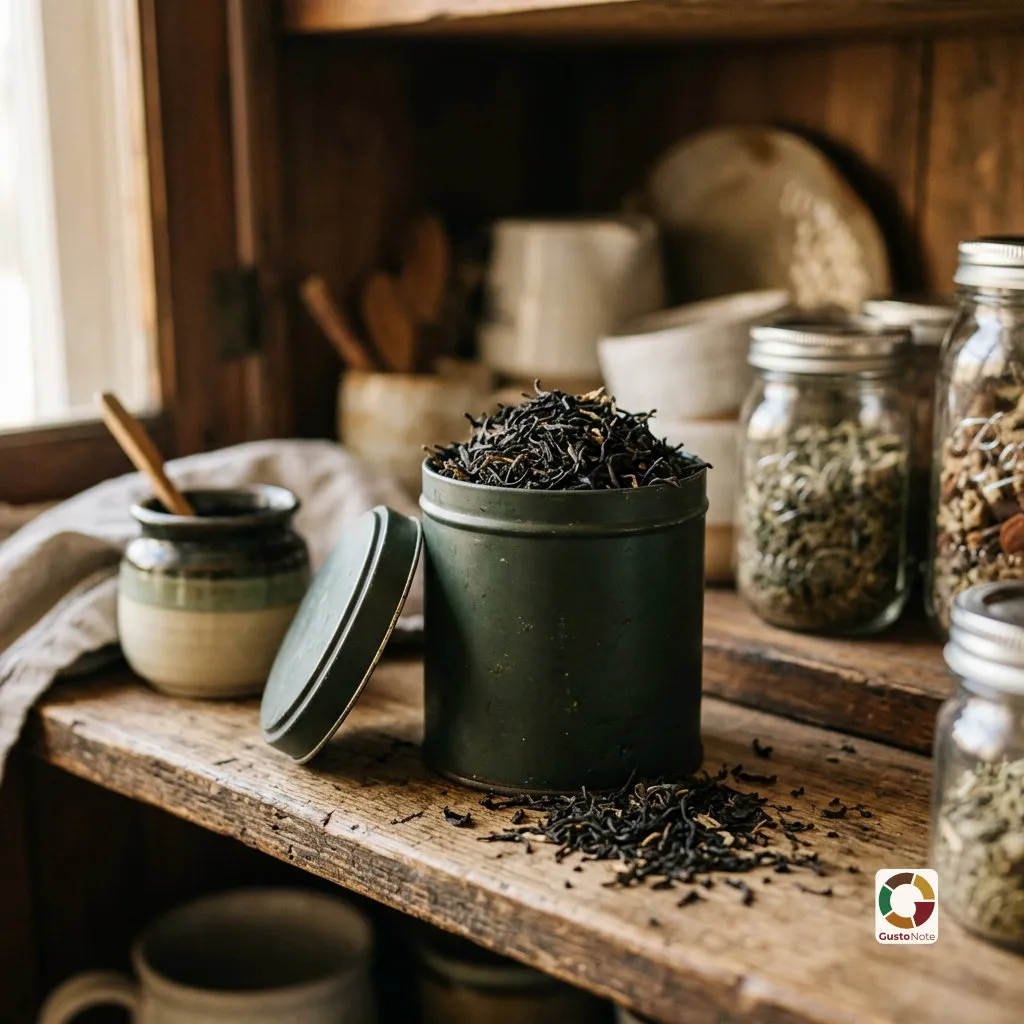
How to store tea so it keeps its flavour
Good tea loses its aroma faster than you think. The four enemies of the leaf, one simple container rule, and why the fridge is usually a bad idea. How to store tea and drink what you paid for.
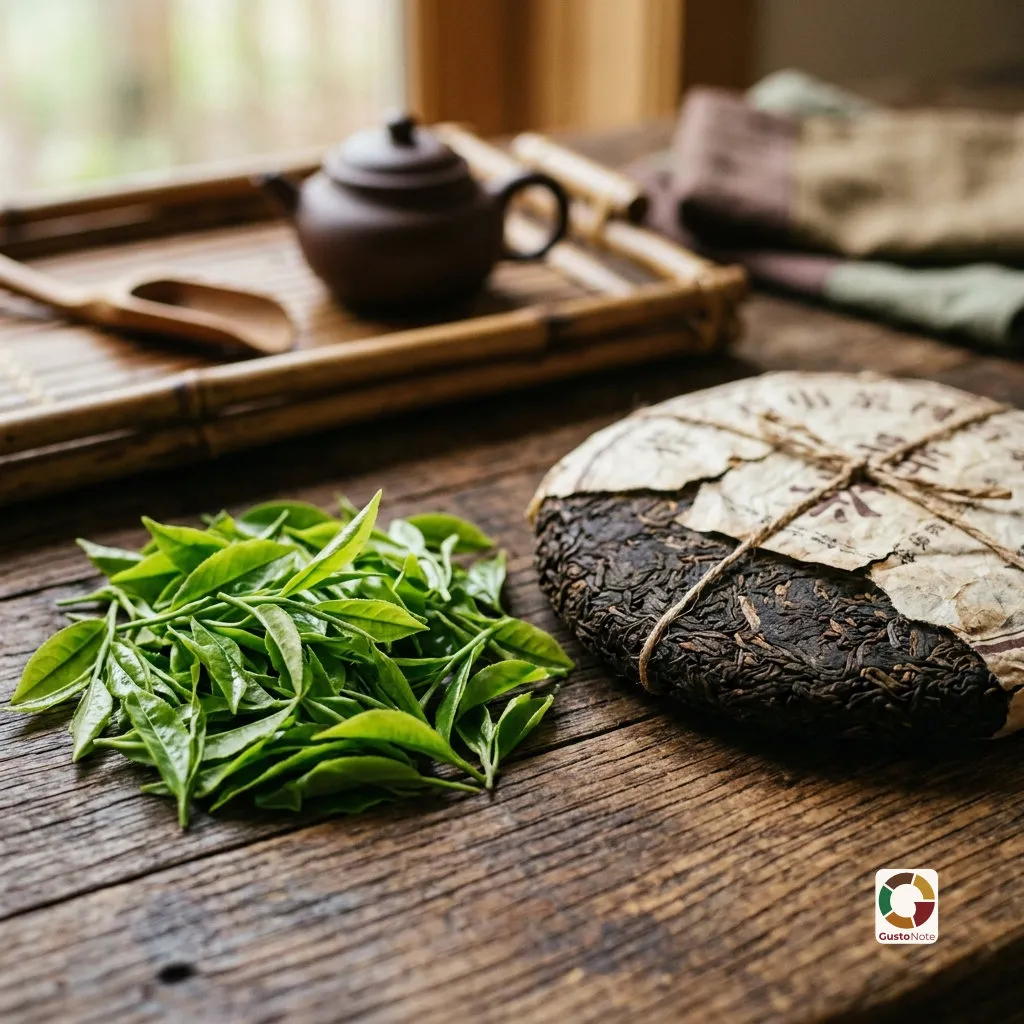
Freshness or age - when older tea is better
Most teas are drunk fresh, but pu-erh ages for years and gains value. Which teas to drink right away, which to set aside, and why age is sometimes a fault and sometimes an asset.
Aging white tea: how it gains with the years
White tea, especially Shou Mei, does not lose with the years, but gains. Fresh, floral notes give way to honey, dried fruit and herbs. Learn how white tea ages, why it is suited to cellaring and how to store it. A guide with a table.
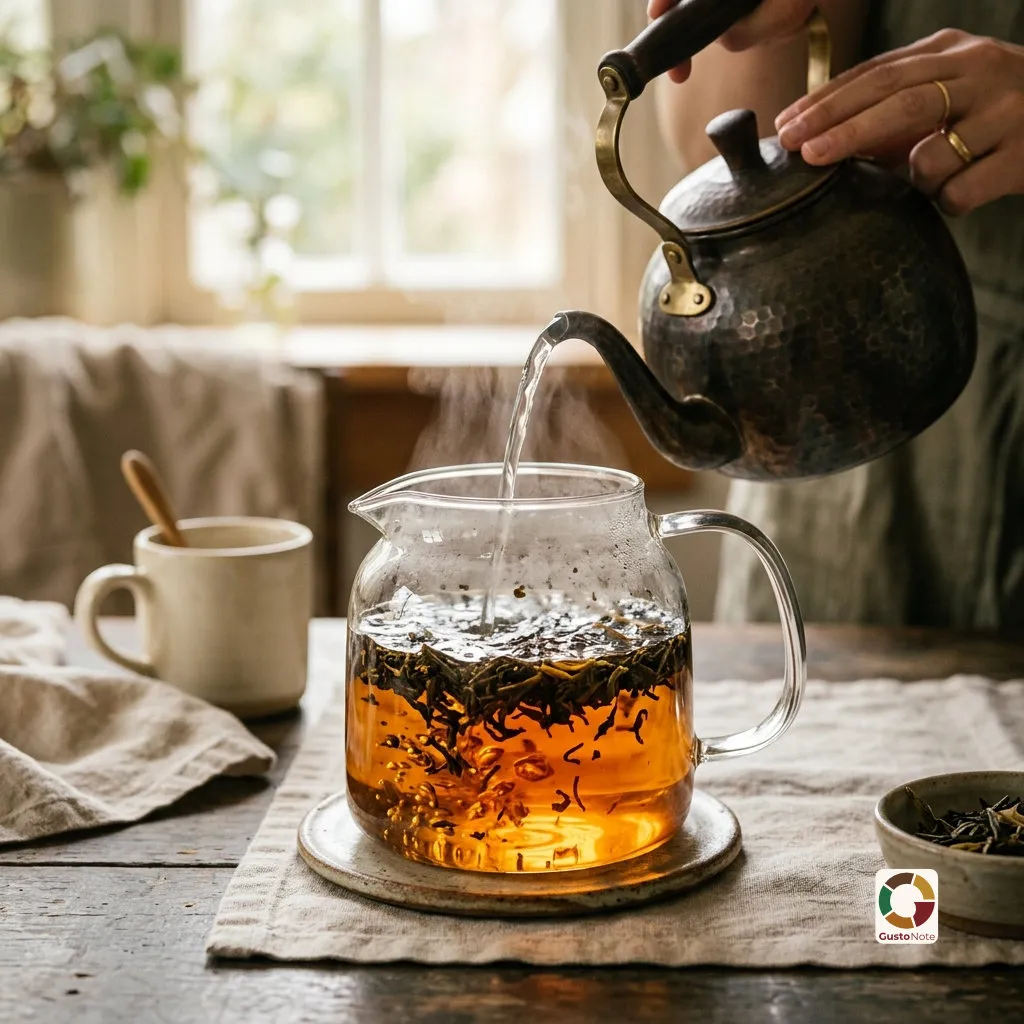
Water for tea - why it matters and which to choose
A cup of tea is over 98% water, and its makeup can change the flavour more than the tea itself. Why hard water flattens the brew, whether to filter, and which water draws the most from the leaf.
Does tea dehydrate you - what science says
Tea has caffeine, so it dehydrates? Hardly. Studies show that tea in moderation hydrates like water. How much you can drink, how it differs from coffee and what about herbal teas.
Antioxidants in tea - facts, myths and what science says
Tea is famous for its health properties and antioxidants. What catechins and EGCG are, how much truth there is, how to brew for health and whether tea is a miracle elixir. Without overstatement.
Organic and pesticide-free tea
Organic tea is not just a pretty sticker, but a system of rigorous rules. Get to know the difference between pesticide-free tea and certified organic (e.g. JAS), why certification is sometimes hard for small farms and when it is worth choosing organic. A guide with a table.
Tea and sleep - which to drink in the evening to sleep well
Tea before bed - does it help or hinder? It depends on the type. Which teas calm you, which to avoid in the evening, how caffeine and L-theanine work and why chamomile makes you sleepy.
Does green tea help weight loss - what science really says
Green tea is a supposed miracle fat burner. What do studies say? The effect is real but modest. How EGCG works, how much truth in the weight-loss slogans and what to expect.
Tea and food - how to pair tea with dishes
Tea can be paired with food like wine. Green with sushi, black with meat, oolong with almost everything. How to match tea with dishes and desserts so the flavours play together.
Tea with dessert and chocolate - how to pair them
Tea pairs with sweets like wine. Matcha with white chocolate, black with milk chocolate, oolong with nutty cakes. How to pair tea with desserts and chocolate so the flavours play together.
Tea as a gift - how to choose so you hit the mark
Tea is a great, personal gift if you know how to choose. Which teas to give a beginner, what to add to the set and how not to miss the mark. A practical guide.
How to read a tea label - harvest, cultivar, region
A good tea label says more than you think. How to read the markings: region, harvest (first flush), cultivar and grade. What is really worth checking and what to skip. A practical guide.
Winter warming teas - spiced and warming infusions
In winter tea warms from within. The best warming teas: spiced chai, ginger, cinnamon, warming spices. What genuinely warms the body and how to compose the perfect winter cup.
Teas for a cold - what really works
Ginger, honey, lemon, peppermint. Which teas and infusions genuinely help with a cold and sore throat, what the research says and how to drink them so they work. A practical guide, no miracle promises.
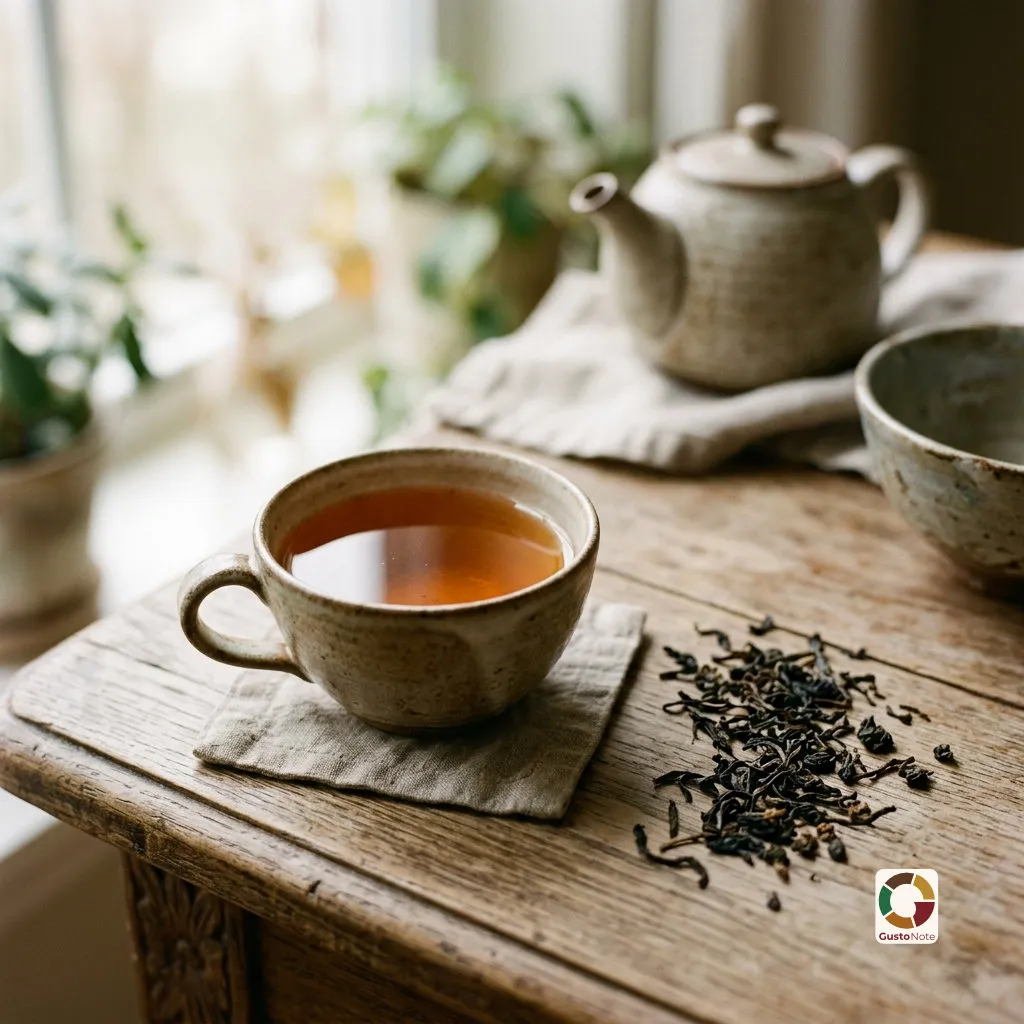
The tea tasting profile - aroma, body, astringency and aftertaste
Four dimensions used to describe any tea: aroma, body, astringency and aftertaste. What each one means, how to separate them in the cup, and how to start naming flavour in your own words.
How to recognise a good-quality tea leaf by its appearance
Before you brew, the dry leaf reveals a lot about a tea. Learn the signals of quality: whole versus broken leaf, colour, uniformity, golden buds, cleanliness and twist, and what appearance will not tell you. A guide with a table.
Panda dung tea - the worlds most expensive tea fertilized with panda droppings
Tea fertilized with panda droppings was sold as the most expensive in the world, for astronomical sums. Its creator promoted it in a panda costume. Here is the story of this marketing absurdity, the argument behind the idea and what it says about luxury teas.
Prussian blue and poisons - how tea was faked in the nineteenth century
In the nineteenth century fraudsters dyed tea with Prussian blue and gypsum to give it the right color, and fake tea was made from foreign leaves and toxic dyes. Here is the story of the mass faking of tea, its health effects and how it led to the first food laws.
Tea grades - OP, FTGFOP, pekoe and what these abbreviations mean
Mysterious abbreviations on tea like OP, FTGFOP or BOP are the orange pekoe grading system. Learn the hierarchy of whole and broken leaf, the meaning of the letters, what a grade really says and what it does not. A guide with a table.
Tea leaf shapes: balls, needles, twists and why they are given
Tea leaves are sometimes rolled into balls, twisted into needles or into long strands. It is not just aesthetics - the shape forms during rolling, which breaks the cells, shapes flavour and protects aroma. Get to know the main leaf forms and why they are given. A guide with a table.
Hand versus machine harvesting: how harvest changes tea quality
The way tea is harvested decides its quality. Hand harvesting lets you choose only the bud and two leaves, machine harvesting takes everything without choice and tears the leaves. Get to know the differences between hand and machine harvesting and why the best teas are picked by hand. A guide with a table.
AI sorts tea leaves better and faster than a human
Machine vision models can classify tea leaves by size, shape, color and defects in a fraction of a second, with accuracy exceeding 90 percent. Here is how artificial intelligence is entering the traditional grading of tea and where the human sense still wins.
Decaf tea: how caffeine is removed from the leaf
Decaffeinated tea is made by removing caffeine from the leaf by one of four methods: CO2, ethyl acetate, water or methylene chloride. Get to know each of them, learn how they affect flavour and why decaf is not entirely caffeine-free. A guide with a table.
Milk in tea: the milk-first debate and British tradition
Milk first or tea first? This British debate divides generations. Get to know the history of adding milk, the class subtext of the dispute, the science of protein and tannins, and whether the order really changes the flavour. A guide with a table.
Terroir: do coffee and tea have it like wine
Terroir is the taste of a place, a concept known from wine. But do coffee and tea have it too? Learn the role of altitude, soil and climate in shaping the flavour of three drinks and why single origin is a terroir argument. A guide with a table.
Umami in drinks: tea, sake, wine - the fifth taste in the glass
Umami, the fifth taste, is not only food - it also hides in tea, sake and wine. Learn where this savoury, full, meaty taste comes from, why gyokuro has the most of it and how to sense it in the glass. The fifth taste in drinks. A guide with a table.
Tea types
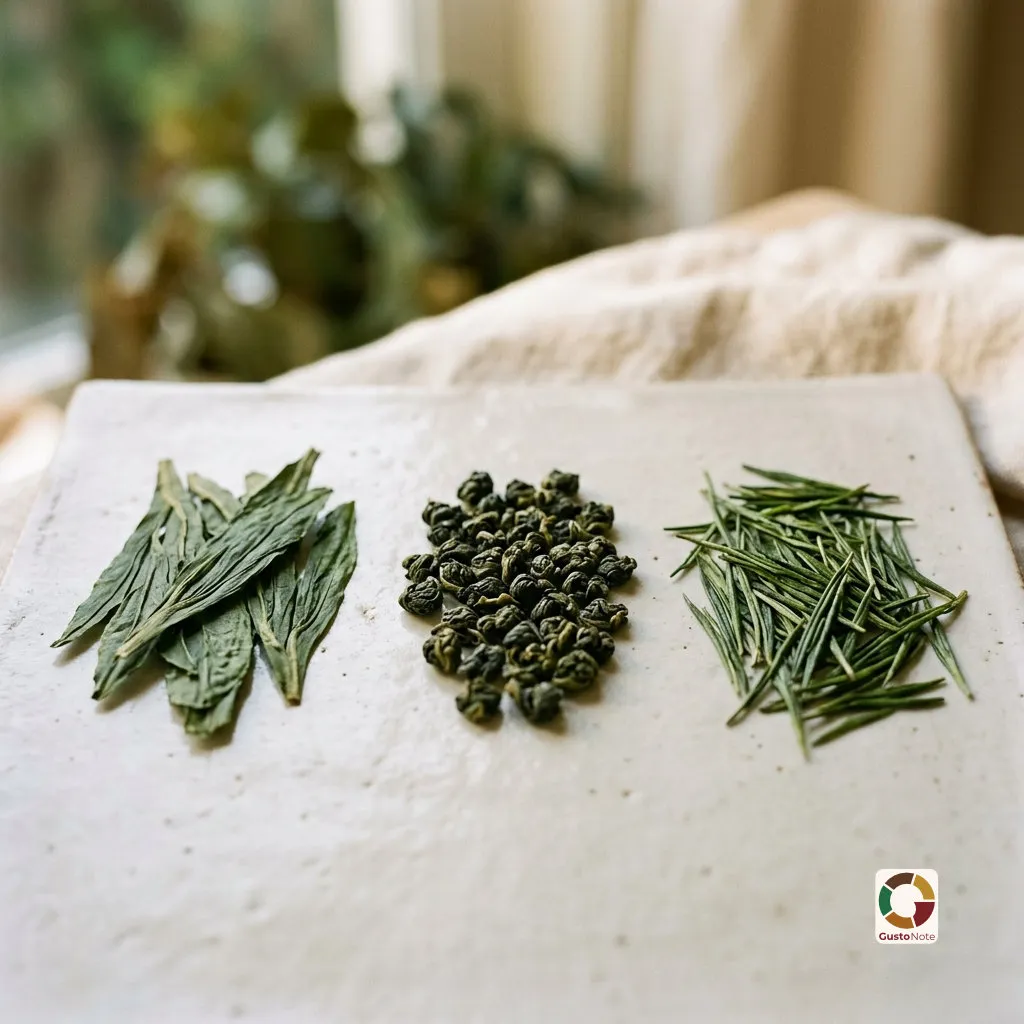
Green tea - sencha, gyokuro, gunpowder and longjing
Green tea is not one flavour but a whole family. What separates steamed teas from pan-fired ones, how sencha, gyokuro, gunpowder and longjing differ, and how to brew them so they do not turn bitter.
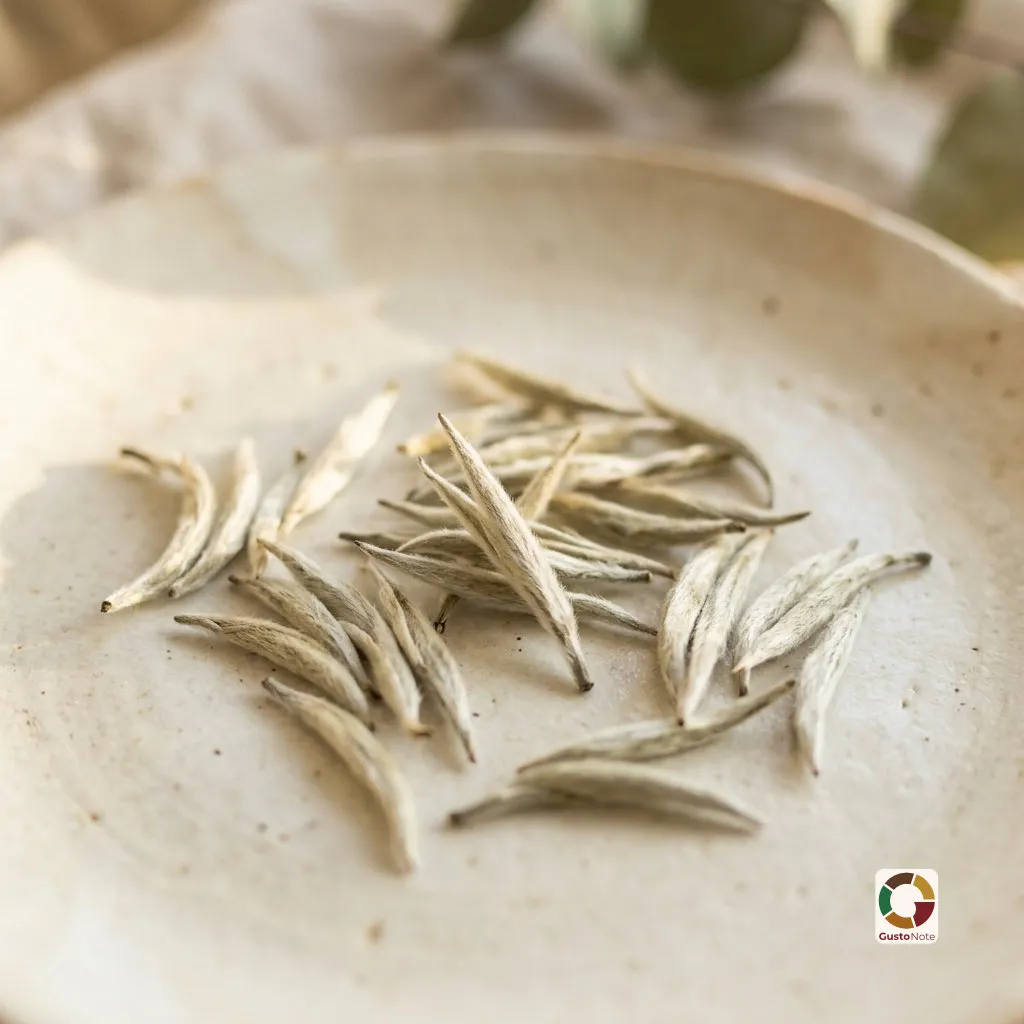
White tea - the least processed and most underrated
White tea is just a withered and dried leaf, with no pan-firing or steaming. Where the name comes from, how Silver Needle, White Peony and Shou Mei differ, why it can age for years, and why the no-caffeine myth is false.
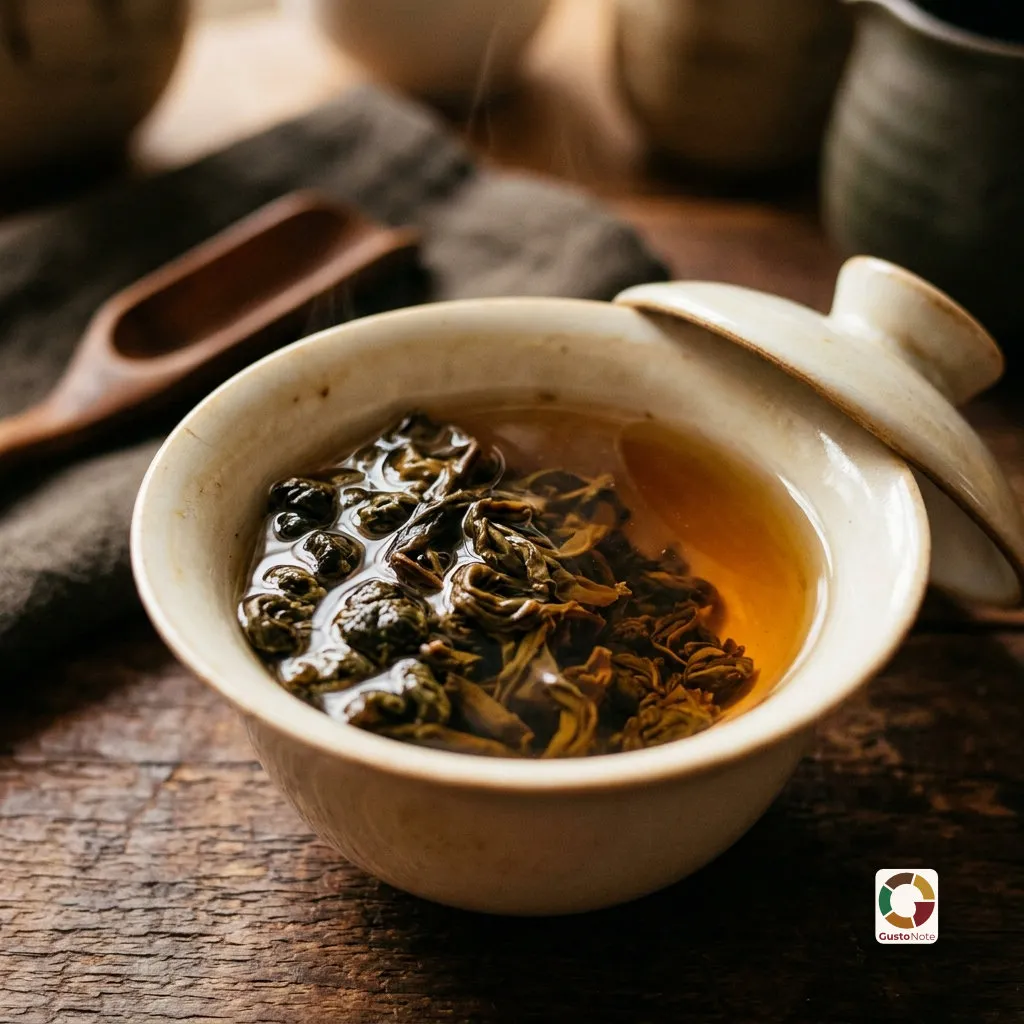
Oolong - the tea between green and black
Oolong is the widest world of flavour among teas, from floral to roasted and honeyed. What partial oxidation is, how Tieguanyin, Wuyi rock teas, Dong Ding and Oriental Beauty differ, and how to brew oolong gongfu style.
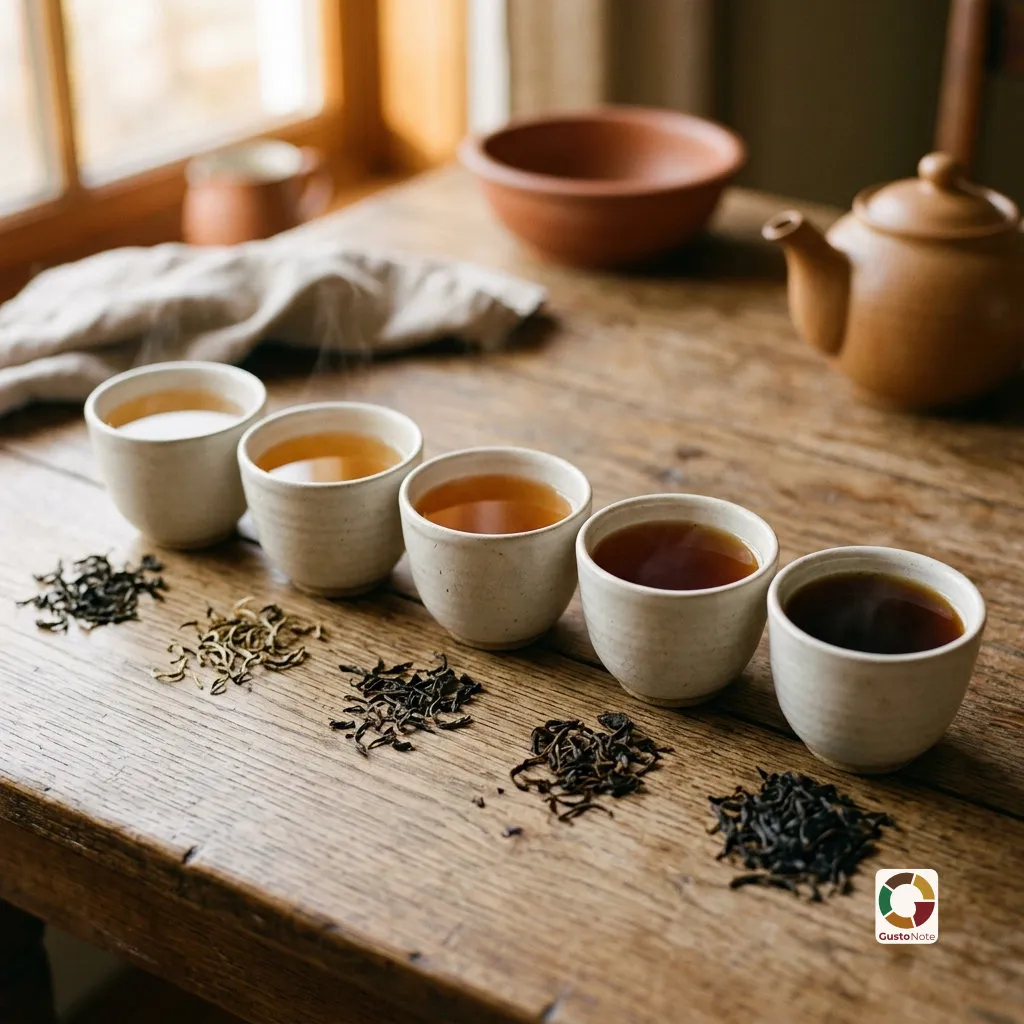
Black tea - Darjeeling, Assam, Ceylon and Yunnan
Black tea is not one flavour but a map of regions: muscatel Darjeeling, malty Assam, citrusy Ceylon and chocolatey Yunnan. How these lands differ, where their character comes from, and how to brew them.
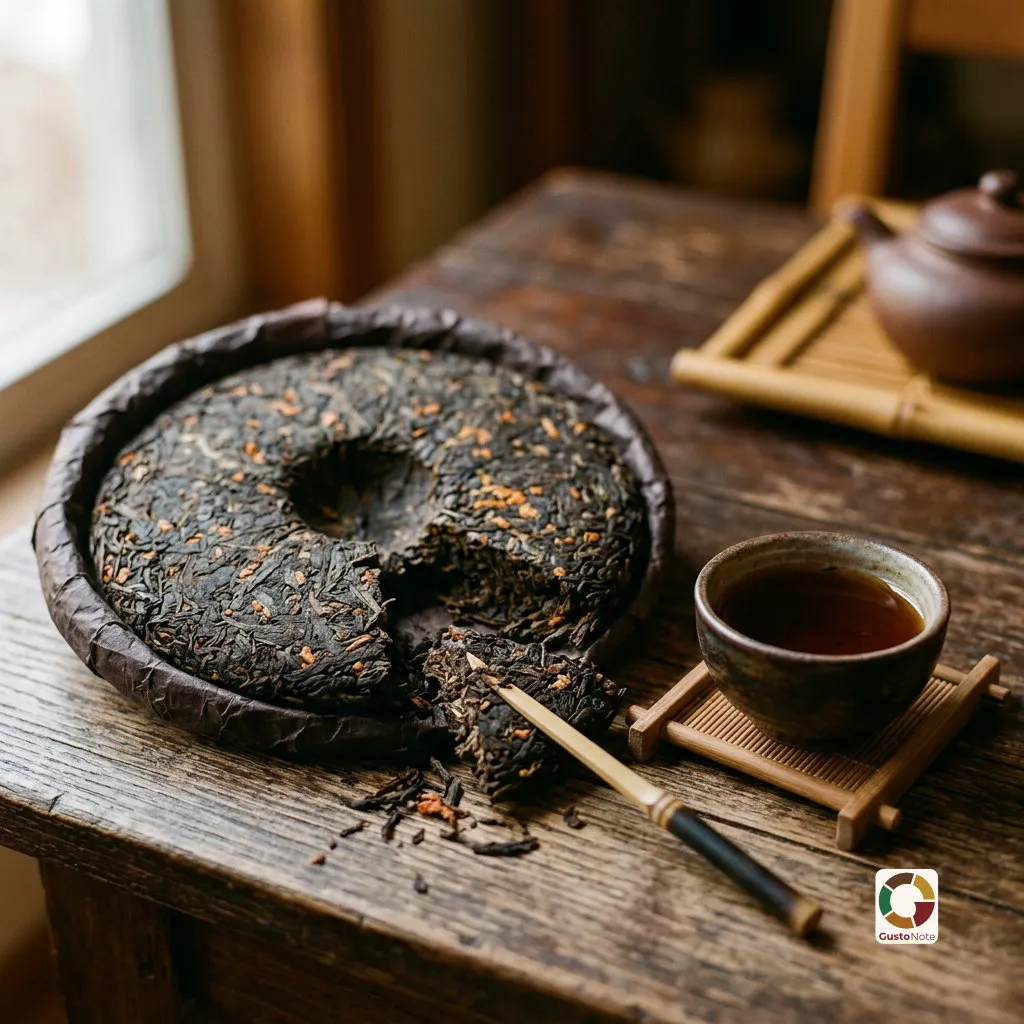
Pu-erh - sheng versus shou, the tea that ages
Pu-erh is the only truly fermented tea, one that ages for years like wine. How raw sheng differs from ripe shou, what the wet-piling wo dui process is, and how to brew the compressed cakes from Yunnan.
Aging and storing pu-erh as an investment
Pu-erh is a tea that matures over years like wine. Learn the difference between dry and wet storage, the ideal humidity and temperature conditions, how the flavour changes over time and the real risks of treating pu-erh as an investment. A guide with a table.
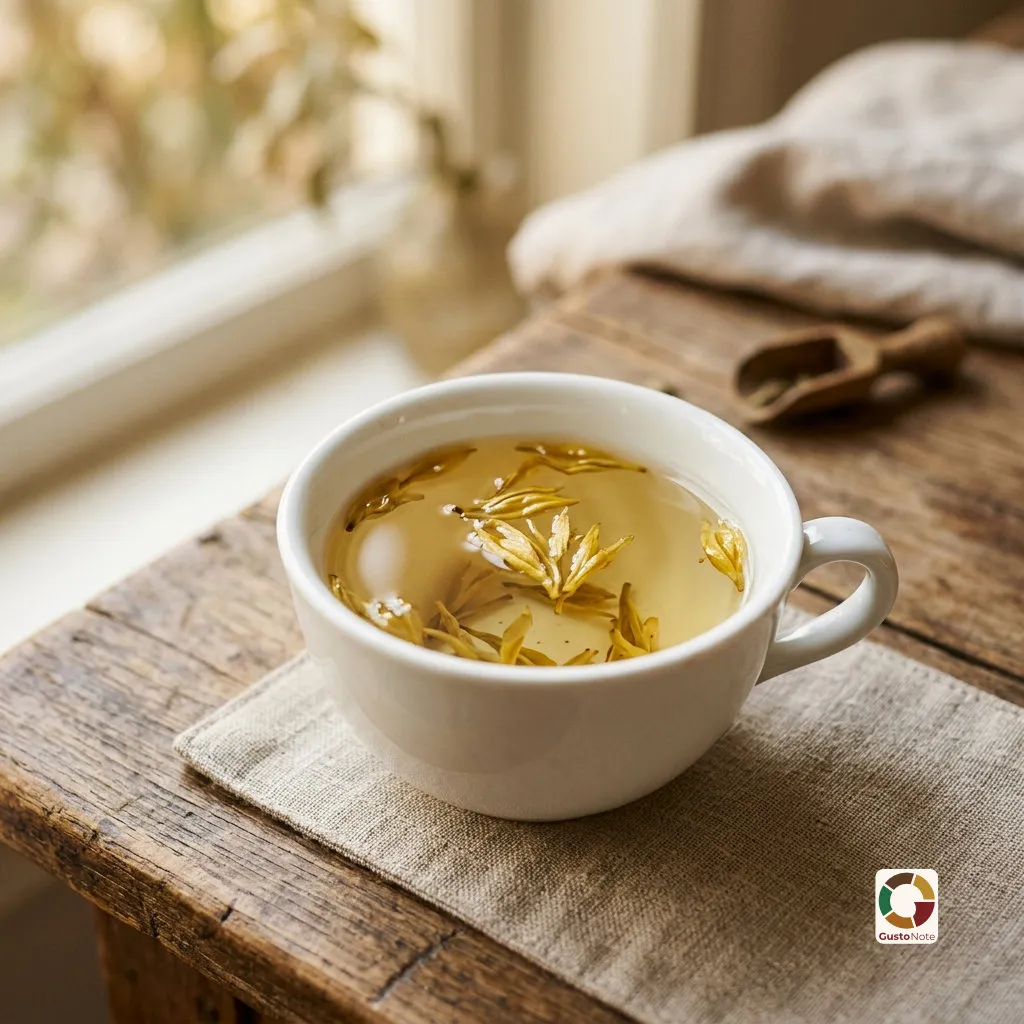
Yellow tea - the rarest of the six types
Yellow tea is the rarest type of tea in the world, similar to green but with an extra yellowing step. What the men huang process is, why it is so mellow and sweet, and which classics are worth knowing.
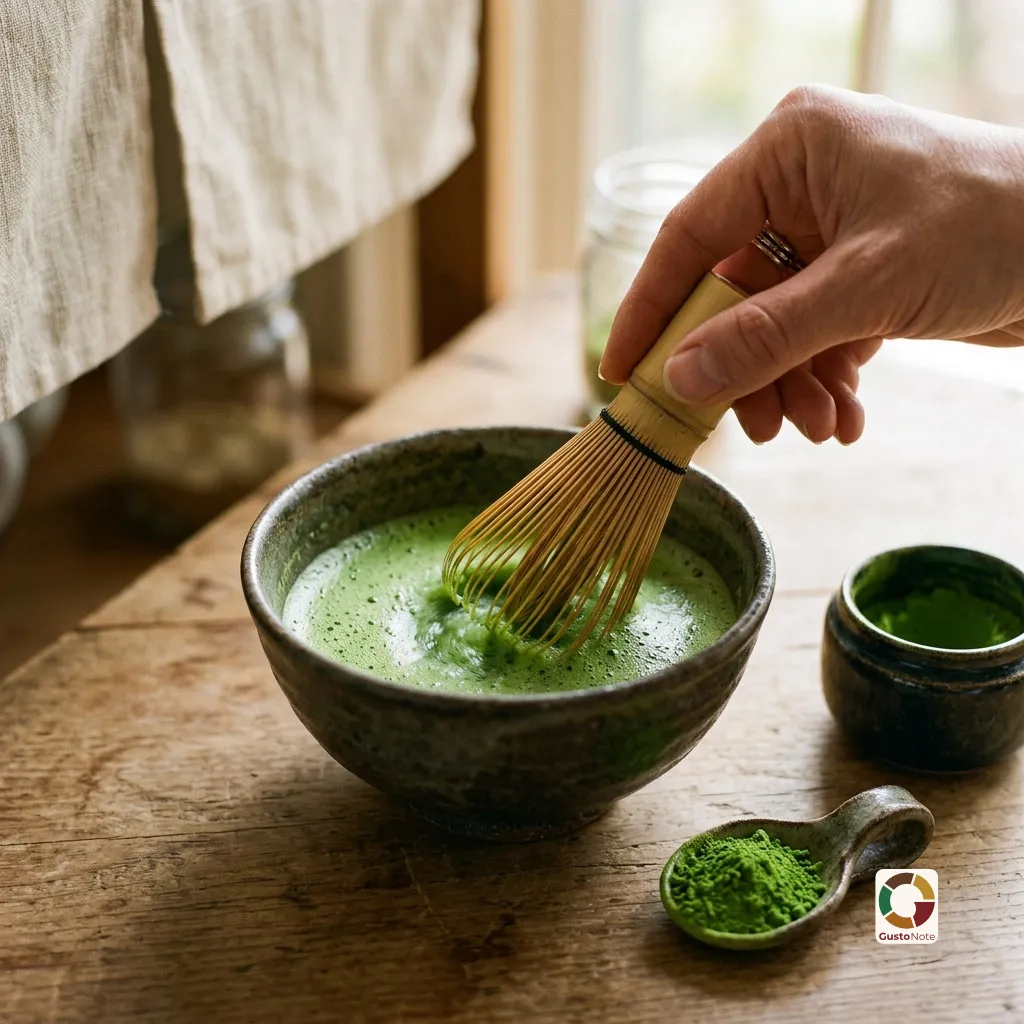
Matcha - the powdered, ceremonial tea you drink whole
Matcha is not an infusion but the whole leaf drunk as a powder. Why the bushes are shaded before harvest, how tencha is stone-ground in granite mills, how ceremonial grade differs from culinary, and how to whisk it.
Matcha grades: ceremonial versus culinary
Ceremonial, premium, culinary - what really lies behind matcha grades? Learn the differences in leaf, shading, colour and texture, find out what each grade suits and how not to be fooled by empty labels. A guide with a table.
Tencha: the raw material from which matcha is ground
Matcha is not made from just any tea - its raw material is tencha, a shaded, steamed and unrolled tea. Learn what tencha is, how it is grown and processed, why its leaves are not rolled and how it becomes matcha. A guide with a table.
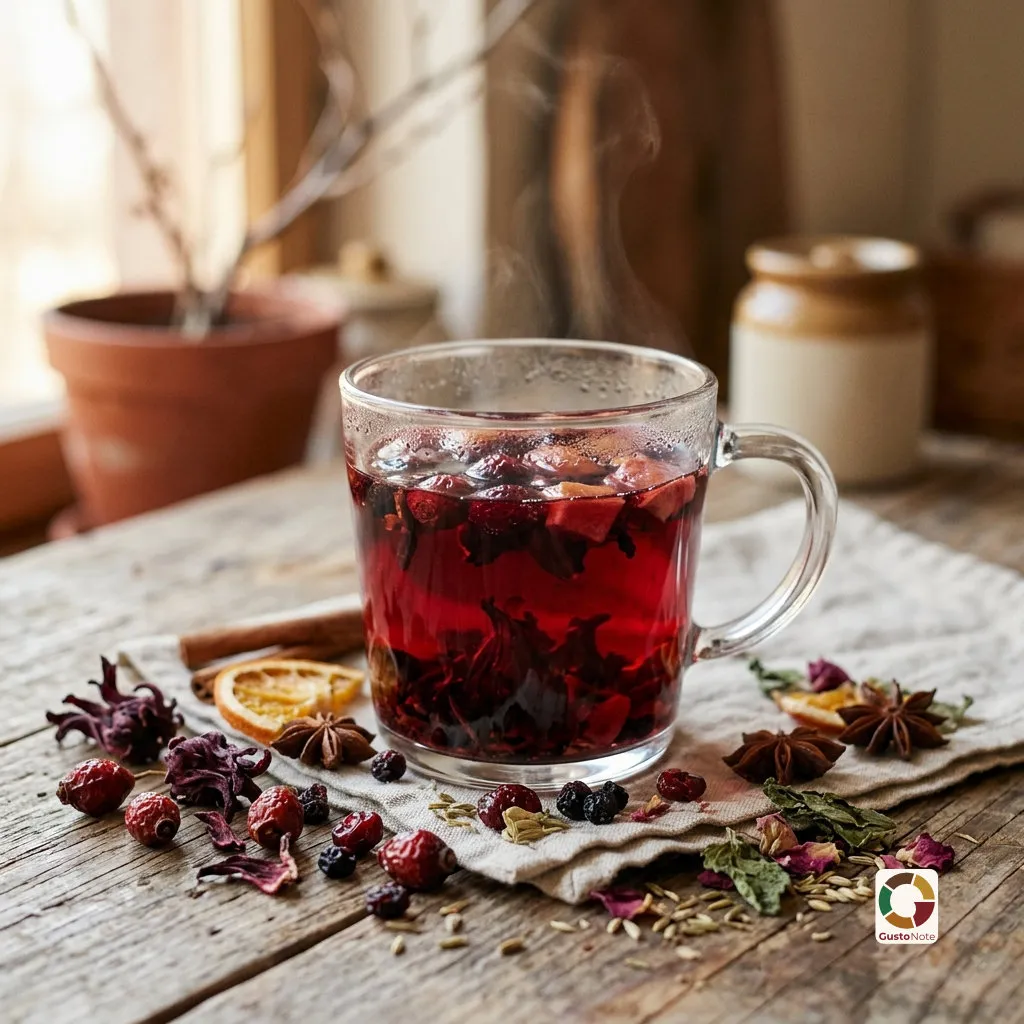
Herbal and fruit - why it is not „real" tea
Chamomile, peppermint or fruit „tea" is technically not tea but a herbal infusion, a tisane. How it differs from real tea made from Camellia sinensis, why it has no caffeine, and how to brew it.
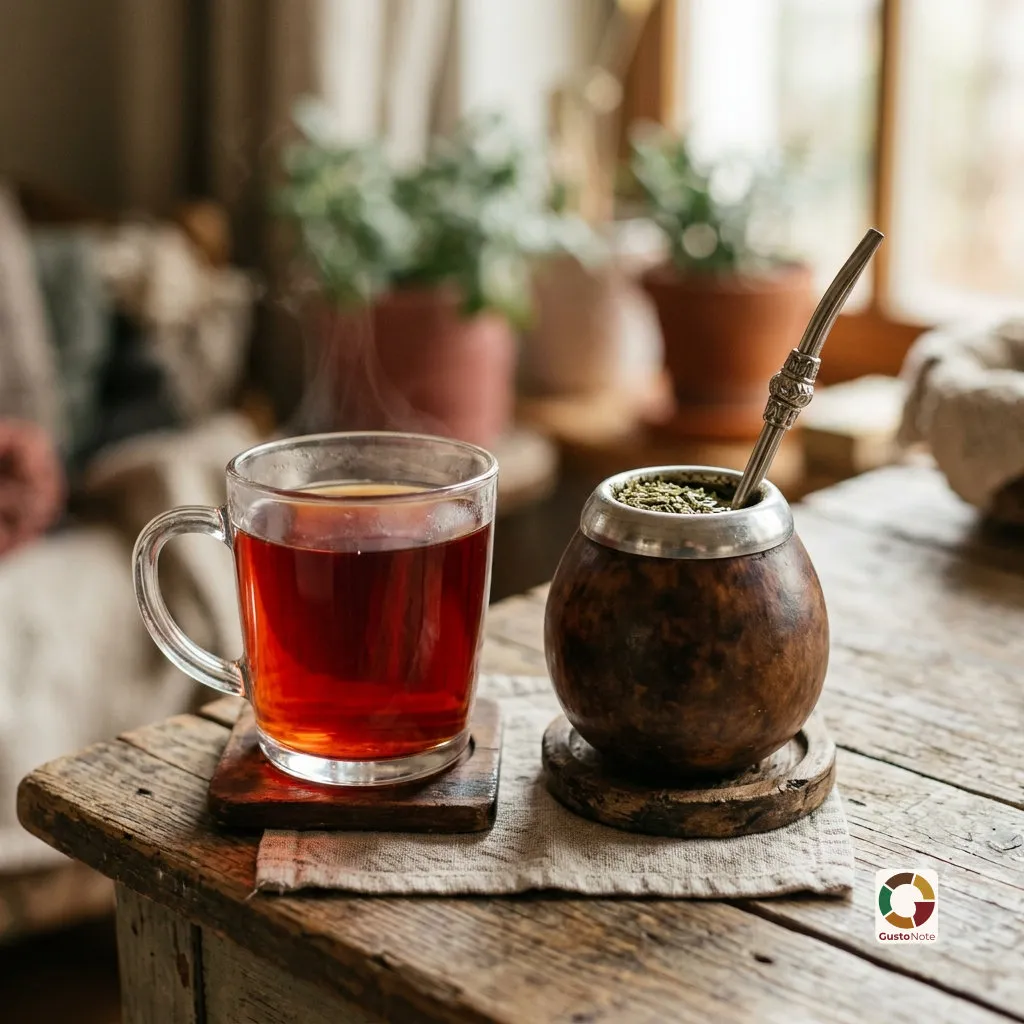
Rooibos and yerba mate - alternatives to tea from two ends of the world
Rooibos and yerba mate are two popular alternatives to tea, but one key thing divides them: caffeine. Where they come from, why rooibos is caffeine-free while mate stimulates like coffee, and how to brew them.
Bubble tea - what it is and how boba is made
Bubble tea is tea with milk and chewy tapioca pearls. Where it comes from, what the boba balls are made of, how it is made and whether it is even still tea. A full guide.
Kombucha - fermented tea
Kombucha is a fizzy, tangy tea fermented by a SCOBY. Learn its ancient roots in Manchuria, the fermentation mechanism, the organic acids and flavour, and what we really know about its effect on health. A guide with a table.
Flower-scented teas - jasmine and osmanthus
How are jasmine and osmanthus tea made? Learn the traditional process of scenting with fresh flowers by the layering method, the difference between natural and artificial aroma and how to recognise good quality. A guide with a table.
Earl Grey and flavoured teas - bergamot and additions
Earl Grey is a black tea flavoured with bergamot oil. Learn what bergamot is, the history of this tea, the methods of flavouring and variants like Lady Grey, French and Russian Earl Grey. Natural or artificial aroma. A guide with a table.
Purple tea: the Kenyan novelty
Purple tea is a novelty from Kenya - the TRFK 306 variety with purple leaves, rich in anthocyanins (like blueberries). Learn where the colour comes from, how it is processed, why it has little caffeine and what properties it has. A guide with a table.
Chong cha - the prized tea made from insect droppings
In southwestern China people drink chong shi cha - an infusion made from the droppings of insects fed on tea leaves and herbs. It sounds disgusting, yet it is a traditional, prized product described back in the Ming era. How it is made, how it tastes and why it exists at all.
Lahpet - the only tea that is eaten as a national dish
In Burma tea is not only drunk but also eaten. Lahpet is pickled tea leaves fermented underground, served as a salad and a symbol of hospitality. Here is how it is made, how it is eaten and why it is a national treasure of Myanmar.
Miang - the Thai tea you chew, not drink
In northern Thailand there is a tea that you do not drink but chew. Miang is fermented tea leaves, used as a stimulant and an element of the ceremonies of the Lanna people. Here is how it is made, how it is consumed and why tea can be something more than a drink.
Regions
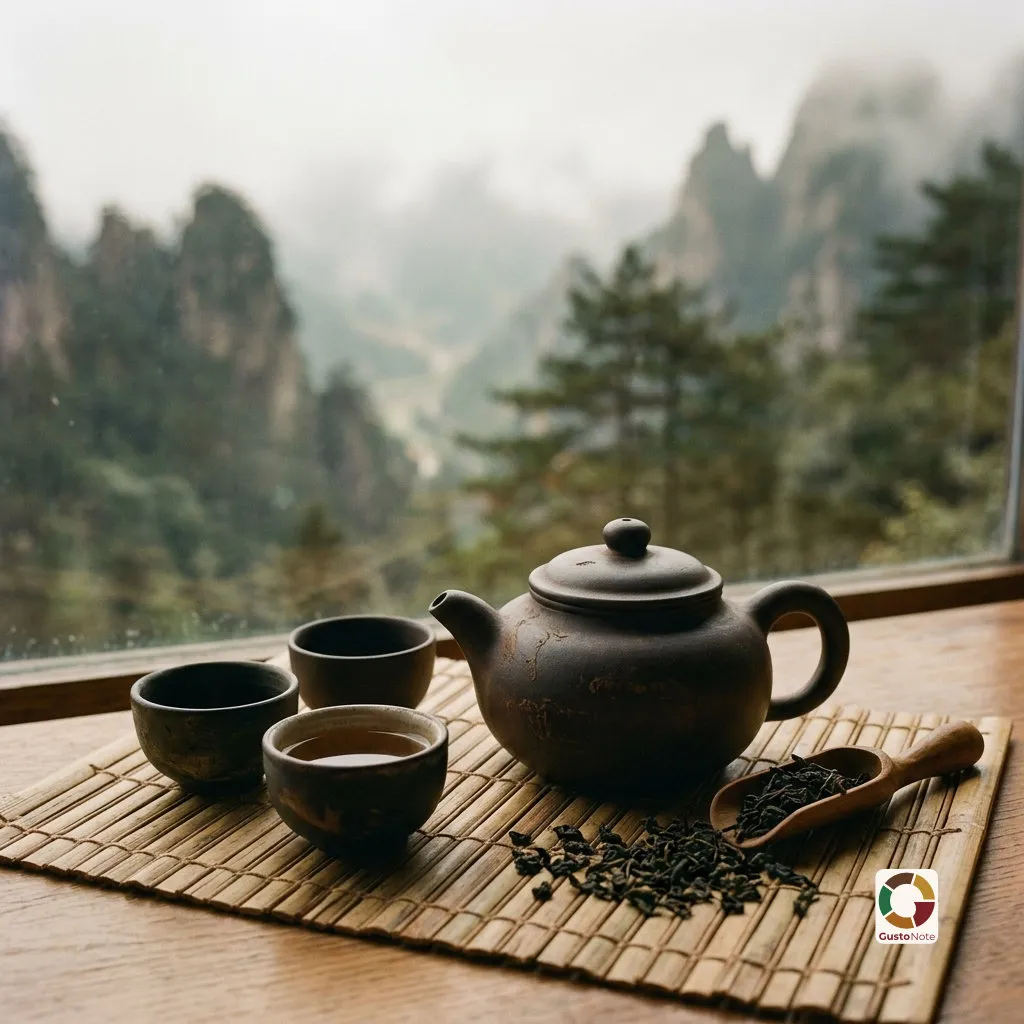
China - the cradle of tea and its styles
China is the homeland of tea, where all six types and the tea shrub itself were born. An overview of the four great tea regions, from Fujian to Yunnan, and the most famous Chinese teas.
Tea in history - the Boston Tea Party and the Opium Wars
Tea changed the course of world history. Learn about the Boston Tea Party, which sparked the American Revolution, and the Opium Wars, born of the British hunger for Chinese tea. How a drink shaped empires. A guide with a table.
Sen no Rikyu - the tea ceremony master forced to commit seppuku
Sen no Rikyu shaped the Japanese tea ceremony and the wabi-sabi philosophy like no one else. Even so, the ruler ordered him to commit ritual suicide. Here is the story of the master who turned tea into an art of simplicity, and the politics that doomed him.
How tea reached India - the theft by Robert Fortune
How did the British break China monopoly on tea? They sent the botanist Robert Fortune to steal seedlings, seeds and the secrets of production from China in disguise. Learn about one of the greatest acts of industrial espionage. A guide with a table.
Tea cultures - Morocco and mint, Russia and the samovar, Tibet and butter
Tea takes the form of the culture that drinks it. Learn about Moroccan mint atay, the Russian ritual of the samovar and zavarka, and Tibetan tea with yak butter and salt. How one leaf became three rituals. A guide with a table.
Scones: jam or cream first? The Devon versus Cornwall war
Whether you spread jam or thick cream first on a scone divides England into two camps: Devon (cream first) and Cornwall (jam first). Here is the story of this delicious dispute over English tea, its regional subtext, and which side the Queen herself took.
High tea or afternoon tea? The most common naming mistake
High tea sounds refined, but it is a specific, working-class evening meal at a high dining table, not the elegance of little sandwiches and scones. Calling an elegant party high tea betrays ignorance of the nuance. Here is the difference between high tea and afternoon tea and its class subtext.
Chinese green teas: Longjing, Biluochun, Maofeng - three classics
The three most famous Chinese green teas: nutty Longjing, floral Biluochun and Maofeng with a note of orchid. Where the different leaf shapes and flavours come from and why pan-firing versus drying changes everything. A guide with a table.
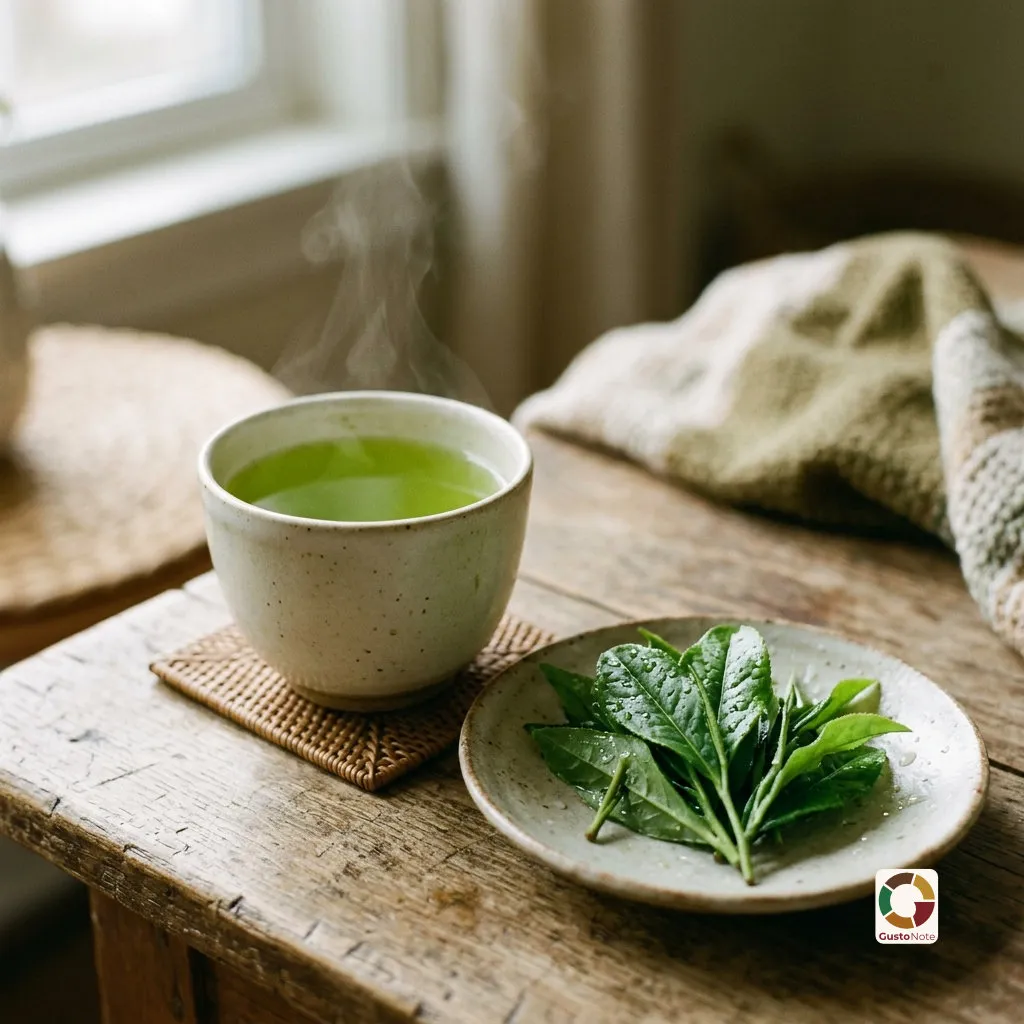
Japan - sencha, matcha, shade and steam
Japanese green tea tastes different from Chinese because it uses steam instead of pan-firing, and the best leaves grow in shade. How shading builds umami, how sencha, kabusecha, gyokuro and matcha differ, and why Japanese tea is so green and broth-like.
Japanese greens: gyokuro, bancha, hojicha, genmaicha
Beyond sencha is a whole world of Japanese green teas. Shaded, umami gyokuro, simple bancha, roasted hojicha and genmaicha with rice. Where their flavours come from, why shade gives umami and roasting lowers caffeine. A guide with a table.
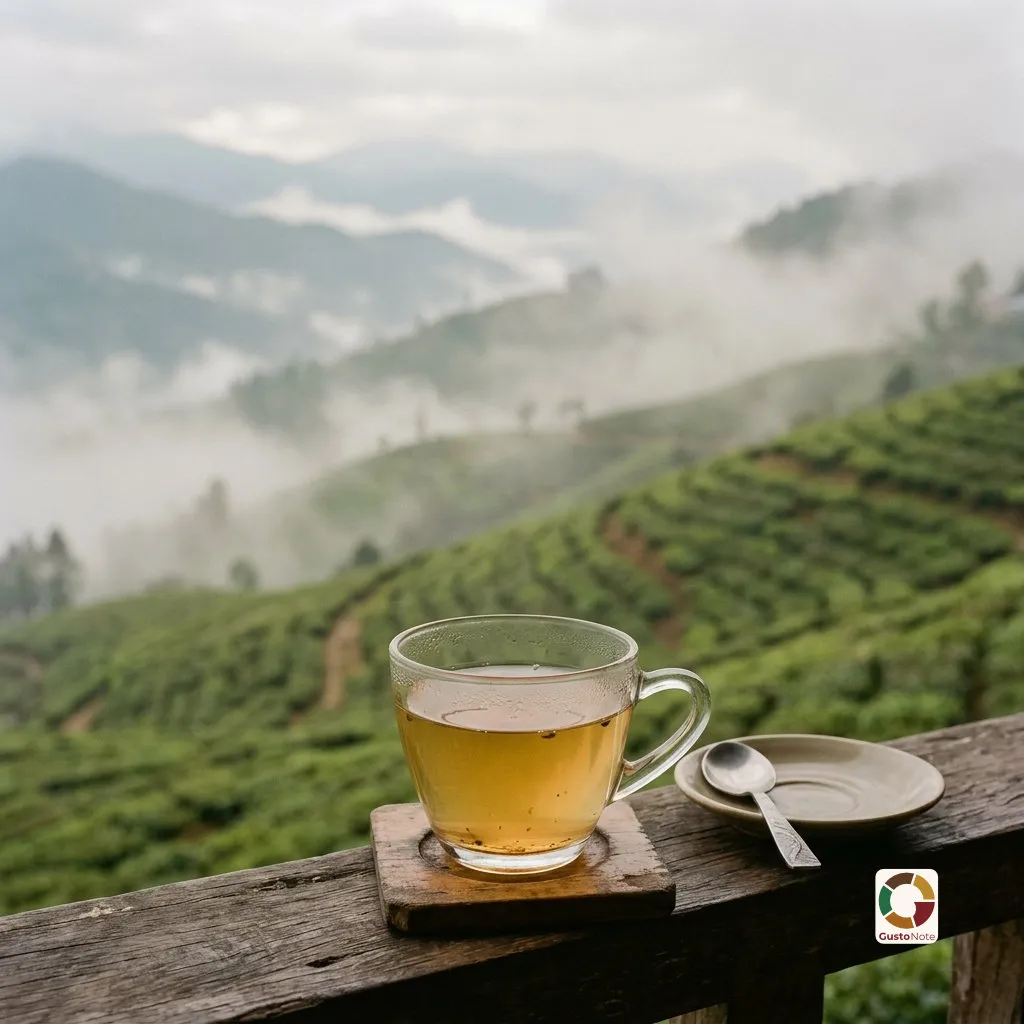
Darjeeling - the champagne of teas and the mystery of flushes
Darjeeling is called the champagne of teas because, like champagne, it is protected by the name of its region. What flushes are, where the famous muscatel flavour of the second flush comes from and why tea from Himalayan slopes tastes different in March and in summer.
Eighty percent of Darjeeling is fake - how to recognize the real tea
Around the world many times more Darjeeling is sold than the region can produce. Most of it is fake, made from other teas repackaged under the prestigious name. Here is how this fraud works, what protects real Darjeeling and how not to be fooled.
Taiwan - high mountain oolong, the floral peak of tea
Taiwanese high mountain oolongs, or gaoshan, are among the most floral and complex teas in the world, grown above a thousand metres above sea level. Why altitude gives sweetness, what rolling the leaf is, how Alishan, Lishan and Dong Ding differ.
Dancong and Dong Ding - lesser-known oolongs of great character
Beyond Tieguanyin is a world of aromatic oolongs. Dancong from the Phoenix Mountains mimics the scents of flowers and fruit, Dong Ding from Taiwan tempts with honey and roast. Where these aromas come from and why cultivar and roasting decide. A guide with a table.
Oriental Beauty and GABA - Taiwanese tea curiosities
Two Taiwanese oolongs born of biochemistry. Oriental Beauty owes its honey-muscat flavour to insect bites, and GABA its relaxing effect to fermentation in nitrogen. Where these wonders come from and how they taste. A guide with a table.
India and Ceylon - the classics of black tea
Assam, Ceylon and Nilgiri are the foundation of the world black tea: the strong, malty base of breakfast blends and bright, citrusy high-grown brews. Where the malty flavour of Assam comes from, why altitude changes Ceylon and what you really drink in English Breakfast.
Korea and tea - a quiet tradition between China and Japan
Korea has its own, lesser-known tea tradition: green nokcha from the Hadong, Boseong and Jeju regions, the darye ceremony based on simplicity, and Buddhist roots. Learn about Korean tea and its character. A guide with a table.
Chinese black: Keemun, Lapsang, Dian Hong, Jin Jun Mei
China invented black tea. Learn about four classics: floral Keemun, smoky Lapsang Souchong, honeyed Dian Hong and luxurious Jin Jun Mei. Where their flavours come from and how they differ from Indian. A guide with a table.
Anhua and compressed dark tea - bricks, logs and golden flowers
Anhua in Hunan is the homeland of compressed dark tea (heicha). Learn about the Fu Zhuan brick with golden flowers, the giant Qianliang log and the history of the tea road. Where their form and flavour come from. A guide with a table.
Liu Bao and the golden flowers - the tea in which life is welcome
Liu Bao is a Chinese dark tea on which, over time, the golden flowers of a fungus develop, regarded as a sign of the highest quality. What for us would be contamination is here an advantage. Here is the story of this fermented tea and the cultural line between fault and delicacy.
Pressed teas: cake, tuocha, brick - the shapes and why
Why is tea pressed into cakes, bowls and bricks? Learn about bing cha (cake), tuocha (nest) and zhuan (brick) - the shapes of pu-erh from the tea-horse road. Where their forms come from, how to break them and why they age more slowly. A guide with a table.
Yunnan - the birthplace of tea and thousand-year-old trees
Yunnan is probably the birthplace of tea, some 4,700 years ago. Wild, old tea trees grow here, some over 1,000 years old. Learn about gushu (old tree), pu-erh and why old growth gives a deeper flavour. A guide with a table.
Ancient tea trees - tea is not just a little bush
In Yunnan grow tea trees hundreds, and supposedly thousands, of years old. Several meters tall, they defy the image of tea as a low bush. Here is what the old gushu trees are, why their leaves are so prized and how much certainty there is in those ages.
Wuyi - rock oolongs (yan cha) and rock rhyme
Yan cha are the rock oolongs of the Wuyi mountains in Fujian. Learn about yan yun (rock rhyme), the role of the mineral terroir, the heavy charcoal roasting and the cultivars Da Hong Pao, Rou Gui, Shui Xian. A guide with a table.
Japanese tea regions - Uji, Shizuoka, Kagoshima
Japan has three key tea regions: Uji (the cradle and matcha), Shizuoka (everyday sencha) and Kagoshima (the new powerhouse). Learn their terroir, specialities and why shading and climate decide the flavour. A guide with a table.
Tea beyond the classics: Nepal, Kenya, Turkey and Georgia
Tea is not only China, Japan and India. Nepal gives Darjeeling-style teas, Kenya strong blacks and purple tea, Turkey black tea from the Black Sea coast, and Georgia is experiencing a revival of hand production. Get to know four lesser-known tea countries. A guide with a table.
Da Hong Pao mother trees - tea more expensive than gold
Six old bushes on a cliff in the Wuyi mountains gave the world most expensive tea - 20 grams sold for about 30,000 dollars. Since 2006 the harvest has been banned by law. Why original Da Hong Pao can no longer be bought and what we drink today under that name.
Brewing and gear
Gaiwan, teapot, infuser - what to brew tea in
The choice of brewing vessel changes the flavour of tea more than you would think. What a gaiwan and the gong fu method are, when a teapot is better, why an infuser is a good first step after tea bags and how to match the vessel to the type of tea and style of drinking.
Yixing teapots: the clay that remembers tea
Yixing teapots of purple zisha clay are a legend of Chinese tea. Unglazed and porous, they absorb the flavour of tea, over time forming a patina and remembering every brew. Learn what zisha clay is, why one teapot per tea type and how the teapot matures. A guide with a table.
Gongfu cha - the Chinese art of brewing tea
Gongfu cha is the Chinese brewing method: a lot of leaf, little water and many short infusions in which the same tea changes flavour from round to round. What the name means, which vessels and steps, why it is not a ceremony but a practice and how to start at home.
How to prepare matcha step by step
Matcha is a powdered green tea you whisk rather than steep. What tools you need, why you must sift it, what water temperature, how to whisk with a bamboo whisk in a W motion and how thin usucha differs from thick koicha.
How much tea per cup - ratios that actually work
Too little leaf and the brew is empty, too much and it turns bitter. How many grams of tea to how much water, why a scale is worth buying and how ratios change in western and gongfu brewing.
Milk in first or last? The dispute that divided the British classes
Whether you pour the milk or the tea into the cup first was, in Britain, a discreet class marker. Nancy Mitford mocked the milk-in-first camp as non-U. Here is the story of this curious dispute, its class subtext, and what science says about the order.
Lemon and milk in tea together? It curdles - a classic host faux pas
Adding both lemon and milk to tea makes the milk curdle and separate into unappetizing lumps. Chemistry is to blame, because the acid from lemon curdles the milk proteins. Here is why this happens, how to avoid it, and why it is a classic host mistake.
How to stir tea with a spoon - move from 6 to 12, silently, no circles
Tea-stirring etiquette: move the spoon back and forth, from 6 to 12, two or three times, silently, with no sweeping circles. Then the spoon goes onto the saucer, never left in the cup. Why these rules came about and how to stir tea with class without betraying a lack of experience.
What to do with a teabag in a restaurant - never on the table or the napkin
A used teabag does not go on the table or the napkin, and you do not wind the string around the spoon. The right place is the saucer, and you gently drain the teabag against the rim of the cup rather than squeezing it hard. How to do it with class, why these rules came about, and how not to leave a wet mess behind you.
Sweetening good tea - when it is a faux pas and when a beloved tradition
Adding sugar to high-quality green tea in China or Japan is sometimes seen as a lack of respect for the leaf. But in the American South sweet tea is a beloved institution. When sweetening tea is a faux pas and when a tradition, why it depends on culture, and how to behave with a good feel.
Slurping tea - a compliment in Japan, a faux pas in the West
The same sound, two cultures: in the Japanese tea ceremony a gentle slurp of the last sip of matcha is a compliment to the host, while in the West drinking loudly is a faux pas. Why slurping means something different in different cultures, how to behave as a guest, and how not to commit a faux pas over tea.
Masala chai - Indian spiced milk tea explained
Masala chai is not a teabag steeped in water but a simmered blend of strong tea, milk and spices. Where it comes from, which spices to use and how to make it at home step by step.
Moroccan mint tea (atay) - do not refuse the three glasses
Moroccan mint tea is a ritual of hospitality that it is not done to refuse. It is served in three glasses, poured from a height for the foam, and each tastes different. How to behave as a guest, why you do not refuse the tea, what the famous three-glasses proverb means, and how to hold a hot glass with no handle.
Tibetan butter tea (po cha) - the bowl is never empty
In Tibet a guest bowl of butter tea never stands empty - the host refills it after every sip. To politely signal that you have had enough, you leave the bowl almost full. What butter tea po cha is, what the guest etiquette is, and why an empty bowl is frowned upon.
The tea ceremony - Japanese and Chinese, how they differ
Two great traditions of brewing tea. Japanese chanoyu - meditation and matcha. Chinese gongfu cha - flavour and many infusions. How they differ, what they mean and what they teach about tea.
Tea cocktails and drinks
Tea is not only a hot brew - it is also a great base for cocktails. Get to know the methods of making tea drinks: infusing spirits, tea syrups and chilled brew. Earl Grey with gin, matcha with rum, chai with cognac - tea adds depth without excess sugar. A guide with a table.