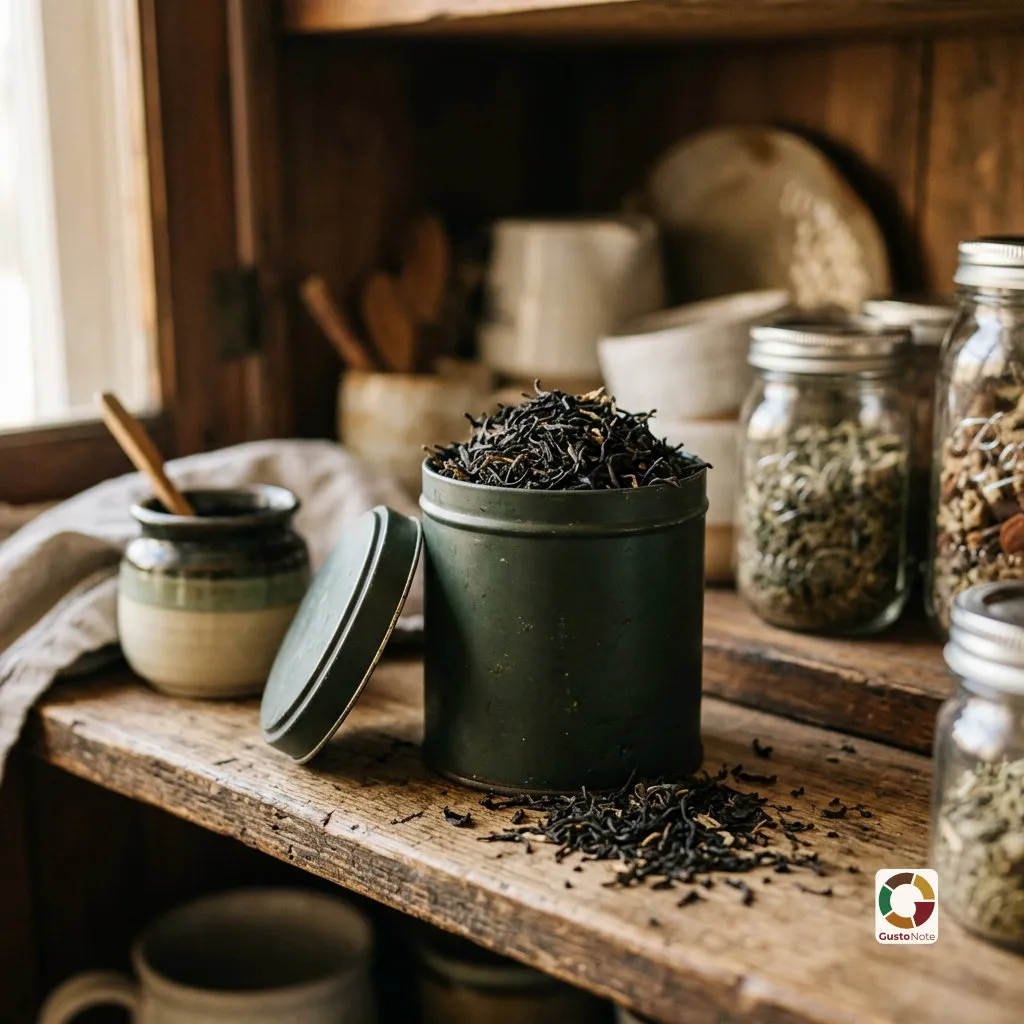
How to store tea so it keeps its flavour
You buy good loose-leaf tea, and a few months later the brew is flat and characterless. The leaf has not gone off in any health sense, it has simply lost the most precious thing, its aroma. The good news is that storing tea is a few simple rules, not arcane knowledge.
The four enemies of the leaf
Tea loses flavour through four things that work together:
- Air - oxygen oxidises the aromas and smooths them into nothing.
- Light - sunlight especially breaks down the delicate compounds in the leaf.
- Moisture - the leaf absorbs water from the air, which speeds up decay and risks mould.
- Foreign smells - tea soaks up surrounding aromas like a sponge, from coffee to spices.
The whole art of storage is simply cutting the leaf off from these four.
One simple container rule
Keep tea in an airtight, opaque container, in a cool, dry place, away from strong smells. A metal or ceramic tin with a good lid beats a glass jar left in the light. A kitchen cupboard away from the stove and kettle is perfectly fine. Do not keep different strongly scented teas in one container, or they will blend.
Why not the fridge
The fridge is tempting but usually harmful. It is humid and full of foreign smells, and tea taken out onto the counter catches condensation. The exception is delicate greens and matcha, which producers sometimes keep cold, but then in airtight, vacuum packaging opened only after it returns to room temperature. In practice a dry cupboard is safer.
Freshness has a calendar
Most teas are at their best within a year or two of harvest, and delicate greens fade fastest. The exception is pu-erh, which matures with age. So it is worth buying only as much as you will realistically drink in a few months. How origin and type affect shelf life follows from how tea is made, which I cover in how tea is made.
Note what and when
In GustoNote you record the purchase date, type and impressions of every tea, and after a few entries you will see how the flavour changes over time and which teas are worth drinking right away. If you want to get the most out of the leaf when brewing, see how to brew tea.