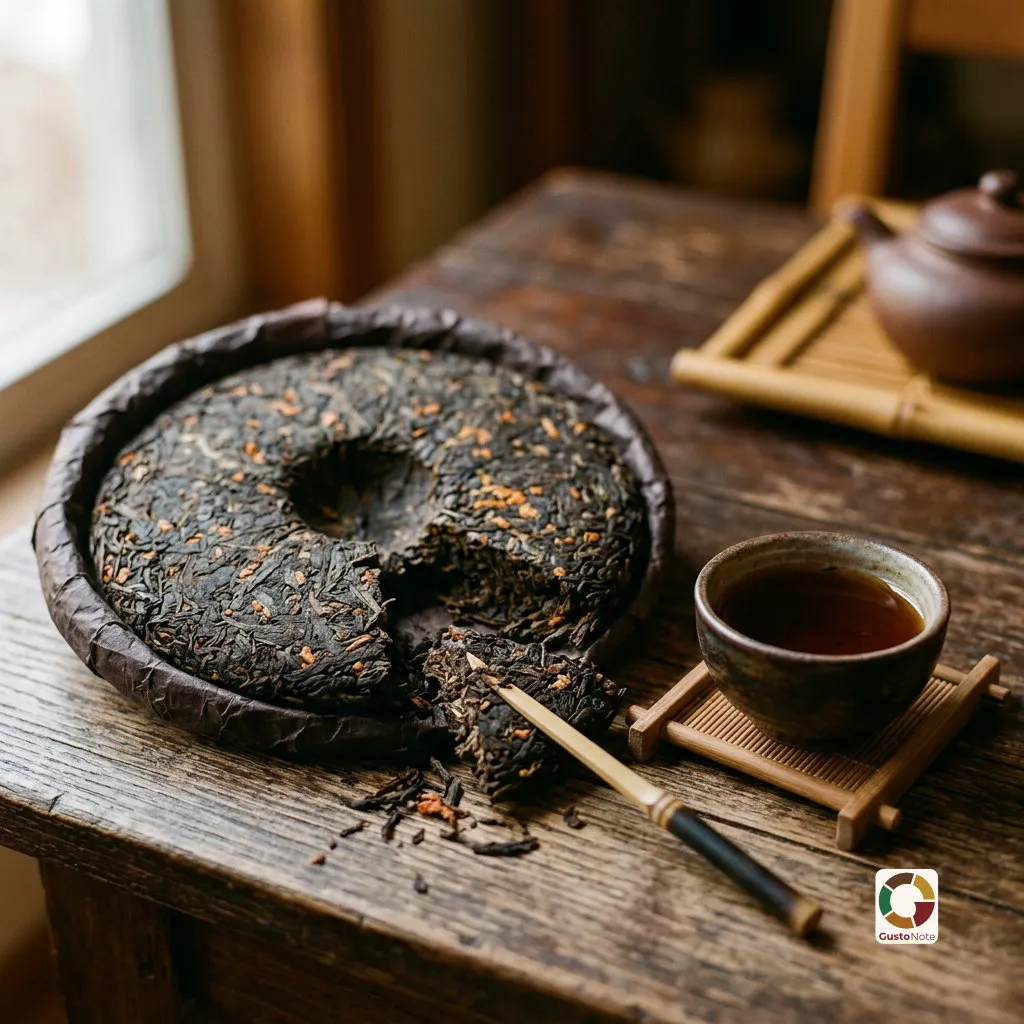
Pu-erh - sheng versus shou, the tea that ages
Pu-erh is the most mysterious tea in the world, the only one that ages for years like wine and is sometimes treated as an investment. It comes from the Chinese province of Yunnan, considered the cradle of tea, and is made from the leaves of a large-leaf variety of the shrub. What sets pu-erh apart from all other teas is true fermentation involving microorganisms, not just oxidation. The world of pu-erh divides into two great families, raw sheng and ripe shou, which taste completely different. They are worth knowing, because this is a tea for the patient that rewards you with a depth unavailable anywhere else.
Fermentation, not oxidation
The most important thing to start with: pu-erh is fermented, not just oxidised. In green, oolong or black tea there is oxidation driven by enzymes and oxygen, which I describe in what oxidation is. In pu-erh something more happens: a slow transformation involving living microorganisms, that is, true fermentation, much like with cheese or wine. It is precisely this that makes pu-erh change and deepen over the years, while other teas simply fade.
The basis of both types is so-called maocha, the raw, large-leaf Yunnan tea, sun-dried. From it come the compressed cakes, bricks and nests characteristic of pu-erh.
Sheng, or raw pu-erh
Sheng is raw pu-erh, made in the simplest way: the leaves are picked, sun-dried and compressed, without accelerating fermentation. Then it is left to age slowly, naturally, over years and even decades, through the gradual activity of microorganisms and enzymes.
Young sheng still tastes like a strong green tea: it is fresh, vegetal, floral, but also clearly bitter and astringent. Only time mellows it. Over the years it loses its sharpness and gains smoothness, sweetness, notes of dried fruit, honey and depth. Well-stored sheng has enormous ageing potential, reaching several decades, which is why old cakes can be sought after and expensive. It is a tea sometimes bought with the future in mind, almost like a wine vintage. I cover which teas to drink fresh and which to set aside in freshness or age.
Shou, or ripe pu-erh
Shou is ripe pu-erh, an invention much younger than sheng. It was created to speed up what takes decades in sheng. It uses a process called wo dui, or wet piling. The loose leaves are piled into heaps, sprayed with water and left to ferment in a hot, humid environment, at a temperature of around sixty-five degrees, for a period of two to seven weeks. In this way an effect close to many years of ageing is achieved in a few weeks.
Shou tastes completely different from young sheng: it is earthy, mellow, smooth and deep, with notes of dark wood, cocoa, forest floor and a gentle sweetness. It has none of the youthful bitterness, because fermentation has already softened it. Importantly, shou can be drunk straight after production, without waiting, which is why it is a great entry into the world of pu-erh for beginners.
How to brew pu-erh
Pu-erh, especially shou, likes hot water, around ninety-five to one hundred degrees. The compressed leaves are best rinsed first: pour boiling water over them for a few seconds and discard this first brew. This rinse awakens the tightly packed leaves and, especially with shou, removes dust from storage. Then pu-erh is brewed short and many times, gongfu style, and a good cake gives a dozen or more infusions, each revealing a different layer. I cover the art of multiple infusions in multiple tea infusions, and matching temperature and time in how to brew tea.
How to explore pu-erh
The best way to understand this world is to brew a young sheng and a ripe shou side by side. The contrast between fresh, bitterish vegetal notes and earthy, cocoa-like depth is immediate and eye-opening. In GustoNote you note the type, vintage, origin and profile of every pu-erh, and with ageing shengs you will see how their flavour changes over the years. It turns a mysterious cake from Yunnan into a fascinating, long-term adventure for the palate. You will find a full overview of tea types in types of tea.