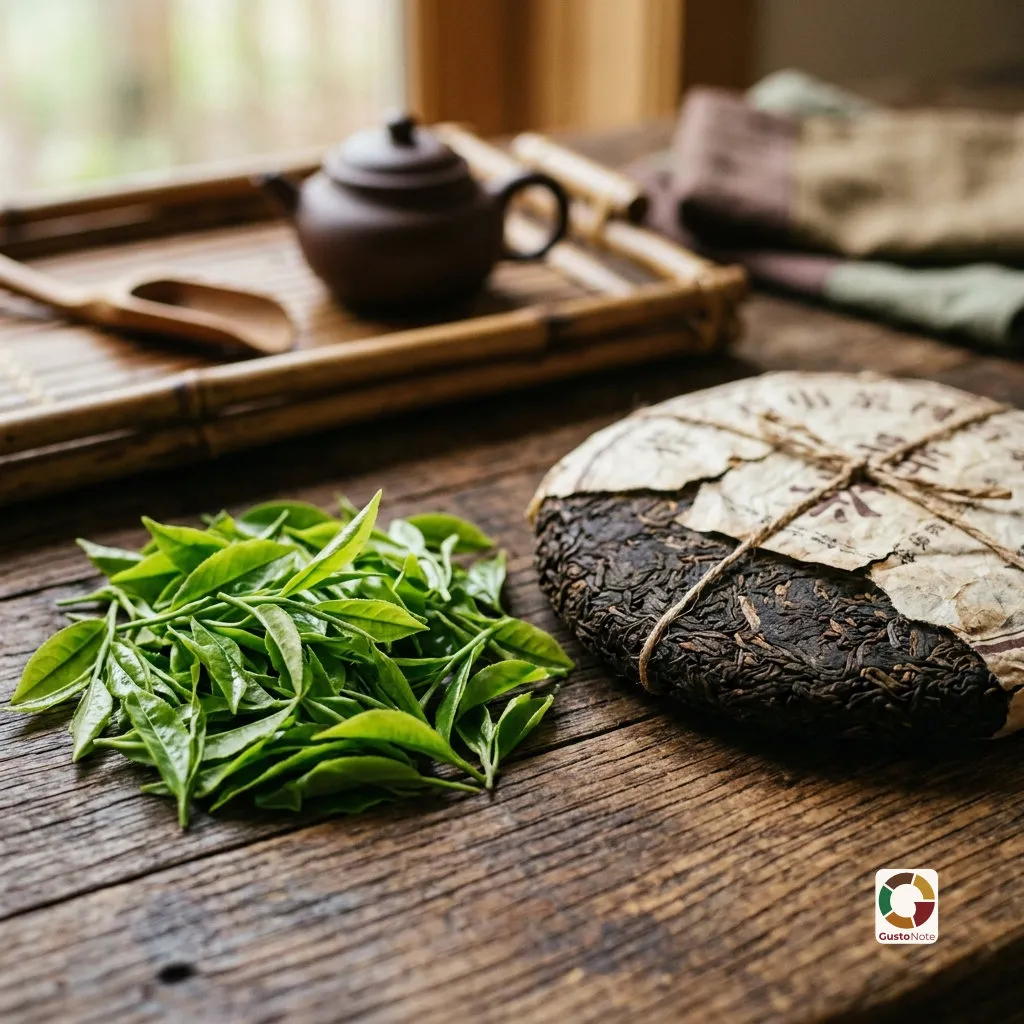
Freshness or age - when older tea is better
With coffee the rule is simple: the fresher the better. With tea it is more interesting, because the answer depends on the type. Most teas are drunk fresh, but there is one large category that does not lose with age but gains. Understanding this difference saves you from two mistakes: drinking stale green tea and throwing away valuable pu-erh.
Most teas - the fresher the better
Delicate, lightly oxidised teas live in the moment. Their charm is a fresh, vegetal, floral aroma that fades over time:
- Green and white are best within a year of harvest. Old green tea turns flat, like hay in the cup.
- Oolong and black hold up a bit longer, but they too lose their shine with time.
For them, the same rule applies as for coffee: buy only as much as you will drink in a few months, and keep it away from air, light and moisture. I cover storage separately in how to store tea.
Pu-erh - the tea that ages like wine
Pu-erh is the exception, because it undergoes true fermentation with microorganisms, not just oxidation. As a result it changes and deepens over time, much like wine or cheese. Well-stored pu-erh loses its youthful sharpness over the years and gains smoothness, sweetness and deep, earthy, forest notes. That is why old pu-erh cakes can be sought after and expensive. I explain the difference between oxidation and fermentation in what oxidation is.
How to tell in practice
- Green, white, most oolongs and blacks - drink fresh, do not set aside for years.
- Pu-erh (especially sheng) and some tightly rolled oolongs - can age, and age is sometimes an asset.
- When in doubt go by the aroma: if the tea smells lively, it is in form; if flat and cardboard-like, its time has passed.
Note how the flavour changes
In GustoNote you note the type, date and impressions of every tea, and with pu-erh you will see how the same tea changes over the years. It is the best way to feel the difference between freshness and ageing on your own palate. You will find a full overview of the types in types of tea.