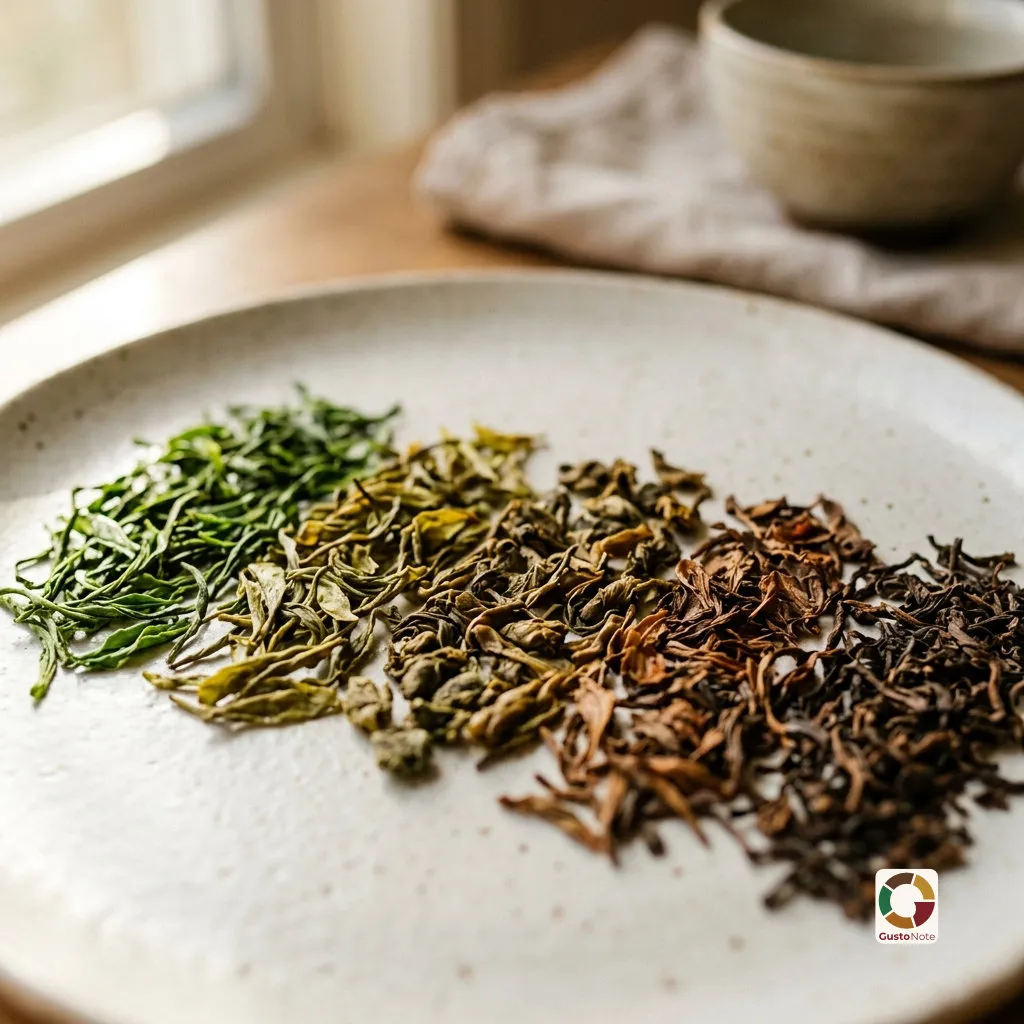
What oxidation is and why it divides teas
If you had to remember one word about tea production, make it oxidation. It, not the plant species, decides whether the same leaf becomes green, oolong or black tea. It sounds technical, but in practice you can see it in the colour of the leaf and taste it in the cup.
What actually happens
When a tea leaf is bruised or rolled, its cells break and the enzymes inside meet the oxygen in the air. A reaction begins that changes the compounds in the leaf: the green colour turns coppery, and the fresh, vegetal taste gives way to fruity, malty and honeyed notes. It is the same mechanism that browns a cut apple left on a plate.
It is not the same as fermentation
You often hear that black tea is fermented. That is shorthand. Oxidation is driven by enzymes and oxygen, with no microbes involved. True fermentation, with microorganisms, happens only in some teas, mainly pu-erh. That is why pu-erh can age for years while ordinary black tea cannot.
How oxidation divides the types
- None or minimal - white and green tea. A pale brew, fresh, grassy, floral flavour.
- Partial - oolong. The widest palette, from floral and creamy to roasted and fruity.
- Full - black tea. A dark brew, bold, malty, honeyed flavour.
That is why the same shrub gives such different cups. You will find a full overview of the types in types of tea, and the whole production journey in how tea is made.
How to taste it in the cup
- Look at the colour of the brew. The darker it is, the higher the oxidation.
- Look for freshness versus depth. Low oxidation is vegetal lightness, high oxidation is malty, fruity fullness.
- Check the astringency. Heavily oxidised teas can be fuller but also more demanding to brew, which I cover in why your tea tastes bitter.
In GustoNote you note the oxidation level and profile of every tea, and after a few dozen entries you will see whether you lean toward fresh greens or deep blacks.