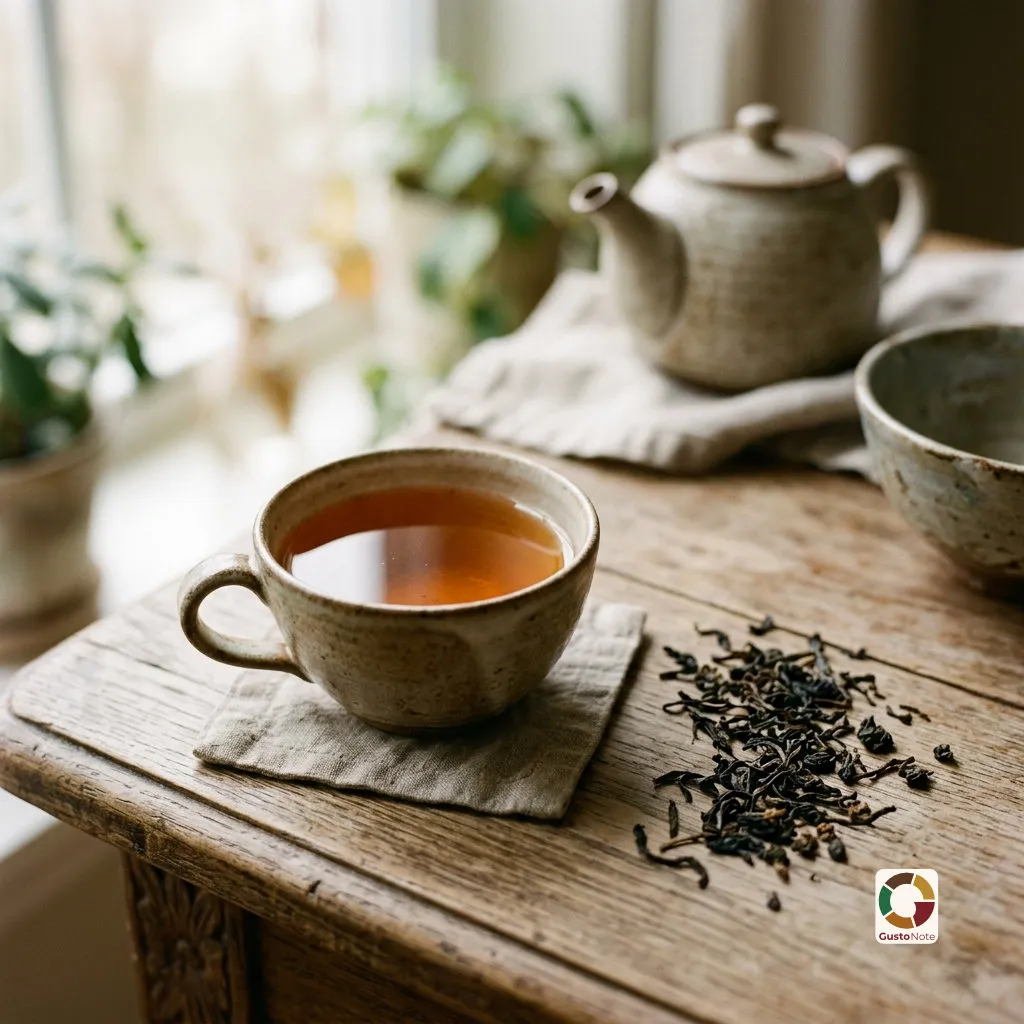
The tea tasting profile - aroma, body, astringency and aftertaste
Tea is not just strong or weak. Professionals describe every brew on several axes at once, and you can do exactly the same at home. Once you learn to separate the four basic dimensions, you stop saying only good or bitter and start understanding what specifically you enjoy. Here are the four pillars of a tea profile.
Aroma
This is everything you sense with your nose, before and during drinking. Tea aroma can be floral, fruity, grassy, honeyed, roasted, earthy or smoky, depending on the type and processing of the leaf. Smell the dry leaf, then the wet leaf after the water hits it, and finally the brew itself. These are three different takes on the same scent. I describe where the differences between types come from in types of tea.
Body
Body is the sense of weight and density of the brew in your mouth, exactly as with wine or coffee. A light, delicate green tea is almost watery, while a strong assam or a mature pu-erh feels full, coating, almost velvety. You check it by paying attention not to the flavour but to how heavy the liquid feels on your tongue.
Astringency
Astringency is the drying, slightly rough feeling on your gums and tongue, coming from the tannins in the leaf. A little astringency gives tea structure and refreshment. Too much, usually from over-brewing or water that is too hot, becomes unpleasant and bitter. It is not the same as bitterness, though they often go together. I explain where excessive astringency and bitterness come from in why your tea tastes bitter.
Aftertaste
The aftertaste, what remains after you swallow, separates an average tea from an outstanding one. In good tea the flavour does not vanish at once but lingers and sometimes changes, for example from floral to sweet. The Chinese have a separate word for this pleasant, long aftertaste, hui gan. The longer and cleaner the aftertaste, the better the tea usually is.
How to practise it
The fastest way to learn to separate these four dimensions is to brew two teas side by side and describe each in turn: aroma, body, astringency, aftertaste. This is exactly the method from how to taste tea side by side. In GustoNote you note these four axes for every tea, and after a few dozen entries you will see which profile suits you best, and start choosing teas for your taste on purpose.