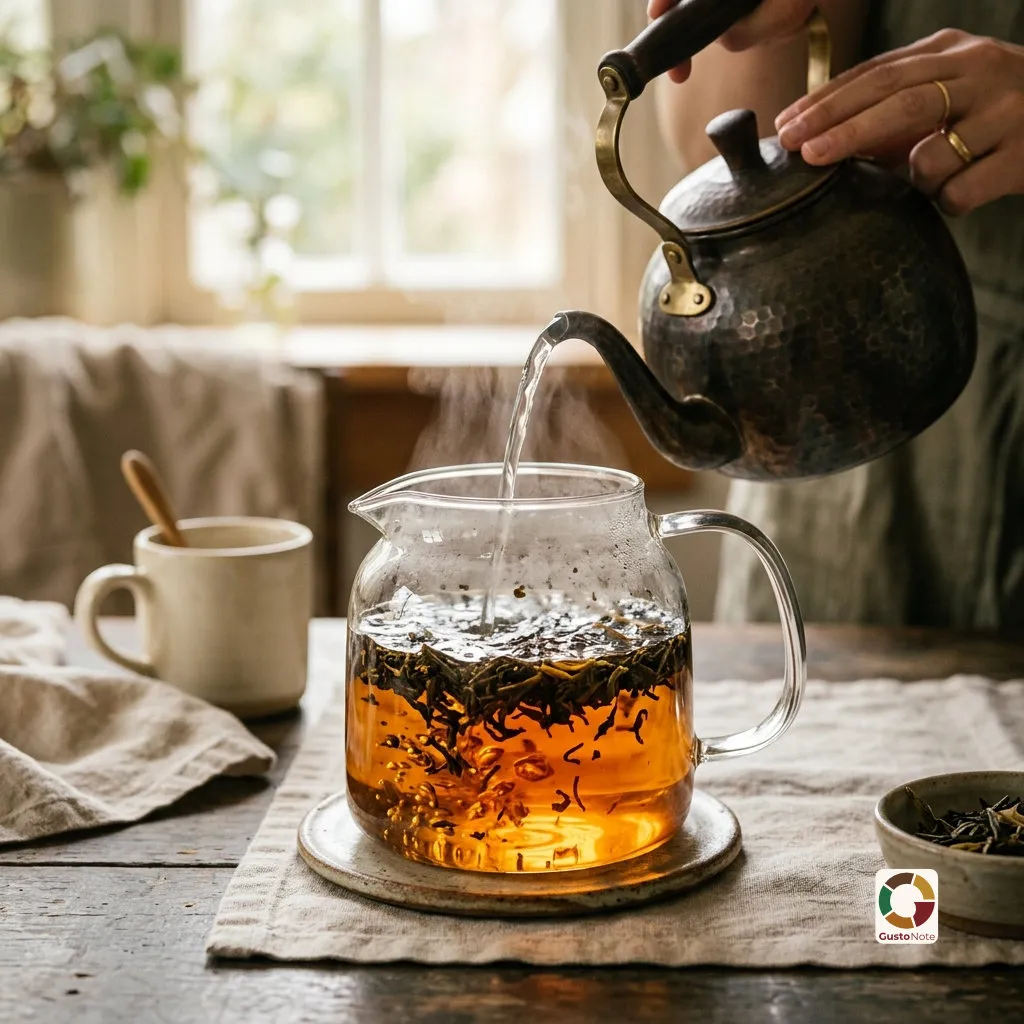
Water for tea - why it matters and which to choose
You buy good loose-leaf tea, you mind the temperature and time, and the brew still comes out flat. Before you blame the leaf, look at what there is the most of in the cup. Tea is over 98% water, so its makeup can change the flavour more than the tea itself. It is the most overlooked ingredient of brewing.
Water is not just H2O
Tap or bottled water carries dissolved minerals, mainly calcium and magnesium salts, plus bicarbonates. They decide whether the water is soft or hard. And those minerals genuinely affect how much aroma and flavour the leaf gives up to the brew, and what colour the tea will be.
Why hard water flattens tea
Hard water, rich in calcium and bicarbonates, binds some of the compounds responsible for aroma and flavour, so the tea comes out muted, heavy, sometimes with a greyish film on the surface of the brew. That is the thin, oily film you have probably seen more than once. In very soft, almost mineral-free water, on the other hand, tea can be thin and empty, because it lacks the minerals that help draw out flavour. The best water is somewhere in the middle, lightly mineral.
Which water to choose
- Filtered water (a filter jug) - the simplest improvement when you have hard tap water. It lowers hardness and removes chlorine.
- Low-mineral bottled water - a good choice for delicate green and white teas.
- Fresh, cold water every time - do not top up water that has already been boiled. Reboiled water loses oxygen and gives a flatter brew.
- Avoid distilled water - completely stripped of minerals, it gives empty tea.
Chlorine from the tap also dampens aroma, so simply filtering or letting the water stand can help noticeably.
Water, bitterness and temperature
Water works together with temperature and brewing time. Even the best water will not save a green tea drowned in boiling water. I cover how to match temperature and time in how to brew tea, and where a bitter, astringent brew comes from in why your tea tastes bitter.
Test it yourself and note it
The best test is to brew the same tea with tap water and with filtered water, side by side. The difference is often surprising. In GustoNote you note which water you used and how the brew turned out, and after a few entries you will see what really makes the biggest difference in your cup.