The flavour balance of beer - bitterness, maltiness and body
When someone says a beer is well balanced, they mean something specific: a balance between two forces that pull the flavour in opposite directions. On one side malt, meaning sweetness and fullness, on the other hops, meaning bitterness and dryness. To this add a third dimension, body, meaning how heavy and dense the beer feels in the mouth. These three axes form the skeleton on which almost any beer can be described, from a light pilsner to a thick imperial stout. Once you separate them, you stop saying only strong or bitter and start understanding why one beer refreshes while another fills you up like a dessert.
Maltiness - the sweet, full pole
Maltiness comes from malt, the sprouted and dried grain, usually barley. Its sugars are what the yeast turns into alcohol, but part of the flavour stays in the beer anyway. Maltiness is notes of bread, biscuit, caramel, toffee, and in dark malts coffee and chocolate. The darker the malt is kilned, the deeper and more roasted the notes. Malt also gives the sense of sweetness and roundness that balances hop bitterness. I cover malt itself in more depth in malt in beer.
Bitterness - the dry, hoppy pole
Bitterness comes from hops, specifically their alpha acids, which during the boiling of the wort transform into bittering compounds. The earlier and longer the hops are boiled, the more bitterness. Hops also give aroma, those grapefruit, resinous, floral or tropical notes, but aroma and bitterness are two different things, added at different stages. Bitterness balances the malt sweetness and dries out the finish, so the beer is not cloying. I break down where the hop character comes from in why IPA tastes like grapefruit.
BU:GU, or how to measure balance
The IBU number alone, the international bitterness units, says little in isolation, because malt sweetness masks bitterness. So brewers use the BU:GU ratio, bitterness to the gravity of the wort. It is a simple way to capture balance in a single number:
- Around 0.5 means a balanced beer, in which malt and hops roughly offset each other.
- Below 0.4 is a malty beer, dominated by sweetness and fullness, as in many helles lagers or a bock.
- Above 0.7 is a clearly hoppy and dry beer, like a classic American IPA.
That is why a strong, sweet imperial stout at IBU 60 can taste mellow, while a dry pilsner at IBU 35 seems more bitter. I calculate this more precisely in IBU, Plato, extract.
Body - the third dimension
Body is the sense of weight, density and texture of the beer in the mouth, independent of whether the beer is sweet or bitter. Several things build it at once:
- Dextrins, sugars the yeast did not process. The more that remain, the fuller the beer. This is controlled partly by mash temperature: higher, around 68-70 degrees, gives more dextrins and a fuller body, lower, around 63-65 degrees, gives a drier, lighter beer.
- Proteins and beta-glucans from grains like wheat or oats, which add smoothness and density. That is why an oatmeal stout is so creamy.
- The degree of attenuation, how much sugar the yeast ate. High gives a dry, light beer, low a sweeter, fuller one. This also depends on the yeast, which I cover in beer yeast.
- Carbonation level. High gives a sense of crispness and lightness, lower a sense of smoothness and roundness. That is why a highly carbonated pilsner feels lighter, and a nitro stout like Guinness feels smooth and creamy despite its dark colour.
How to place styles on the axis
These three dimensions are clearest when you line styles up side by side. Importantly, they are independent, so a beer can be bitter and light or sweet and full:
- Pilsner - balanced with a lean toward dry bitterness, light body, high carbonation. Crisp and clean.
- Helles, bock - malty, fuller, low bitterness. Round and filling.
- West Coast IPA - strongly bitter and dry, light to medium body. Bitterness leads.
- NEIPA - low bitterness despite heavy hopping, soft, full, juicy body. The hops give aroma, not sharp bitterness.
- Milk stout - sweet and full, because added lactose, which the yeast does not ferment, leaves sweetness and density.
- Dry stout, like Guinness - dry, roasty, slightly bitter from roasted malt, yet surprisingly light in body.
That is why two beers of the same strength can give a completely different impression: one dry and refreshing, the other sweet and filling.
How to practise and record it
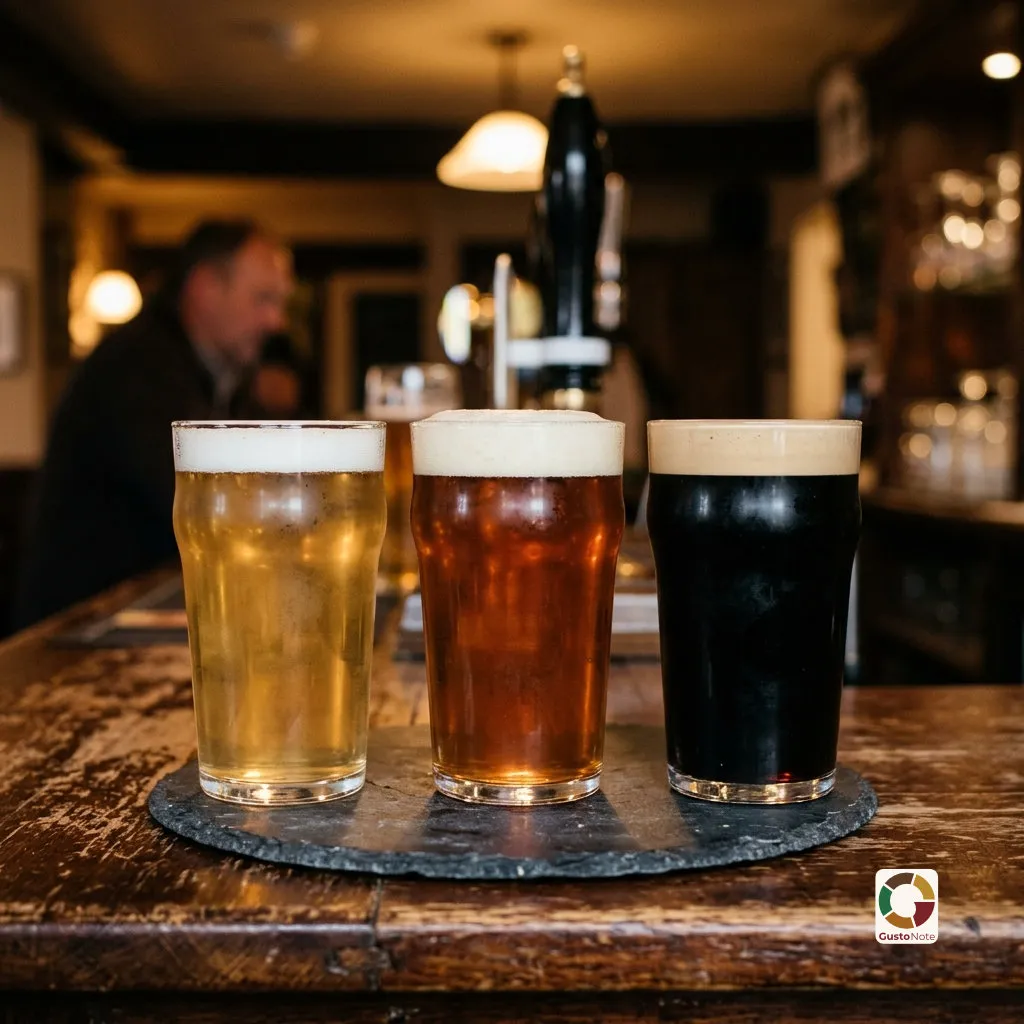
Next time you drink a beer, try to judge each axis separately. First maltiness versus bitterness: which side leads? Then body: light like water or thick and coating? You will build a feel for it fastest by lining up two contrasting beers, for example a pilsner and a milk stout. In GustoNote you rate the bitterness, maltiness and body of every beer on separate scales, and after a few dozen entries you will see which region of the axis your taste really lives in, whether you lean toward dry bitterness or malty fullness. It turns a vague I like it into a specific, personal language of taste.