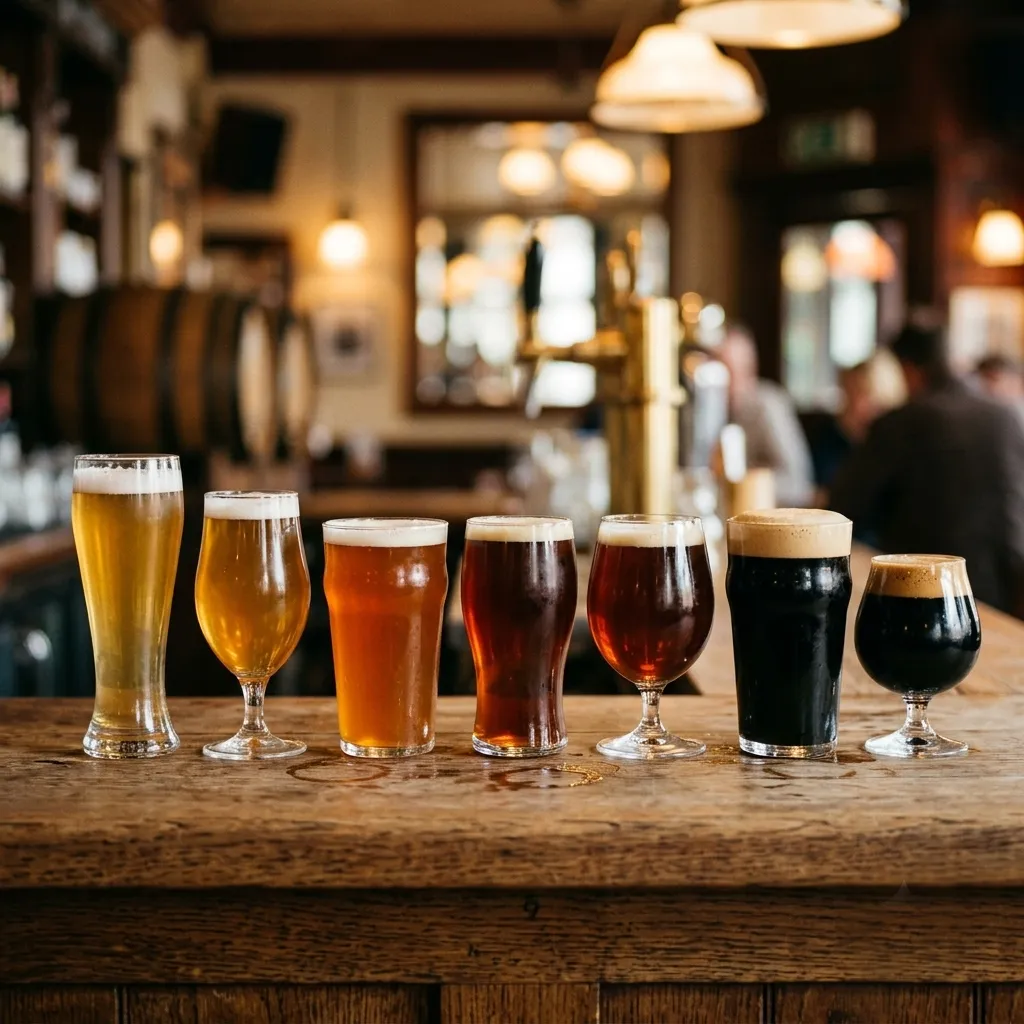
Beer is more than a cold lager - how to start tasting it
„Beer is beer". Cold, golden, straight from the fridge, ideally with a barbecue or a match on TV. If that is your whole world of beer - relax, it is not your fault. Most of us only know beer from one side: a pilsner or a basic lager from the supermarket, drunk ice-cold straight from the bottle. And that is a bit like judging all of music by the one song that plays on every radio station. Beer is not a single flavour - it is a whole galaxy of styles, from lemony and refreshing to thick as dessert. The good news: stepping into this world is cheaper and easier than with wine or whisky.
First, stop drinking it ice-cold
Let us start with the habit that ruins more beers than anything else: serving them straight from the coldest shelf of the fridge. A very low temperature is a great trick for hiding flavour - which is exactly why the cheapest lagers are drunk as cold as possible, because that is when you taste least that there is nothing to taste. But if you reach for something more interesting, ice-cold beer kills the very thing you paid for.
The rule is simple: the lighter and paler the beer, the colder it can be (wheat beer, pilsner - around 6-8°C). The darker and stronger, the warmer (porter, a strong stout are happy at 10-12°C, like a cool cellar). Take the bottle out a few minutes earlier and the beer starts to show what it can really do. It costs nothing and changes more than buying a pricier bottle.
Lager is only the doorway
The pale lager - the one most of us know - is one specific style: a cold-fermented, clean, refreshing beer. Brilliant in the heat, no disrespect to it. But standing right next to it is the whole rest of the family, the part the shop shelf stays quiet about:
- Wheat beers - hazy, light, with a hint of banana and clove. Gentle and friendly, great to start with.
- Hoppy beers (APA, IPA) - they smell of citrus, tropical fruit, resin. Bitterness from delicate to bold.
- Dark beers (porter, stout) - coffee, cocoa, chocolate, sometimes a roasted edge. Despite appearances, often not strong at all.
- Sour beers - refreshing, fruity, sometimes like lemonade for grown-ups. A flavour that breaks the „beer = bitter" mould.
You do not have to memorise this. It is enough to know that behind the word beer there are as many different worlds as behind the word music.
Three doorways in - actual beers to start with
Theory is theory, but you learn best with your tongue. Three gentle, widely available beers, each showing a different face - and none of them knocking you off your feet:
- Wheat beer to warm up. A classic German Hefeweizen (e.g. Paulaner or Franziskaner) - you will clearly taste banana and clove, even though nobody added anything to it. That is pure yeast at work, and on its own it can be a small revelation.
- A first meeting with hops. A mild APA or a session IPA - citrus, grapefruit, a hint of resin, but without overwhelming bitterness. This is the doorway to the whole world of hoppy beers, today the most recognisable craft style.
- „Black" with no fear. Guinness or a gentle porter - and here comes the biggest surprise: dark does not mean strong or heavy. Guinness is only around 4.2% and drinks lighter than many a lager, while in the glass you get coffee and cocoa instead of malt and little else.
Buy any of them, pour it into a glass (more on that in a moment) and take it slowly. After just these three beers you will know more about beer than after ten years of lager from the bottle.
Learn to drink it, not just quench your thirst
A few habits turn having a beer into tasting a beer, and none of them require secret knowledge:
- Pour it into a glass. From a bottle or can you will sense almost nothing - the aroma escapes and your nose has nothing to work with. The glass alone is half the battle.
- Look and smell. Colour, head, bubbles - that is the first piece of information. Then the nose: beer can smell of bread, citrus, coffee, honey, resin. Start with the smell before you take a sip.
- Drink in small sips. Not in one go. Hold it in your mouth for a moment - only then, beyond plain „bitter/sweet", do specific flavours show up.
- Notice the finish. What stays after you swallow? A dry bitterness? Sweetness? A note of coffee? That is often the most interesting part.
Beer is a fresh product - check the date
One thing wine and whisky forgive far more than beer does: freshness. Hoppy beers in particular (those citrus-scented IPAs) age fast - the hop aroma fades in weeks, not years. A year-old beer off a dusty shelf is often a pale shadow of what it once was.
So look at the production date (not just the best-before) and drink hoppy beers fresh, within a few months. This is not snobbery - it is the difference between „I can taste an explosion of grapefruit" and „well, it is a bit bitter". Dark and strong beers are more forgiving here, and some even improve with time - but to start, stick to the rule: the fresher the hops, the better.
Swap „bitter" for actual words
And here is where the real fun begins. At first, any beer beyond a lager is simply „strong" or „bitter". But when you pause for a moment, that „bitter" breaks down into grapefruit, pine resin, orange peel, and „dark and strong" turns out to be espresso, dark chocolate and a note of liquorice. The brain stops waving it off with „eh, beer is beer" once it has something to call it. Tasting beer is largely learning its language - the more words you have, the more you actually taste.
Keep a record of your journey through the styles
One evening with a wheat beer and a stout will not make anyone an expert. What counts is a series of notes you can return to - because only then can you see how your taste shifts and which styles are really yours. That is why GustoNote exists: you record every beer, the aroma wheel suggests words when you are short of them, the radar shows the beer’s profile, and the app keeps your whole history in one place. After a few entries you will see in black and white how you went from „beer is beer" to „oh, this one has clear grapefruit and a dry finish".
You do not have to love every style - nobody likes everything. But it is worth giving beer the chance to show how much it can really do. Start with those three bottles, pour them into a glass, do not serve them ice-cold - and see for yourself whether „beer is beer" still holds up.