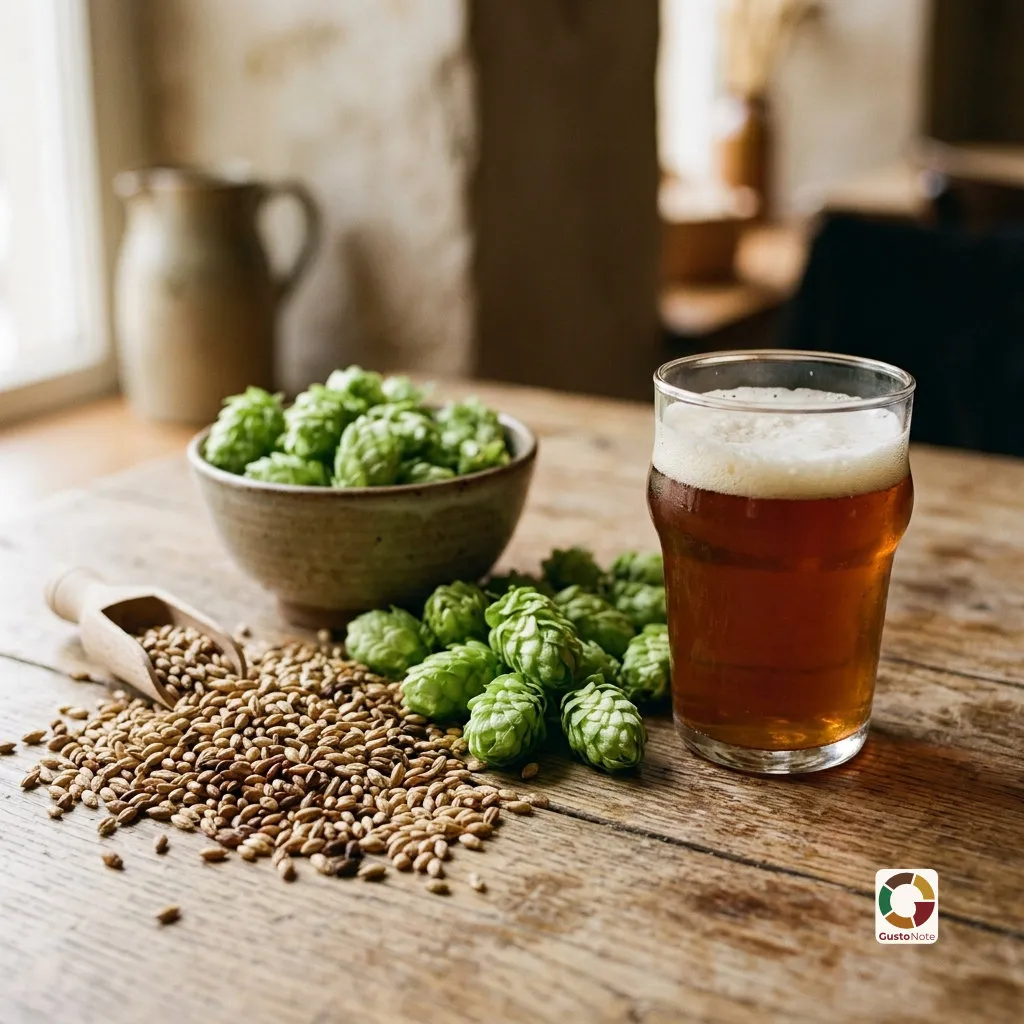
How beer is made - malt, hops, yeast, water
Beer is made from four things: malt, hops, yeast and water. It sounds trivial, yet the same ingredients can brew a light lager or a dense imperial stout. The whole craft lies in the proportions and a few steps where the sweetness, bitterness and bubbles are born.
The four ingredients
- Malt - sprouted and dried grain, usually barley. It gives the sugars for fermentation, the colour and the malty flavour.
- Hops - the cones that add bitterness, aroma and act as a natural preservative.
- Yeast - turns the sugars into alcohol and carbon dioxide, and creates a host of aromas along the way.
- Water - more than 90 percent of beer. Its makeup genuinely changes the taste.
The steps where flavour is born
- Malting - the grain sprouts and is dried. The harder it is kilned, the darker and more roasted the beer.
- Mashing - the malt is steeped in hot water, enzymes turn starch into sugars. A sweet wort is created.
- The hop boil - the wort is boiled and hops are added. Early hops give bitterness, late hops give aroma. Hence the grapefruit smell of an IPA, which I cover in why IPA tastes like grapefruit.
- Fermentation - the yeast eats the sugars. It is what decides whether the beer is a lager or an ale. I break down the difference in lager vs ale.
Where the bubbles and head come from
The carbon dioxide from fermentation dissolves into the beer and is released as bubbles when you open it. The head is those bubbles held up by proteins from the malt. That is why a well-built head is one sign of a good beer.
Listen to your beer
Next time you pick up a glass, try to separate the malt sweetness, the hop bitterness and the yeast aromas. They are three different traces of three different steps. In GustoNote you note these impressions for every beer, and after a few dozen entries you will see which way your taste leans. For more of the numbers on the label, see how to read a beer label.