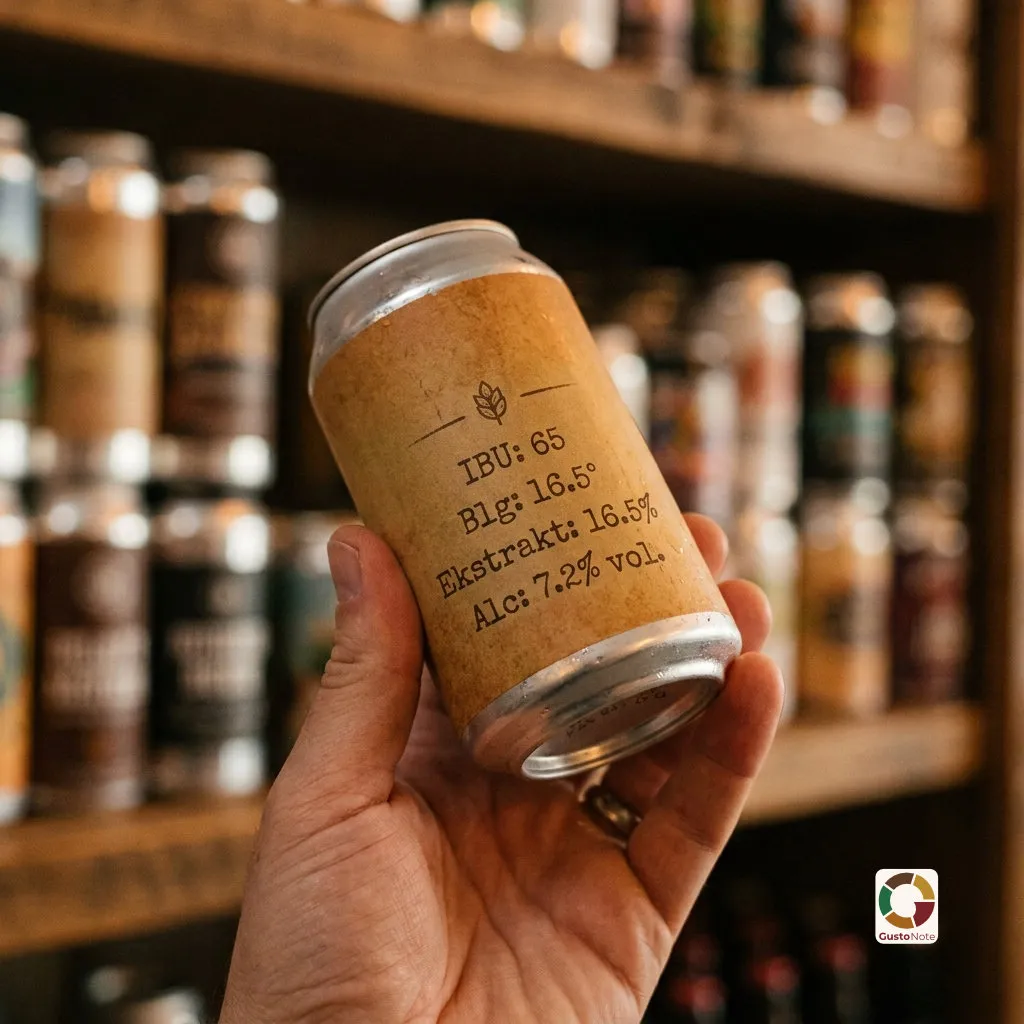
IBU, Plato, extract - what the numbers on a beer label mean
You pick up a can of craft beer and there is a little code on it: IBU 45, extract 13 Plato, alcohol 6.2%. To many people it is gibberish, which is a shame, because these numbers let you guess a beer’s flavour before you open it. Let us break them down one by one.
Extract (Plato) - how much sugar before fermentation
Extract is the amount of sugars and other malt-derived substances dissolved in the wort before the yeast gets to work. It is given in degrees Plato (or Balling, which in practice means almost the same). The higher the extract, the more fuel for the yeast and usually the fuller, stronger the beer:
- Around 10-12 Plato - light, sessionable, thirst-quenching beers.
- Around 12-15 Plato - most classic full-flavoured beers.
- Above 16-18 Plato - strong beers, bocks, imperial stouts.
I describe the process where extract is created in how beer is made.
Alcohol - how much sugar the yeast converted
The alcohol content (usually given as ABV) results from how much of the extract sugar the yeast turned into alcohol. High extract usually means higher alcohol, but not always, because some styles deliberately leave more sweetness. The colour of the beer has nothing to do with strength, which I unpack in is dark beer strong.
IBU - how much bitterness, but not how much you taste
IBU (International Bitterness Units) measures the amount of bittering compounds from the hops. The higher it is, the more bitter the beer in theory. The catch is that perceived bitterness is not the number alone. Malt sweetness balances the hops, so:
- A strong, sweet imperial stout at IBU 60 can taste mellow.
- A dry pilsner at IBU 35 can seem more bitter.
That is why you should always read IBU together with extract. High IBU plus low extract is a clearly bitter beer, high IBU plus high extract is a balanced one. I describe where the hop character comes from in why IPA tastes like grapefruit.
How to guess the flavour from them
Put it together: extract tells you about strength and fullness, alcohol about potency, and IBU relative to extract about how bitter and dry the beer will be. After a few beers you will start hitting your taste from the label alone. I break down more terms in how to read a beer label.
Note it and compare
In GustoNote you note the extract, IBU, strength and impressions of every beer, and after a few dozen entries you will see which numbers your taste really lives in - and stop buying blind.