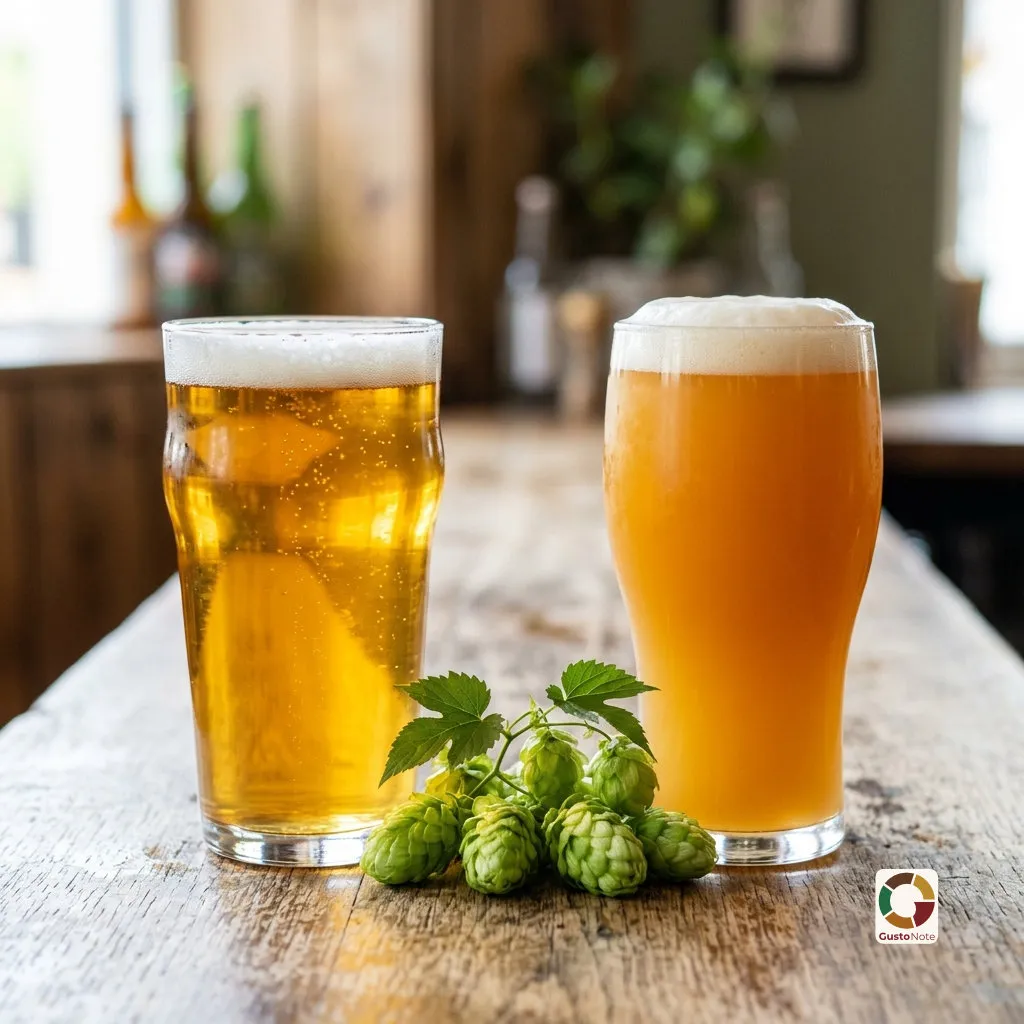
The IPA family - from West Coast to NEIPA, DIPA and session
Just two decades ago, few people outside the craft scene knew what an IPA was. Today it is the most popular craft beer style in the world and also the most branched-out. Under the same abbreviation hide beers that are crystal clear and densely hazy, dry and bitter and juicily sweetish, light and powerful. For a beginner this jungle of abbreviations, IPA, NEIPA, DIPA, session, can be confusing. It is worth sorting out, because each of these types is a different experience, and once you understand what divides them, you stop buying blind.
Where IPA comes from at all
IPA stands for India Pale Ale, a pale ale of 19th-century English origin. The real revolution, though, came only with the American craft movement at the end of the 20th century, when brewers began loading the beer with American hops of intense, fruity-resinous aroma. That is when IPA became a style in which the hops play first fiddle. I break down where these grapefruit, pine and tropical notes come from in why IPA tastes like grapefruit.
English IPA - the classic at the source
The original, the English IPA, is today the gentlest member of the family. It has a balanced build: a noticeable, biscuity malt, earthy, floral, slightly tea-like English hops and moderate bitterness. It is an elegant, drinkable beer, without the aggression of modern variants. A good starting point if the American hop bombs seem too intense to you.
West Coast IPA - dry and bitter
The American IPA from the West Coast is the benchmark of the style for many. It is crystal clear, gold to amber in colour, clearly bitter and dry in the finish. The hops give an intense aroma of citrus, pine resin and grapefruit, while the malt recedes into the background, forming only a base for the hops. It is a beer for those who like decisive, clean bitterness. I cover how bitterness balances against maltiness in the flavour balance of beer.
NEIPA - the hazy, juicy revolution
The New England IPA, or NEIPA, also called hazy, exploded in the 2010s and turned the style upside down. Instead of bitterness it bet on aroma and juiciness. It is characteristically hazy, straw to juice in colour, and the aroma bursts with the tropics: mango, pineapple, peach, citrus. Bitterness is low to moderate, and the texture soft, almost creamy, often thanks to added oats and wheat and proteins that create the haze. The secret of the juiciness is also dry hopping, adding a large amount of hops after fermentation, which brings out aroma without sharp bitterness. It is today the most popular variant of IPA, the gateway for many people who cannot stand bitterness.
DIPA - a double dose of everything
The Double IPA, or DIPA, also called Imperial IPA, is simply a strengthened version of the style. The easiest way to think of it is doubling everything: more malt, more hops, more strength. The alcohol content usually sits between around 7.5 and 9.5 percent, and sometimes higher. A DIPA comes both in clear and bitter and in hazy and juicy versions. It is a substantial, strong, intense beer, so it is drunk more slowly and with respect.
Session IPA - hops without the weight
At the other end of the strength scale stands the session IPA. It is a beer designed to keep the hoppy character of an IPA at a low alcohol content, usually around 3 to 5 percent. The word session means a beer you can drink for longer, without quick fullness and without knockout strength. Less malt and body, but still plenty of hop aroma. Perfect for a hot day or a longer get-together.
Why freshness is crucial here
This is the most important practical tip for the whole IPA family, and especially for NEIPA. The aromatic hop compounds are volatile and oxidise quickly, so a fresh IPA smells intensely of fruit, while after a few weeks or months it turns flat, cardboard-like, sometimes oniony. That is why IPA, unlike strong stouts or barley wines, is drunk as fresh as possible, ideally within a few weeks of the production date. Check the date on the can and do not buy IPAs that have been sitting around. I cover how to read the numbers on the label in IBU, Plato, extract.
How to explore the IPA family
The best way to feel the differences is to line up a dry West Coast IPA and a juicy, hazy NEIPA side by side. The same family, yet two completely different worlds: bitterness versus aroma. In GustoNote you note the style, bitterness, aroma and your impressions of every IPA, and after a few dozen entries you will see whether you lean toward the bitter, clear classic or the soft, fruity variants of the new wave. It turns a chaotic jungle of abbreviations into a map you can navigate on purpose.