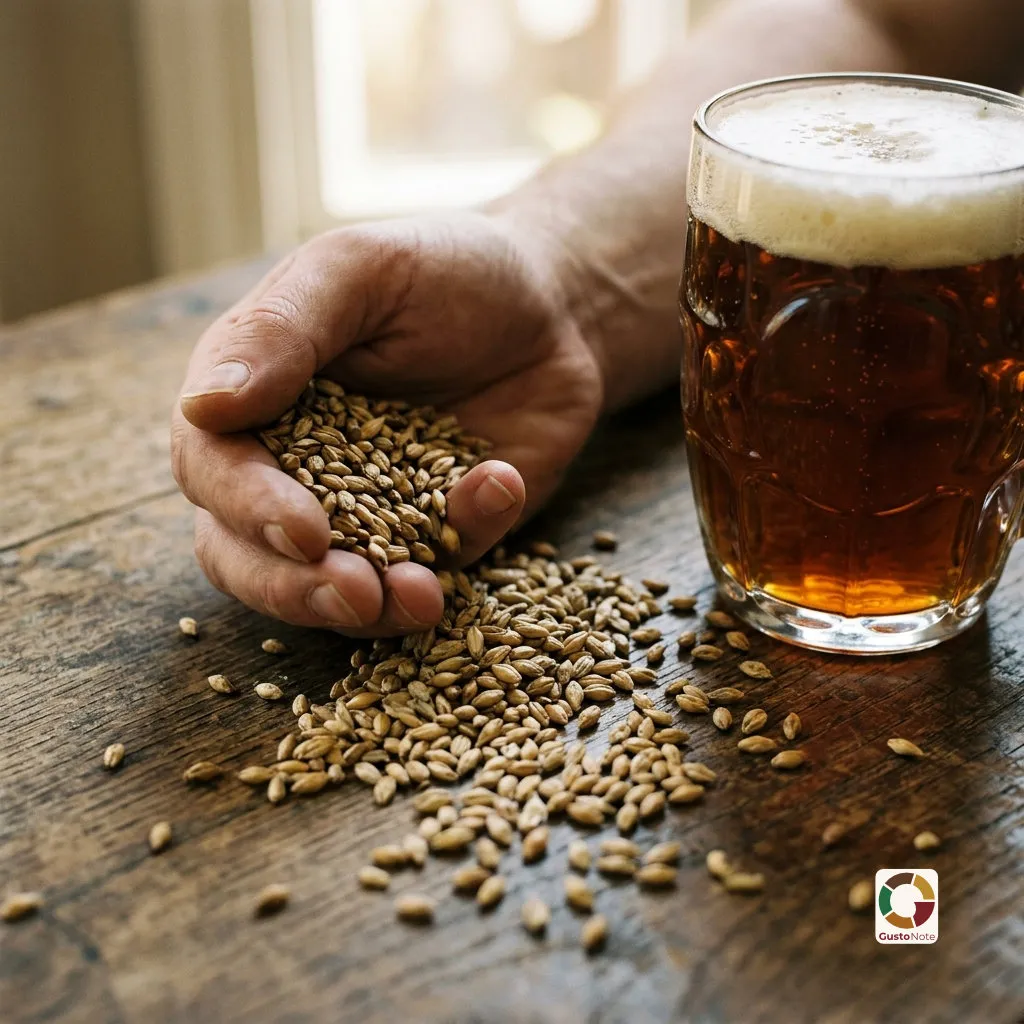
Malt - the forgotten other half of beer
People talk endlessly about hops, yet malt is the foundation of beer. Without it there is no sugar to ferment, no colour and no grainy, bready base on which the rest of the flavours stand. If hops are the seasoning, malt is the dish.
What malt actually is
Malt is grain, usually barley, that has been wetted and allowed to start sprouting, then dried. Sprouting switches on enzymes that, during brewing, turn starch into sugars. Those sugars are what the yeast later eats to make alcohol. Without malting, the grain would be useless to the brewer.
Where colour and flavour come from
All the magic happens during drying and roasting. The higher the temperature and the longer the time, the darker and more intense the malt:
- Pale malt - lightly dried, giving flavours of bread, biscuit and straw. The base of lagers and pale ales.
- Caramel malt - lightly roasted, bringing toffee, caramel and dried-fruit notes.
- Dark and roasted malt - heavily roasted, giving coffee, chocolate and a slightly burnt crust. This is what colours porters and stouts.
That is why a dark beer gets its colour from malt, not strength. I unpack that myth in is dark beer strong.
How to taste malt in the glass
- Look for sweetness and body. A malty beer feels fuller and rounder.
- Catch bread and grain notes in pale styles, and caramel and chocolate in dark ones.
- Check the balance. A good beer is a conversation between malt and hops, not one drowning the other.
The easiest place to hear malt is in dark styles, which I cover in dark beers: porter and stout.
Write down what you taste
In GustoNote you rate the maltiness, body and balance of every beer, and after a few dozen entries you will see whether you prefer malty or hoppy beers. If you want to see the whole process first, go back to how beer is made.