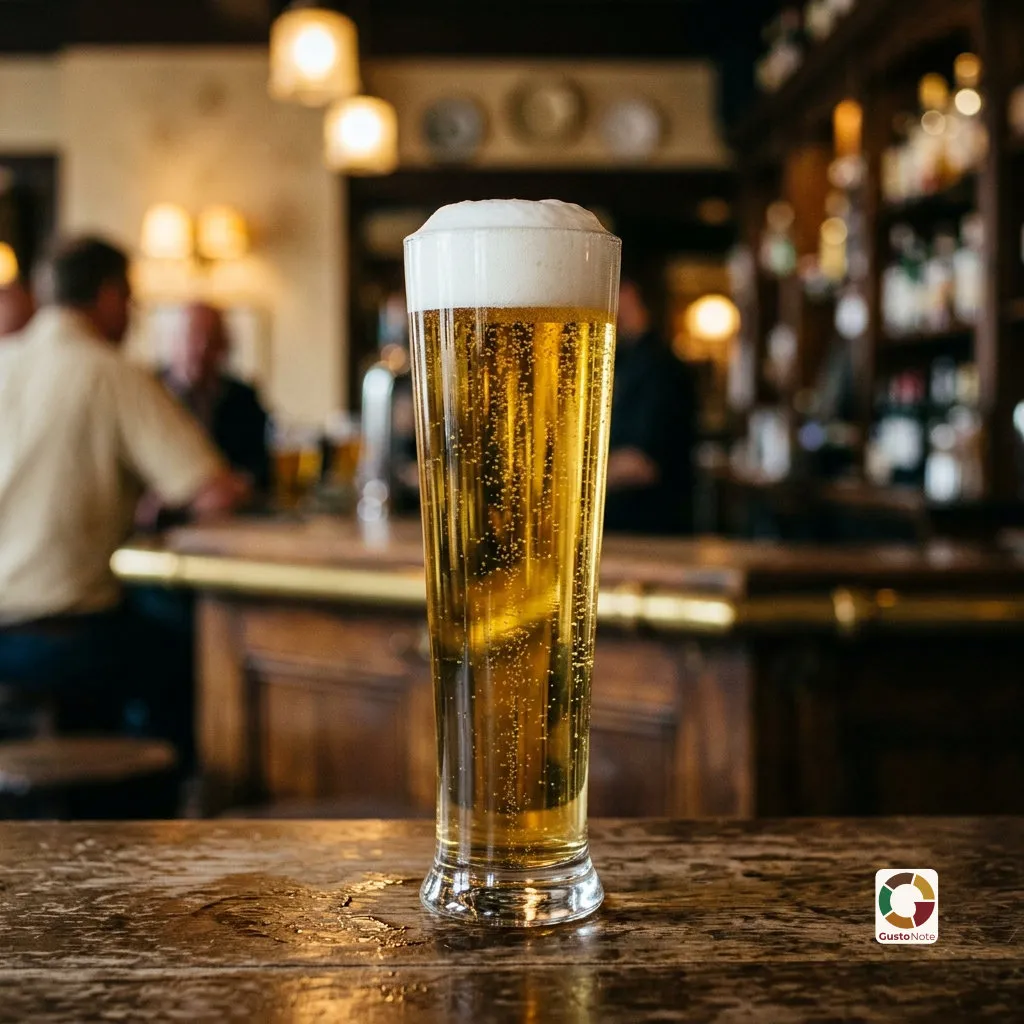
Pilsner - the most underrated beer style in the world
Pilsner has it tough. To many it is just an ordinary pale beer, the same type as cheap supermarket lagers. Yet it is one of the hardest to brew and most influential styles in the history of beer. The golden colour we now expect from almost every lager was born from the pilsner. And because a real, well-made pilsner has nowhere to hide, it is often a test of a brewery’s class. It deserves appreciation, because beneath the apparent simplicity lies more than in many a trendy, heavily hopped beer.
The revolution of 1842
Until the mid-19th century, beer was usually cloudy, dark and unstable. The citizens of Czech Pilsen had had enough of poor, spoiling batches, so in 1842 they built a new municipal brewery and brought in the Bavarian brewer Josef Groll. He combined several elements that together produced something entirely new: pale malt dried by a new, gentle method, the exceptionally soft water of Pilsen, the noble Saaz hop from nearby Žatec, and Bavarian bottom-fermenting yeast, maturing in cool cellars. The result was the world’s first clear, golden beer.
This coincided with the spread of cheap glassware. For the first time people drank from glasses instead of stoneware mugs and saw that gleaming, golden colour. The impression was so strong that the style spread around the world almost overnight and became the model for most pale lagers. The original brewery still makes Pilsner Urquell, meaning the original source. I cover the role of water in the birth of the style in water in beer.
Why pilsner is so hard to brew
Here lies the heart of its underappreciation. Pilsner is a bottom-fermented beer, brewed at low temperature and matured long in the cold, that is, lagered. This cold, slow fermentation gives a very clean beer, without the fruity esters typical of top-fermented beers, which I cover in lager vs ale.
The problem is that this cleanliness does not forgive mistakes. In a heavily hopped IPA or a thick stout, small faults are easy to hide under an avalanche of hops, malt and strength. In a pilsner there is nothing to hide behind: every impurity of fermentation, every malt or water defect comes straight to the surface. That is why brewers have a saying that a good pilsner is the hardest exam of the craft. Simplicity in flavour here means enormous precision in production.
Czech versus German
Over time the pilsner split into two great schools worth telling apart:
- Czech pilsner, the světlý ležák, is fuller and maltier. The soft water and traditional, multi-step mashing give a round, bready sweetness, balanced by the delicate, herbal bitterness of Saaz hops. It can be a touch buttery, and in this style that is acceptable. It drinks fuller and smoother.
- German pils is drier, paler and crisper. It has a lighter body, higher and more assertive bitterness and a dry, clean finish. The further north in Germany, the drier and more bitter the pils usually is.
There is also a newer, Italian variant, a dry-hopped pils, combining the dryness of the German style with an intense, floral hop aroma.
What you should taste in a good pilsner
A pilsner is judged not by strength but by balance and cleanliness. Here is what to look for:
- Malt - a delicate note of fresh bread, cracker or a lightly honeyed sweetness, clean and unobtrusive.
- Noble hops - the spicy, herbal, floral, slightly grassy aroma of Saaz or German varieties. This is the signature of the style.
- Bitterness - clear but elegant, drying the finish so you want to reach for the next sip.
- Cleanliness and clarity - no fruity or buttery notes apart from the Czech exception mentioned, a brilliantly clear brew, fine, dense bubbles.
- Finish - dry, crisp, refreshing, inviting the next sip.
How bitterness and maltiness arrange themselves in a pilsner is best understood through the flavour axis I cover in the flavour balance of beer.
How to serve and drink it
Pilsner tastes best chilled but not ice-cold, around 7-9 degrees, because too cold mutes the subtle aroma of hops and malt. Pour it into a tall glass with a proper head a few centimetres tall, which protects the aroma. It is also one of the best beers for food, because the crisp bitterness and clean flavour suit almost anything, from fried fish to spicy dishes.
Give pilsner a second chance
If pilsner only reminds you of a bland, mass-produced lager, try a fresh, well-made example of the style, ideally a Czech ležák and a German pils side by side. The difference between round maltiness and dry bitterness is immediate and eye-opening. In GustoNote you note the style, bitterness, maltiness and your impressions of every beer, and after a few dozen entries you will see whether you lean toward the Czech or the German school, and stop treating pilsner as boring background. For more numbers and terms, see how to read a beer label.