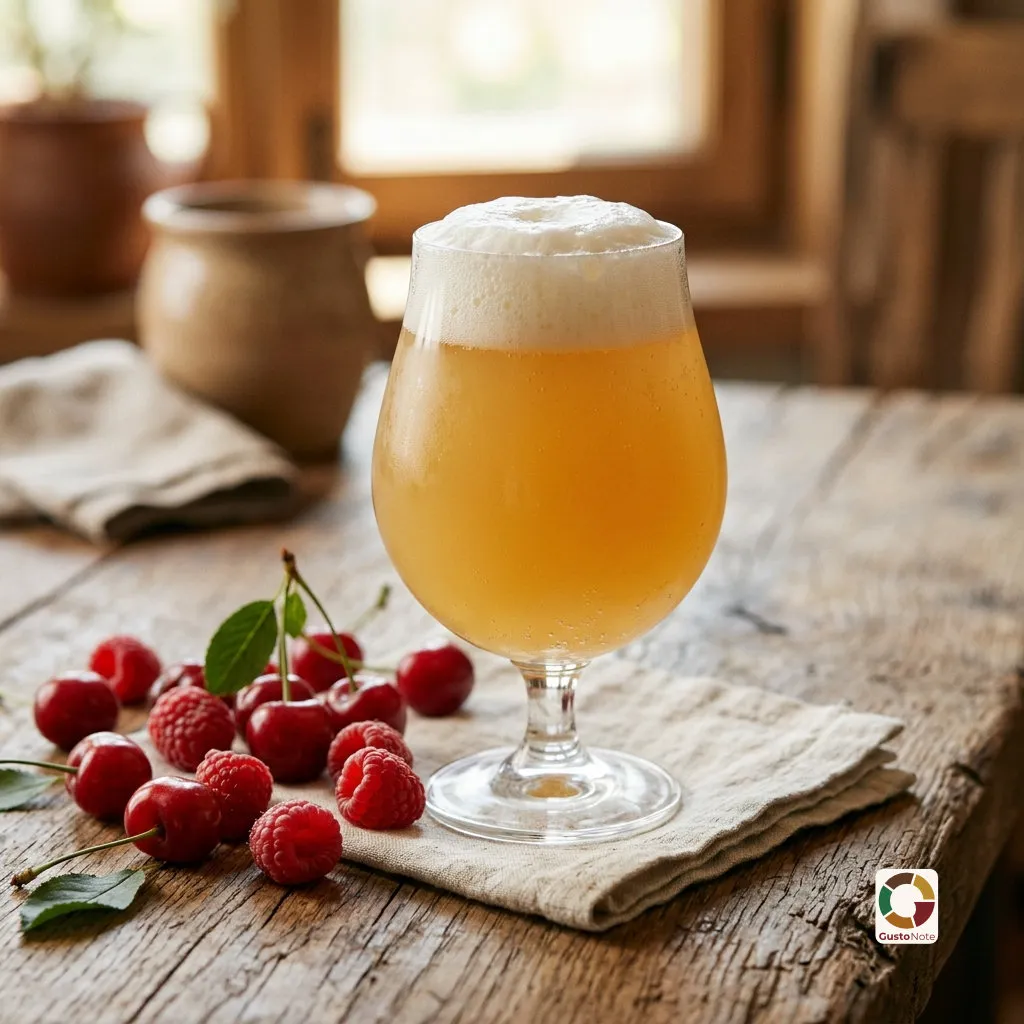
Sour beers - lambic, gose and Berliner Weisse
The first sip of a sour beer can surprise you: instead of malt and hops, a refreshing, lemony acidity hits you, sometimes with a wild, farmyard aftertaste. For many it is a shock, for others love at first sip. Contrary to appearances, this acidity is not a fault or spoilage but a deliberate effect, achieved with bacteria and wild yeast that are normally avoided in beer. It is one of the oldest and most fascinating categories of beer. It is worth knowing, because sour beers are a great refreshment and often the perfect entry for people afraid of hop bitterness.
Where the acidity comes from
In ordinary beer only brewing yeast works, making alcohol and carbon dioxide, which I cover in beer yeast. In sour beers additional microorganisms come into play:
- Lactic acid bacteria, mainly Lactobacillus and Pediococcus, produce lactic acid, giving a clean, lemon-and-yoghurt acidity.
- Wild Brettanomyces yeast adds acidity, but above all the characteristic wild aromas described as farmyard, stable, leather or wet wool.
It is these organisms, not a production fault, that give sour beers their taste. Different combinations of them create different styles.
Lambic, or spontaneous fermentation
Lambic is the most legendary and most wild of the sour beers, from the area around Brussels in Belgium. Its secret is spontaneous fermentation: the wort is not pitched with cultured yeast but exposed in shallow, open vessels overnight, so the wild yeast and bacteria floating in the air settle into it. Then the beer ages in wooden barrels for one to even three years.
The result is complex, dry, sour and funky beers. Two famous styles come from lambic: gueuze, a blend of young and old lambic put through refermentation, sparkling and Champagne-like, and kriek and framboise, lambics with added cherries or raspberries. These are beers for the patient and the curious.
Berliner Weisse, or pure lemon
Berliner Weisse is a completely different story: a light, low-alcohol wheat beer from Berlin, soured by lactic acid bacteria. Its acidity is clean, refreshing, lemon-and-yoghurt, without wild, farmyard notes. It is one of the cleanest and gentlest sour beers, perfect for hot weather. Historically it was served with fruit syrup to soften the acidity. I cover wheat beers in general in wheat beers.
Gose, or acidity and salt
Gose resembles Berliner Weisse but has two additions that make it unique: salt and coriander. The bacteria give acidity, and the salt adds a gently saline, almost maritime finish that many associate with a sea breeze. It is a refreshing, dry and slightly salty beer, today enjoying a big comeback, often in versions with added fruit. It combines acidity with an unusual, salty depth.
How to start with sour beers
A sour beer can be a shock, so it is worth entering wisely. To begin, the gentler, clean styles work best: Berliner Weisse or gose, especially in fruit versions that soften the acidity. Only then is it worth reaching for the wild, complex lambics and gueuze, which require a little openness. Most sour beers are low in alcohol and refreshing, so they work brilliantly in summer. I touch on how acidity sits in flavour in the flavour balance of beer.
How to explore them
The best way to feel this category is to start with a clean, citrusy gose or Berliner Weisse, and then compare them with a wild, funky lambic. The contrast between simple, refreshing acidity and complex wildness is immediate. In GustoNote you note the style, level of acidity and your impressions of every sour beer, and after a few dozen entries you will see whether you lean toward simple lemon or wild depth. It turns a surprising sourness into a map of specific, fascinating flavours.