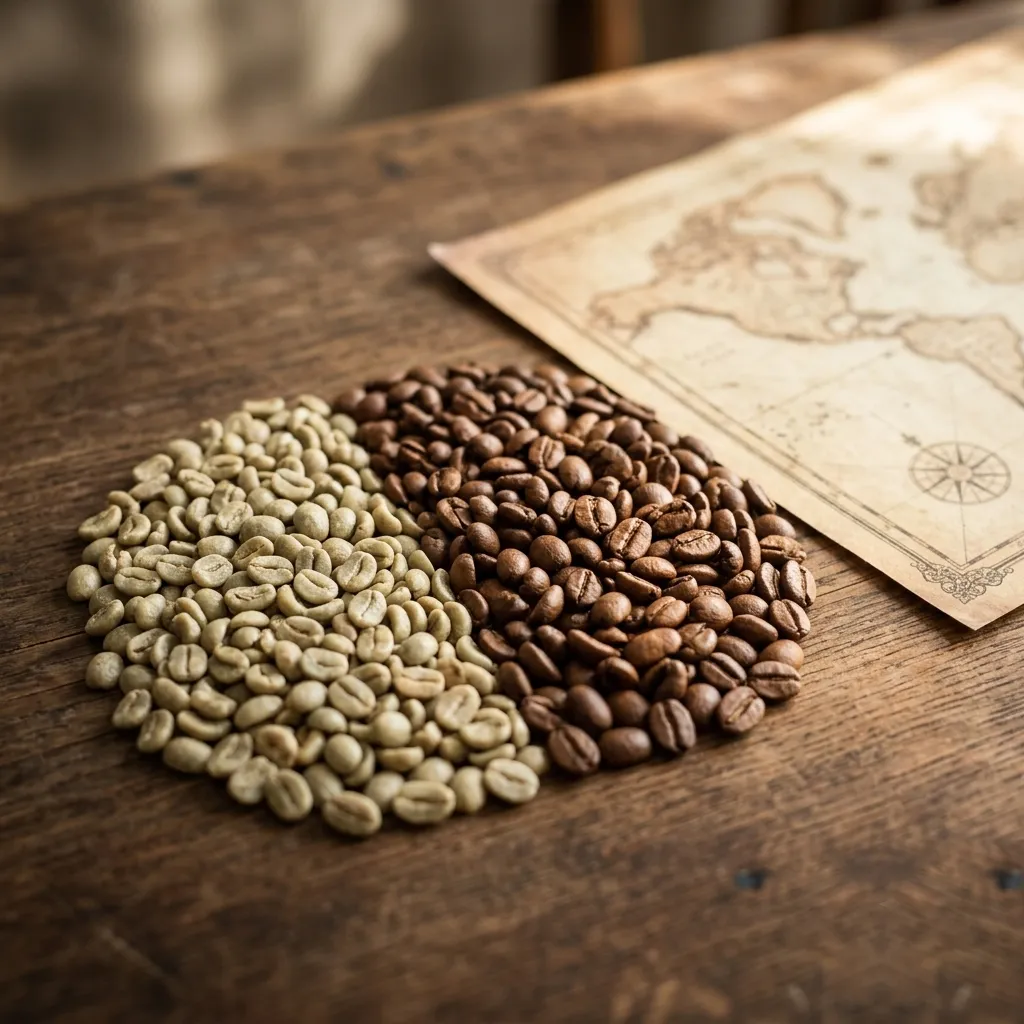
Where coffee gets its flavour - origin, variety and processing
You take two coffees from a good roaster. One smells of blueberries, citrus and flowers, the other of nuts, chocolate and caramel. Both are simply „coffee", both brewed the same way - so where does the gulf come from? Many people bet on the roast, but that is a myth. The most about coffee’s flavour is told by three things that happen long before roasting: where the bean comes from, which variety it is, and how it was processed after harvest. Let us go through it.
First the species: Arabica and Robusta
The two main families of coffee:
- Arabica - gentler, more complex, acidic, with a rich aroma. Specialty coffee is made from it.
- Robusta - stronger, more bitter and „rubbery", but with more caffeine. Common in cheap coffee and classic Italian espresso blends (it gives a thick crema).
If you are after those fruity, floral flavours - you are after Arabica.
Origin - how place changes the taste
This is where the real magic begins. Coffee, like wine, has its terroir - region, soil, climate and altitude. The higher it grows, the slower the cherry ripens, and slower means more complexity and more acidity. Hence the typical characters:
- Ethiopia - flowers, berries, citrus, a tea-like lightness. The homeland of coffee.
- Kenya - intense, juicy acidity, blackcurrant, tomato.
- Colombia - balanced, sweet, caramel and red fruit.
- Brazil - low acidity, nuts, chocolate, body - an ideal base for milky espresso.
- Guatemala / Central America - cocoa, spice, balance.
These are simplifications, but next time you taste blueberries in a coffee, check the country on the bag - you will probably see Africa.
Processing - often louder than the country
After harvest, the coffee cherry (because coffee is the pit of a fruit!) has to be processed. The processing method can change the taste more than the origin itself:
- Washed - the pulp is removed before drying. The result: clean, clear, pronounced acidity, full exposure of the origin’s character.
- Natural (dry) - the bean dries inside the whole fruit. The result: fruity, sweet, jammy, sometimes notes of wine or alcohol. More „wild".
- Honey / pulped natural - in between, combining sweetness with clarity.
Two coffees from the same farm, one washed and one natural, can taste like two different drinks. That is not a flaw or an accident - it is the producer’s decision.
Variety - the grape of coffee
Just as there are grape varieties, there are coffee varieties (Bourbon, Typica, Caturra, SL28…). Most influence the cup subtly, but one became a legend: Geisha - floral, tea-like, extraordinarily aromatic and very expensive. If you see it on a bag, know that you are paying for rarity and an exceptional profile.
And the roast? It tends to mute, not create
Roasting does not „add" berries or flowers - they are already in the bean. A light roast preserves the origin’s character (all that fruit and acidity), while a dark roast covers it with a smoky, bitter, burnt taste that is the same everywhere. That is why specialty coffee is roasted lighter. (We wrote about this in why good coffee tastes sour.)
How to read a specialty bag
A good roaster gives you all of this directly: origin (country, region, farm), variety, processing and tasting notes. It is not decoration - it is an instruction for what to expect. „Ethiopia, natural, blueberry and wine" promises a completely different coffee than „Brazil, washed, nuts and chocolate".
Turn it into knowledge about your own taste
The best way to make all of this click is to record and compare. That is why GustoNote exists: you note every coffee with its origin and processing, mark the notes on a flavour wheel, rate acidity, sweetness and body, and the app lets you compare your description with the typical profile of the origin. After a dozen entries you will see a pattern - that you keep gravitating, say, to fruity Ethiopian naturals or chocolatey Brazilian washed coffees. And next time you do not guess - you know what to order.