Why good coffee tastes sour (and why that is not a flaw)
„I paid three times more and it tastes like watered-down juice.” „Where is the strength?” „Sour, thin, as if someone forgot to brew it properly.” If that is how your first adventure with specialty coffee ended - relax, you have every right to feel cheated. But before you banish that bag to the back of the cupboard: coffee is one of those drinks that is very easy to brew badly, and even easier to drink in a hurry without giving it a chance. The good news is that „sour” does not have to mean „spoiled” - sometimes it means exactly the opposite.
You probably only know coffee roasted to charcoal
For years most of us drank one kind of coffee: dark, bitter, from a supermarket tin or an instant 3-in-1 sachet topped with boiling water. That coffee is bitter by design - a dark, heavy roast covers everything with one smoky, burnt flavour, and that is exactly what we learned to expect. „Strong and bitter” became our synonym for „real coffee”.
It is a bit like someone knowing whisky only as the cheapest blend downed in one gulp, convinced that whisky simply „burns your throat”. Coffee from over-roasted beans is not the reference point for all coffee - it is just one rather brutal version of it.
Sour does not mean spoiled
Here is the heart of it. In good, lighter-roasted coffee, acidity is not a flaw - it is fruitiness. The same thing that makes a juicy apple, a ripe orange or a handful of berries taste alive rather than flat. Professionals even talk about „bright” and „lively” coffee as a compliment, and noticeable acidity is often a sign of freshness and bean quality, not a mistake.
You just need to tell apart two things that are easy to confuse:
- Pleasant acidity - juicy, round, reminding you of a specific fruit (lemon, blackcurrant, apricot). It makes you want another sip.
- A sour misfire - sharp, empty, „stingy”, with no sweetness behind it. That is usually not the bean’s fault but under-extraction (too short, ground too coarse, water too cool). More on that in a moment.
In other words: before you decide you do not like sour coffee, check whether you tasted that good acidity or your own brewing mistake.
And the bitterness? You usually make it yourself
Bitterness works the opposite way to what most people think. Yes, it can come from too dark a roast - but very often we add it ourselves in the kitchen:
- boiling water straight from the kettle (water too hot „scorches” and pulls out bitter compounds),
- grinding too fine (water flows through too slowly and over-extracts the coffee),
- brewing too long.
If your coffee is bitter and astringent, before you blame the bean, fix these three things. Surprisingly often „bad coffee” is simply badly brewed coffee.
Four things that change everything
You do not need gear worth thousands. You need to mind four basics:
- Freshness. Look for a roast date on the bag, not a „best before”. Coffee tastes best roughly from a few days to a few weeks after roasting. The supermarket one, packed six months ago, has gone stale.
- Grinding. Ground coffee loses its aroma within minutes, so if you can - grind right before brewing. Match the coarseness to the method: finer for espresso, medium for pour-over, coarse for a French press.
- Water. It is 98% of your coffee in the cup. Not boiling - wait half a minute after the kettle clicks (ideally 92-96°C). And use water you actually like to drink; coffee will not turn out well with water full of chlorine.
- Ratio. The most common beginner mistake is too little coffee, hence „thin and sour”. A starting point: roughly 60 g of coffee per litre of water (somewhere around 1 to 16-17). Measure it, do not guess.
Fix these four things and the same bag you wanted to throw out can taste like a completely different drink.
Brewing method? Less important than you think (but it does change a little)
You do not have to buy an espresso machine to start. Each method has its own character:
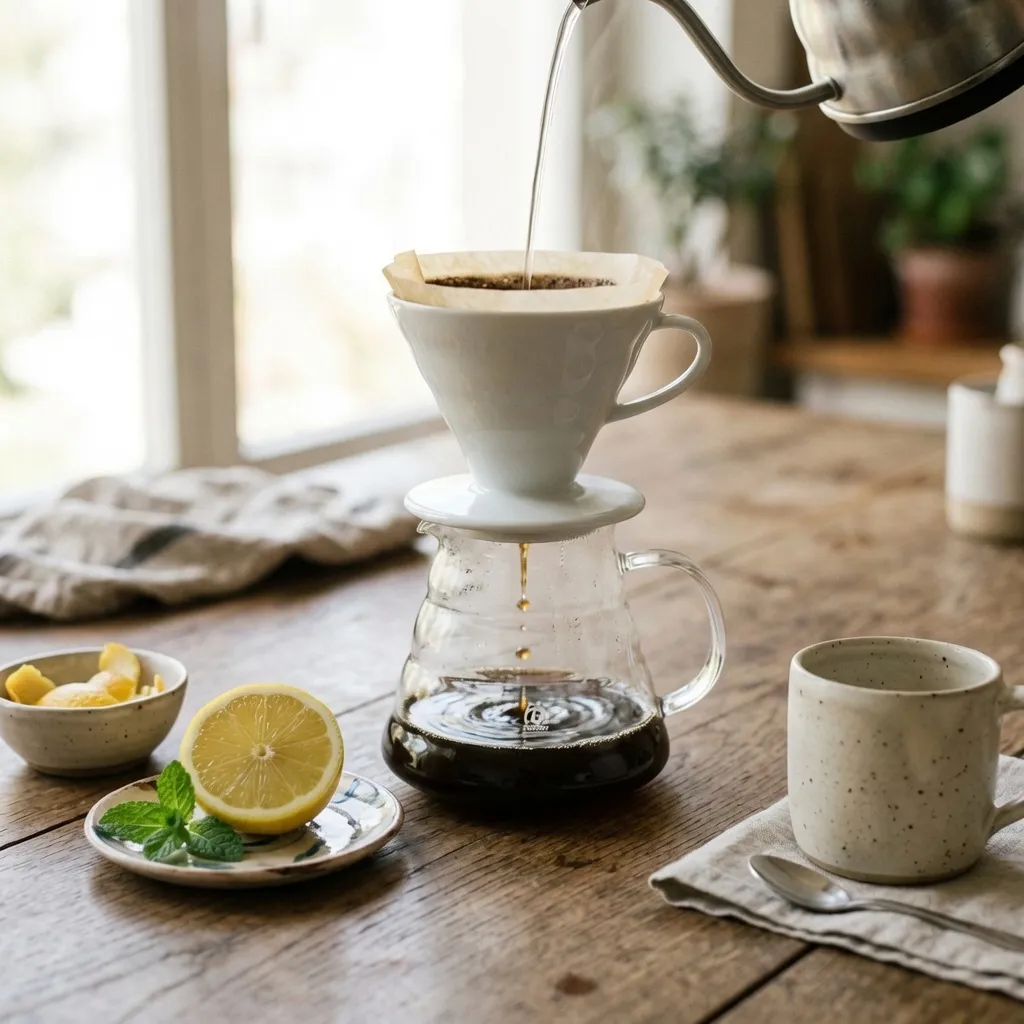
- Pour-over / dripper - clean, light, you hear the most of the fruity notes. Great for learning to taste.
- French press - fuller, more „round”, gentler for a beginner.
- Espresso - intense and dense, but the least forgiving of mistakes.
If you are just starting to pick out flavours, begin with a pour-over or a French press. Leave espresso for later.
Stop drinking coffee to wake up - start tasting it
Most of the coffee in our lives we drink absent-mindedly: on the run, next to the laptop, „to get going”. It is hard to feel anything then. Try it differently once: first smell it, take a small sip, hold it for a moment, let it cool. Funnily enough, coffee reveals the most when it cools a little - hot hides the flavours, lukewarm shows them.
Then ask yourself a few simple questions:
- Acidity - is it there? lively or sharp? which fruit does it remind you of?
- Sweetness - can you taste caramel, chocolate, honey, or nothing?
- Body - light like tea or thick like cocoa?
- Finish - does it vanish at once or linger?
- Notes - citrus, berries, nuts, chocolate, flowers? There are no wrong answers.
You do not have to get it „like an expert”. The point is to move from „tasty / not tasty” to something specific - because only then do you start to understand what you like and what to look for next time.
Write down what you taste
And here comes the best part. Taste is not a talent you are born with - it is practice. The more coffees that pass over your palate consciously, the more you start to catch. But taste memory is fleeting; without notes, a month later you will not remember whether that Ethiopian was „so floral” or whether that was a completely different bag.
That is why it is worth writing it down. That is what we built the GustoNote drinks tasting journal for - you note your coffee (and tea), mark the notes on a ready-made flavour wheel, rate acidity, sweetness, body and finish, and over time you see with your own eyes how your palate develops. You can even run your own cupping at home and compare several coffees side by side, like the professionals.
And speaking of professionals: at a cupping, tasters slurp coffee off a spoon so loudly that your grandmother would have a fit at such manners. It is not rudeness - the point is to spray the coffee across your whole palate and feel it everywhere at once. The first time you feel like a vacuum cleaner, the second time you already get it.
Start with a single, lighter-roasted, fresh bag. Brew it properly. Let it cool. And instead of downing it on the run - taste it and write it down. You may find that „sour coffee” is exactly what you were looking for, only nobody told you before how to drink it.