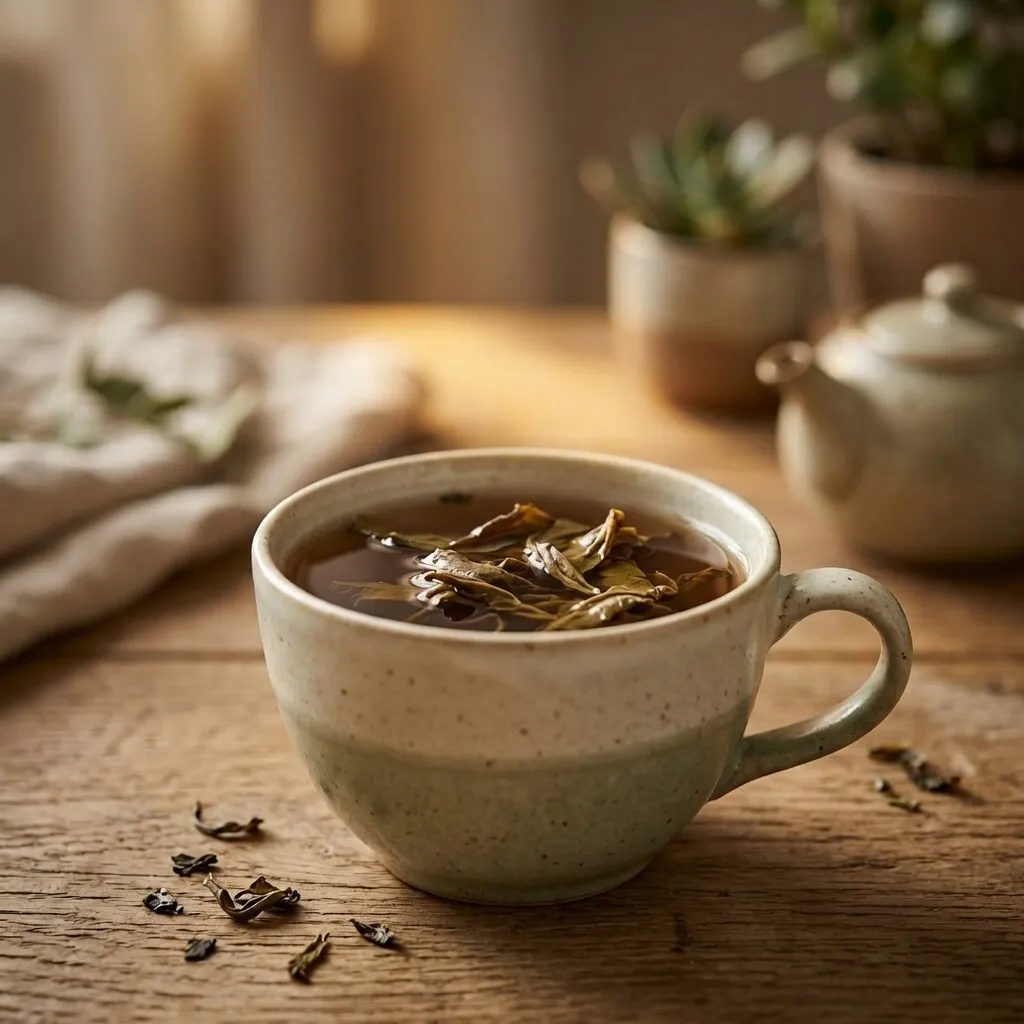
Why your tea tastes bitter (and how to fix it)
„Bitter". „Dries my mouth like an unripe quince". „I have to drown it in sugar to get it down". If that is how your encounter with tea usually ends - relax, you are not alone, and it is almost certainly not the tea’s fault. Tea is one of those drinks that is very easy to brew badly: you drop a bag into boiling water, go fetch the milk, come back five minutes later to something dark and astringent. And then you conclude that you „don’t like tea without sugar". The good news: the very same tea can be brewed so that the sugar simply is not needed.
The main culprit: boiling water
This is where most cups go wrong. Years have trained us into one move: boil the kettle, pour. For a strong black tea that just about works - but for green, white or a delicate oolong, boiling water is a death sentence. Water at 100°C literally boils the bitter compounds out of the leaves and scorches the subtle aromas before you ever get to taste them.
The rule is simple: the more delicate and less oxidised the tea, the cooler the water. Green likes around 70-80°C, white 75-85°C, oolong 85-95°C, and only strong black and pu-erh can take near-boiling. No kettle with a thermometer? After boiling, leave the water uncovered for 3-5 minutes, or pour it once between vessels - each pour drops it by a few degrees. It is one move, and it changes more than a pricier tea would.
The second culprit: time
A missed minute is the other half of the problem. The longer the leaves sit in the water, the more tannins they release - and those are what cause that drying, astringent feeling on your tongue. A green tea left for five minutes turns bitter even at the perfect temperature.
A starting point: green and white 1-3 minutes, oolong 2-3, black 3-4, herbal and fruit infusions a comfortable 5 or more (those do not fear bitterness). Set a timer on your phone - seriously. Tea is one of the few drinks where timing discipline alone handles half the job. And take the leaves or bag out when the time is up - do not leave them in to „get stronger", because all they get is worse.
What is actually inside that teabag
There is a third, quiet reason. Most cheap teabag tea is not leaves but dust and broken bits (dust and fannings) - what is left at the bottom of the sieves after leaf tea is graded. Dust has an enormous surface area, so it gives up everything instantly: colour, tannins, bitterness - and runs out just as fast. Hence that typical strong, dark, astringent teabag brew.
You do not need to buy a scale and a teapot right away. Just reach for loose-leaf tea (or whole-leaf bags, those pyramids) and you are already in a different world: a leaf releases its flavour more slowly, gently and evenly - and forgives small brewing mistakes. It is usually the single biggest jump in quality for the least money.
Bitterness is not the same as astringency
It is worth separating two sensations that are easily lumped into one „bad":
- Bitterness - a taste, the same one as in dark chocolate or lemon peel. In tea it usually signals water that was too hot or steeping that ran too long.
- Astringency (the dry pucker) - not a taste but a feeling: the tongue goes dry and rough, like after an unripe quince or a bold red wine. Tannins are behind it.
A touch of each belongs in good tea - it gives structure and definition, much like a gentle bitterness in good coffee. The trouble only starts when bitterness and astringency drown out everything else. That is the signal: cool the water, shorten the time.
Good tea is brewed several times
A small bonus few people know: a proper loose-leaf tea - especially oolong and pu-erh - can be brewed not once but several times from the same leaves. The first steep, the second, the third - each tastes a little different, revealing fresh notes. Steep briefly, pour off, repeat. It is not just economical but the best lesson there is: you feel on your own tongue how the same leaf changes over time.
Stop gulping tea on the run - taste it
We drink most of our tea without attention: at the laptop, lukewarm, just to wet the throat. It is hard to feel anything that way. Try it differently once: first smell the brew, take a small sip, hold it for a moment. Then ask yourself a few simple questions:
- Aroma - grass, flowers, honey, dried fruit, smoke, or something buttery?
- Taste - sweet, floral, nutty, mineral?
- Astringency - is it there? gentle, or drying far too much?
- Finish - does it vanish at once, or leave a sweetish note, that famous aftertaste of a good oolong?
The point is not to score like a master. It is to move from „nice / not nice" to something specific - because only then do you start to understand which teas you really like.
Write down what you taste
And here is the best part. The palate is not a talent you are born with - it is practice. The more teas pass through it with attention, the more you start to catch. But taste memory is fleeting; without notes, a month later you will not remember whether that green was grassy or floral, nor the temperature at which it finally came out perfect.
So it is worth writing it down. That is why we built the GustoNote drinks tasting journal - you record every tea, mark the notes on a ready flavour wheel, rate astringency, sweetness, body and finish, and jot down the brewing temperature and time along the way. After a few entries you have your own cheat sheet in black and white: which tea, how many degrees, how many minutes - and you stop guessing.
Start with one decent loose-leaf tea. Do not scald it with boiling water, set a timer, take the leaves out on time. And instead of drinking it on the run - taste it and write it down. You may find you never had a problem with unsweetened tea, only with tea brewed blind.