Matcha - the powdered, ceremonial tea you drink whole
Matcha is exceptional even among the whole world of tea, because it is the only one that is not an infusion but the whole, powdered leaf suspended in water. When you drink matcha, you consume the entire leaf, not just what has rinsed out of it, which is why it gives such an intense colour, flavour and effect. This vivid green, creamy, umami tea has gained huge popularity around the world, but behind its simple look lies one of the most labour-intensive processes in all of tea production. It is worth understanding where its character comes from, to tell real matcha from the mediocre.
Shading, or the secret of umami
The most important stage begins out in the field. For about three to four weeks before harvest, matcha bushes are covered with mats or nets, cutting off a large part of the light, sometimes from fifty to as much as ninety percent. This shading has huge consequences for the flavour.
Deprived of full sun, the plant responds by producing more theanine, an amino acid with a sweet, umami taste, and at the same time fewer catechins, which give bitterness and astringency. The leaf also accumulates more chlorophyll, turning an intense, vivid green. That is why good matcha is sweet, creamy and broth-like in flavour rather than bitter. It is the same shading mechanism used for the noblest tea, gyokuro, which I cover in green tea.
From tencha to powder
After harvest, the shaded leaves are steamed and dried, but, unlike ordinary green tea, they are not rolled. Then the stems and veins are removed, leaving only the delicate body of the leaf. This produces tencha, the raw material for matcha.
Only now comes the stage that makes matcha matcha: grinding. Tencha is ground in slow granite stone mills, turning just a few dozen times per minute. This slowness is crucial, because grinding too fast would create heat that would destroy the delicate flavour and colour. In this way the leaf becomes a smooth, silky, vivid green powder. That is why real matcha is relatively expensive: producing a small amount takes hours.
Ceremonial grade versus culinary
In shops you will meet two main quality levels, and it is worth telling them apart:
- Ceremonial grade is the highest-class matcha, from the youngest, most carefully cultivated leaves. It is smooth, sweet, delicate and intensely green, meant to be drunk on its own, suspended in water alone, with no sugar or additives.
- Culinary grade has a stronger, more astringent and assertive flavour, can be a touch duller in colour and often comes from leaves with some stem left in. It is made for combining with other ingredients, that is, for lattes, desserts and cooking, where it has to cut through milk and sugar.
The choice depends on the purpose: drink ceremonial on its own, use culinary for lattes or baking.
How to prepare it
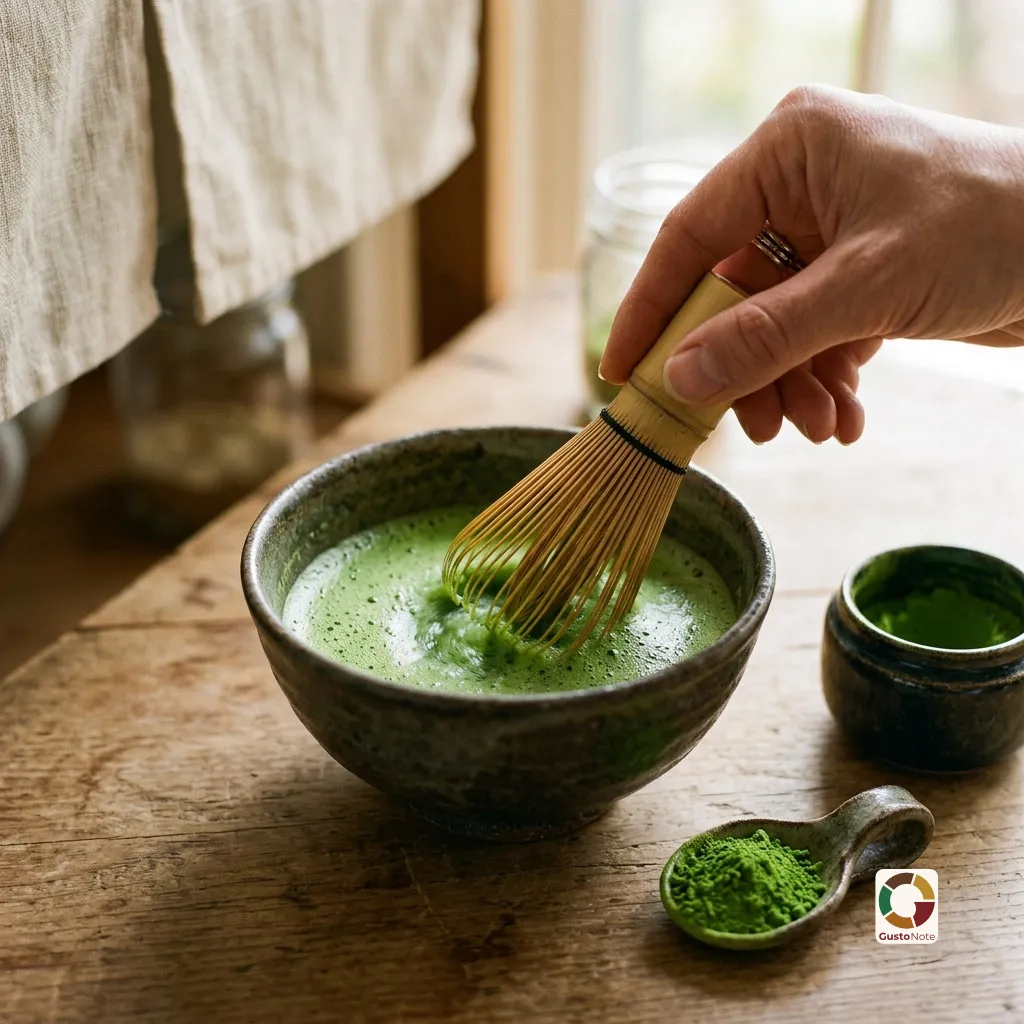
Matcha is not brewed but whisked. Sift the powder into a bowl, add not-too-hot water, around 70 to 80 degrees, because boiling water would draw out bitterness, and whisk vigorously with a bamboo whisk, called a chasen, in M-shaped motions, until a smooth, light green froth forms on the surface. You then drink the whole leaf suspended in the water. Matcha combines a high dose of caffeine with theanine, which gives that characteristic calm focus I cover in caffeine in tea.
How to explore it
The best way to appreciate matcha is to try a good ceremonial grade, prepared yourself, and compare it with a cheaper culinary one. The difference in sweetness, smoothness and colour is immediate. In GustoNote you note the grade, origin, preparation and profile of every matcha, and after a few entries you will see which one really suits your taste. It turns a trendy green powder into a conscious element of your tea map. You will find a full overview of tea types in types of tea.