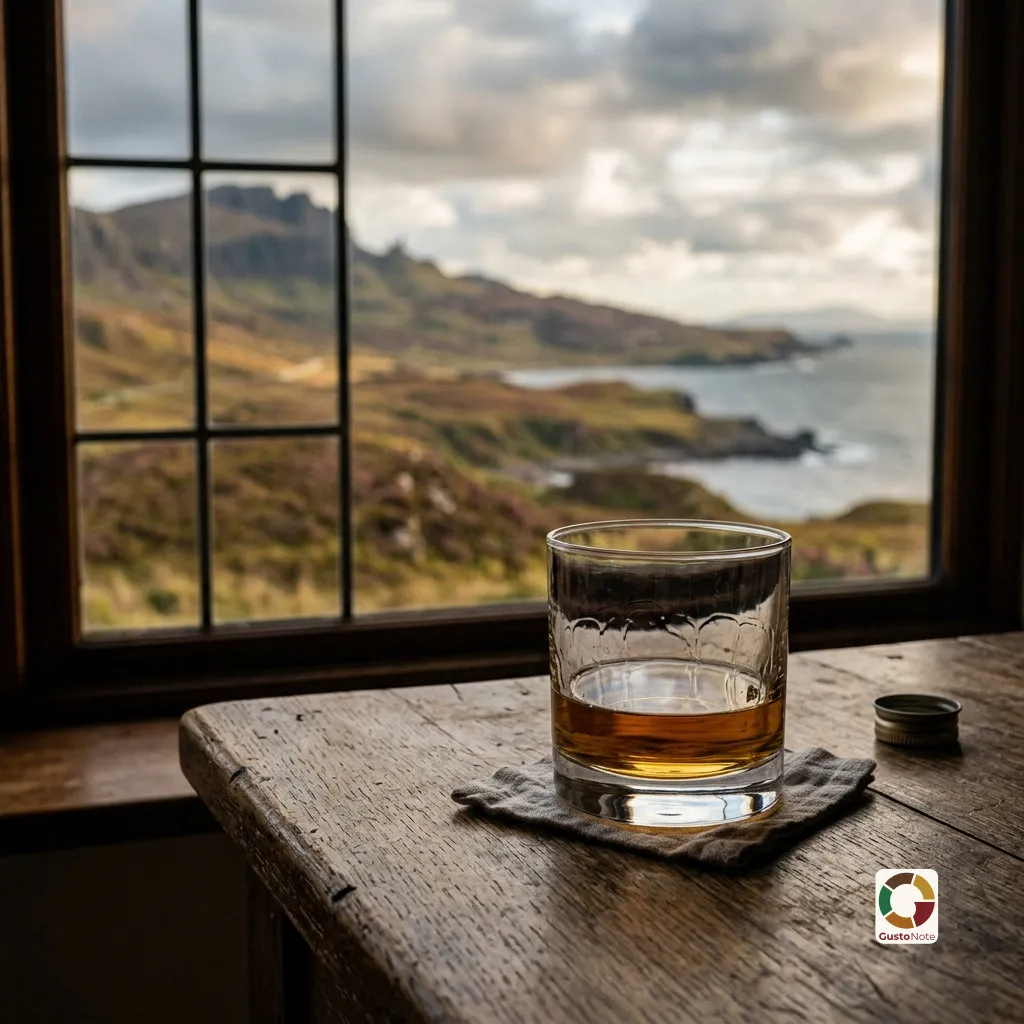
Highlands, Lowlands and Campbeltown - three faces of Scotch whisky
Scotland is traditionally divided into five whisky regions. Two of them, smoky Islay and fruity Speyside, I have covered separately, because they have the most recognisable character. That leaves three: the gentle Lowlands, the vast and elusive Highlands, and the tiny, oily Campbeltown. Each tells a different story about how place, water and tradition shape the flavour of whisky. Getting to know them completes the map of Scotch single malt and shows how varied whisky from a single country can be.
Lowlands - gentleness and triple distillation
The Lowlands, the lowland belt of southern Scotland, give the gentlest and most approachable whiskies. These are light, delicate and as a rule completely unpeated spirits, with a subtle profile. Typical notes are grass, flowers, cream, ginger, peanut butter, toast and cinnamon. It is an elegant, easy whisky, often recommended for first steps.
The Lowlands also hold an interesting technical tradition. Historically, whiskies from this region were triple distilled, that is, distilled three times instead of twice, which gave a lighter, cleaner spirit. Today this tradition is carried on across a full range above all by the Auchentoshan distillery. Triple distillation is mainly associated with Irish whiskey, but it has its roots here too.
Highlands - a vast region of many faces
The Highlands are by far the largest whisky region in Scotland, covering the whole mountainous north of the country. Its vastness makes it hard to speak of a single style, because whiskies from different corners can differ wildly. Even so, some tendencies can be pointed out:
- The south and east often give whiskies with notes of heather honey, toffee, dried fruit and warming spice, leaning toward fruit and sweetness.
- The coast and north give sturdier, more maritime whiskies, with a note of salt, sometimes a gentle smoke, rawer and fuller.
There is a technical curiosity too. Barley was historically scarce in the Highlands, so distilleries used smaller stills. Smaller stills let the heavier, oilier compounds carry further, which gives a richer, more obviously flavoured whisky. This is one reason for the fuller character of many Highland single malts. I touch on how still shape affects flavour in how whisky is made.
Campbeltown - a small capital with a big character
Campbeltown is today the smallest whisky region, on the Kintyre peninsula. Hard to believe, but in the 19th century it was a true capital of Scotch whisky, with dozens of working distilleries. Today only three remain, but their style is unmistakable: oily, sturdy, maritime, often with a note of salt and gentle smoke. It is a whisky of bold, distinctive character, prized by connoisseurs.
Each of the three distilleries has its own face. Springbank gives the sturdiest, oiliest and slightly smoky whisky, with a maritime base. Glen Scotia is lighter, with grassy notes. Glengyle, whose whisky carries the name Kilkerran, is light and sweet but with a distinctive oily and salty note. It is a small region but with a disproportionately large personality.
How these regions sit on the flavour map
Lining up all five regions gives you the full spectrum of Scotch whisky. At one end stand the gentle, floral Lowlands, at the other the smoky, medicinal Islay, which I cover in Islay - the peatiest island. Between them stretch the fruity, elegant Speyside, covered in Speyside, the rich and varied Highlands, and the oily, maritime Campbeltown. That is why Scotch whisky can be so varied, though it comes from a single, small country. You will find a full overview of world whisky in whisky around the world.
How to explore them
The best way to feel these three regions is to line up a gentle Lowland, a full Highland and a sturdy Campbeltown whisky. The contrast between delicate grass and oily, maritime strength is immediate. In GustoNote you note the region, profile and your impressions of every whisky, and after a few dozen entries you will see which Scottish lands suit your taste best. It turns a general I like Scotch into a specific map of regions you can navigate on purpose. If you are just starting, see how to fall in love with whisky.