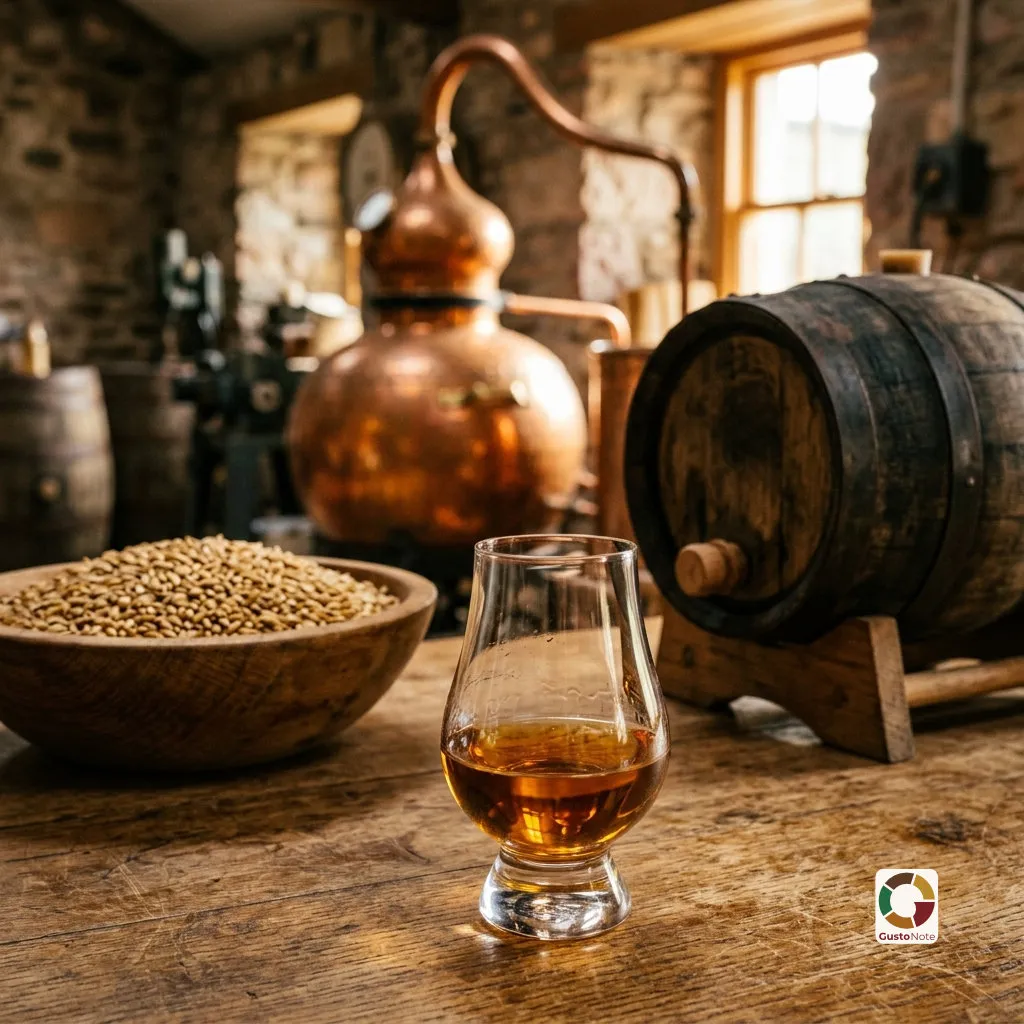
How whisky is made - from barley to barrel
Whisky is essentially distilled beer aged for years in wood. It sounds simple, but each of the five stages gives birth to a different part of the flavour. Once you understand where specific notes come from, you start recognising them in the glass instead of just admiring the label.
1. Malting
Barley is soaked and allowed to start sprouting, then dried with hot air. Sprouting releases enzymes that will later turn starch into sugars. If the grain is dried over smoke from burning peat, the whisky picks up its smoky, bonfire character here. Where exactly that smoke comes from is covered in why whisky tastes like a bonfire.
2. Mashing
The ground malt is steeped in hot water. The enzymes break the starch down into sugars, which pass into a sweet liquid called wort. That is the fuel for the yeast.
3. Fermentation
Yeast is added to the wort, eating the sugars and producing alcohol and aromas. The result is a liquid roughly as strong as beer, called wash. The first fruity and floral notes are born here.
4. Distillation
The wash is heated in stills. Alcohol evaporates faster than water, so it condenses separately, stronger and cleaner. Malt whisky usually goes through two distillations, Irish whiskey often three. The distiller decides which part of the stream to keep - a choice that shapes the character of the spirit.
5. Maturation
Fresh spirit is colourless and sharp. Only years in an oak cask give it colour, vanilla, honey, dried fruit and softness. Most of the flavour is born here - which is why people say the cask makes the whisky. I expand on this in how the cask shapes whisky.
Flavour has a birthplace
Next time you catch smoke, fruit or vanilla, you will know which stage it came from. In GustoNote you note those notes for every whisky and over time you will see which styles pull you most. And if you are just getting into it, start with how to fall in love with whisky.