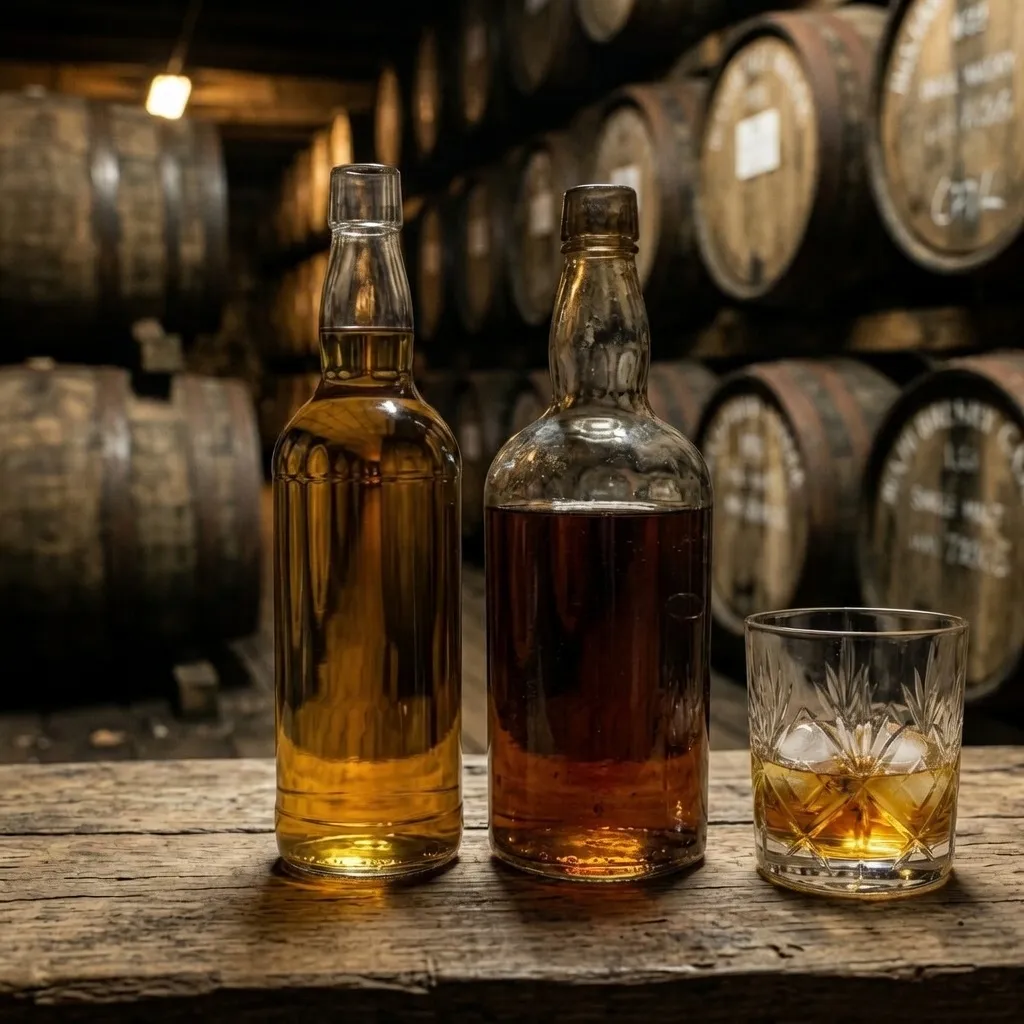
Is older whisky better? The truth about age, NAS and price
Two bottles stand on the shelf: one with a clear 18, the other with no age at all. Instinct says the older one is better and the one without a number is worse. This is one of the most persistent myths in the whisky world - and like most myths, it holds a grain of truth and a lot of exaggeration. Let us unpack it calmly.
What the number on the label actually means
The age on the bottle (12, 18) tells you how many years the youngest whisky inside spent in the cask. If it is a blend of several vintages, the youngest one counts. Time in the cask is not the same as the age of the bottle - whisky only matures in the wood, and once bottled it stops ageing. A bottle of 30-year-old whisky sitting in a cabinet for 20 years is still 30-year-old whisky.
What age actually does to the flavour
Longer maturation means more contact with the wood, so usually:
- more notes from the cask - vanilla, spice, dried fruit, sometimes a tannic grip,
- a smoother, rounder character,
- but also less of the fresh, grainy and fruity character of the spirit, which the wood covers over time.
So older does not mean more flavour, just a different flavour - more woody.
Why older is not always better
This is the crux. Whisky can be over-aged. Too long in an active cask and it turns bitter, dried out and dominated by oak - like tea left in water for half an hour. Many people believe whisky has its sweet spot, often somewhere between 10 and 18 years, depending on the cask and distillery. Above that it is often pricier, but not necessarily better - sometimes just more woody.
NAS - whisky with no stated age
More and more bottles have no number (NAS, or No Age Statement). That does not mean worse or young by force. Often it is a thoughtful blend in which the master blender combines younger and older whisky for a specific flavour, not for a number on the label. Some excellent, popular whiskies are exactly NAS. Age adds prestige and pushes up the price, but it is not a guarantee of quality.
What you are really paying for
The price of old whisky is largely rarity, not flavour. The longer a cask matures, the more evaporates (the so-called angels share), so less liquid remains - hence the higher price. You are paying for time, storage and loss, not just for it being tastier.
How to buy wisely
- Do not assume that pricier and older means better for you.
- Look at the cask type and strength - they often do more for the flavour than age alone. We wrote about it in the post whisky around the world.
- Trust your own palate, not the number on the label.
Check it on yourself
The best way to see through this myth is to compare your own ratings. In GustoNote you can note the age, cask type and strength of each whisky, mark the aromas and rate the profile on the radar. After a dozen or so entries you will see in black and white whether you really lean towards older, woody drams or rather younger, lively ones - and you will stop overpaying for a number on the bottle.