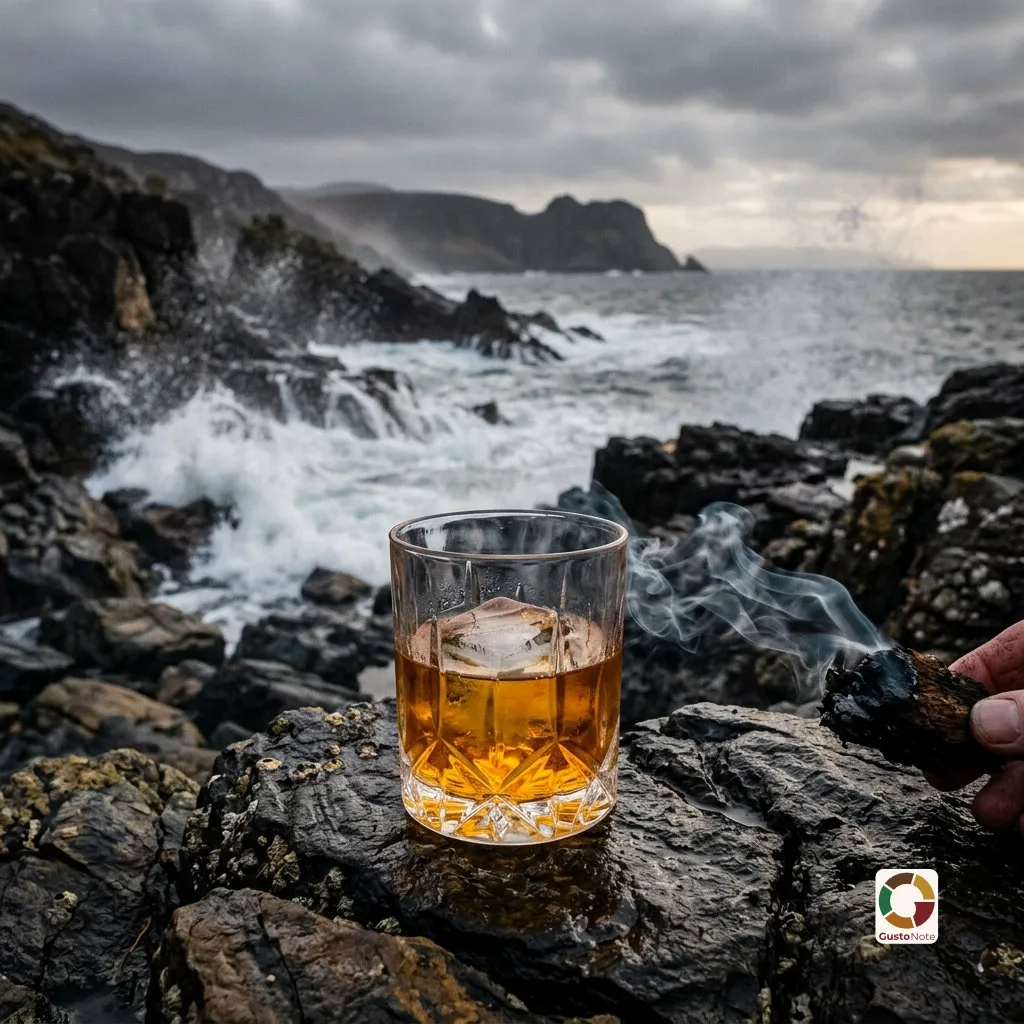
Islay - the peatiest whisky island in the world
There is a small island off the west coast of Scotland, barely forty kilometres long, that means more to whisky lovers than many an entire country. Islay, pronounced eye-luh, is the home of the peatiest, smokiest, most maritime whiskies in the world. For some it is the peak of tasting experience, for others a liquid sticking plaster. Either way, no other island has such a recognisable, unmistakable character. It is worth understanding where it comes from and how to navigate it, because Islay is a world of its own.
Where the smoky, maritime character comes from
The heart of the Islay style is peat. When sprouting barley is dried over smoke from burning peat, the grain absorbs phenolic compounds that later give the whisky its smell of smoke, soot, tar and medicinal notes. I describe this mechanism in more depth in why whisky tastes like a bonfire.
The key thing, though, is that Islay peat is unique. The island is small, wind-battered and surrounded by sea, and its peat bogs formed from coastal vegetation: heather, mosses, algae. So the smoke from Islay is not simply smoky but maritime, iodine-like, seaweedy, salty. Add to this the maturation of barrels right by the ocean, in humid, salty air, which many tasters link to the characteristic note of sea breeze and brine. This combination of peat and sea gives a style that cannot be faked anywhere else.
What ppm of phenol really means
The level of peating is given in ppm of phenol, parts per million. These are tempting numbers: Lagavulin uses malt peated to around 35 ppm, Laphroaig to around 45 ppm, and Ardbeg to around 50-55 ppm, one of the highest among the classic Islays. There are also extreme whiskies peated to several hundred ppm.
Here is an important nuance rarely mentioned, though: the ppm is given for the malt, not for the whisky in the glass. During mashing, fermentation, distillation and years of maturation, a huge part of the phenols is lost, so the finished whisky has many times fewer than the number on the malt suggests. That is why experienced tasters warn against chasing ppm like megapixels. A whisky with a lower ppm can be perceived as smokier than one with a higher figure, because the impression is decided by the whole of production, not the number alone. This is knowledge that protects you from the marketing assumption that more always means better. I cover where specific notes come from in where whisky flavours come from.
The big three of the south
On the south coast of Islay sit three legendary distilleries side by side, forming the smokiest face of the island:
- Laphroaig is the most medicinal of them: iodine, seaweed, tar, sticking plaster, salty breeze. A whisky that splits people in two.
- Lagavulin is elegance in smoke: deep, substantial, blending peat with fruity sweetness, often from sherry casks. For many the most balanced of the three.
- Ardbeg is the cleanest, most intense smoke with notes of soot, herbs, citrus and sea salt. A cult favourite among peat fans.
The rest of the island, not just smoke
It would be a mistake to think all of Islay is nothing but peat monsters. The island is more varied than it seems:
- Bowmore, the island’s oldest distillery, gives a moderately smoky, gentler whisky with fruit and flowers.
- Bruichladdich is famous for completely unpeated whisky, while at the same time producing the heavily peated Port Charlotte and extremely peated Octomore lines.
- Caol Ila is a smoky but lighter, oilier whisky, often used in blends too.
- Bunnahabhain surprises, because it is mostly delicate and largely unpeated, with a maritime, slightly salty note.
- Kilchoman, a small farm distillery, and the newer Ardnahoe round out the picture of a living, developing island.
That is why you can explore Islay for years and still find new shades.
How to start your Islay adventure
Heavily peated whisky can be a shock to the palate, so it is worth entering wisely. Do not start with the most medicinal bottles at full strength. A good entry is a gentler, balanced whisky with smoke and sweetness, for example in the style of Bowmore or Lagavulin. Add a drop of water, which tempers the burn and opens the aroma, which I cover in why whisky burns. Nose gently and with your mouth open, because concentrated smoke can overwhelm. Give yourself a few tries, because peat is a taste many people grow into and then cannot live without.
In GustoNote you note the level of smoke, the maritime notes and your impressions of every Islay whisky, and after a few entries you will see whether you lean toward the medicinal peat monsters of the south or the gentler, maritime faces of the island. You will find a full overview of whisky regions and countries in whisky around the world.