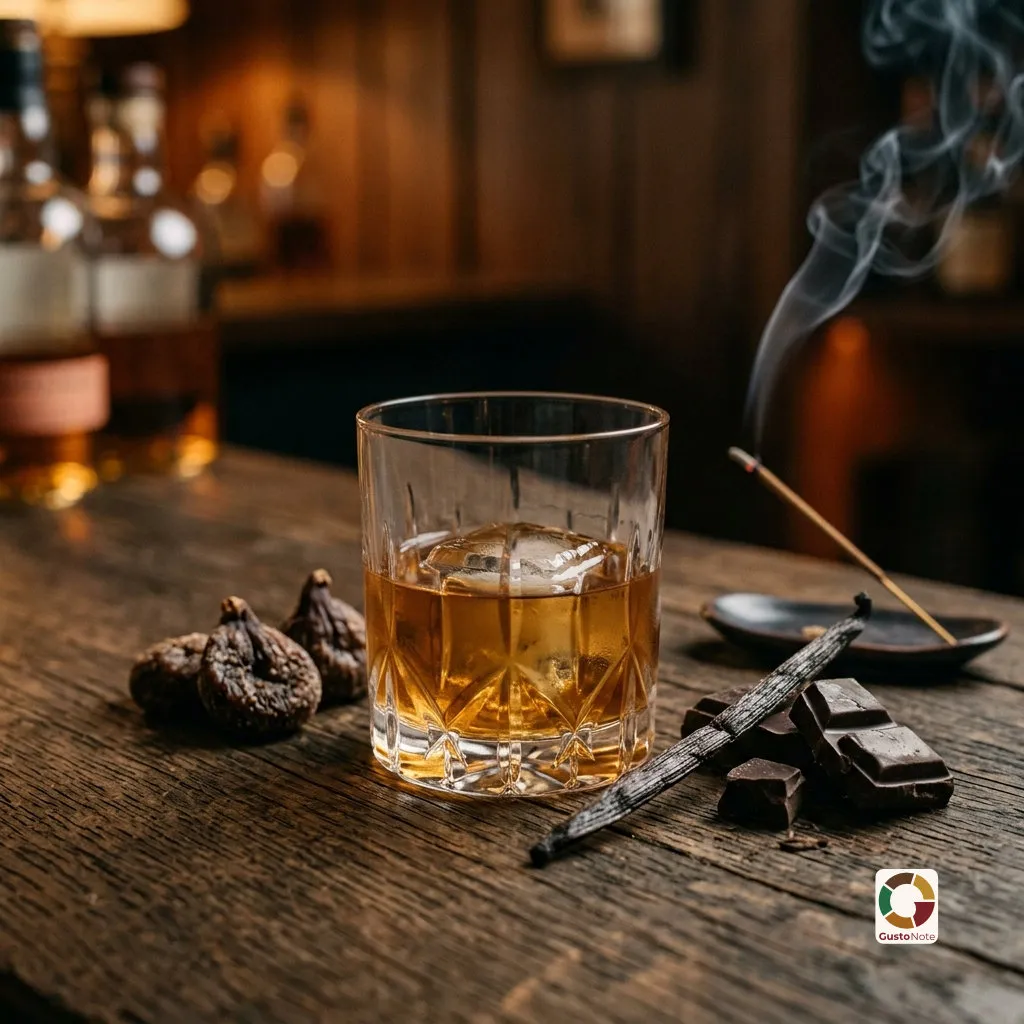
Where whisky gets its vanilla, honey, smoke and dried fruit
You smell a good whisky and clearly catch vanilla, honey, dried fruit, and sometimes campfire smoke or a sticking plaster. Yet only three things go into making it: grain, water and yeast, plus an oak barrel. So where does the whole palette come from? Each of these notes has a specific source and a specific moment when it forms. Once you know this map, you stop merely admiring the aroma and start reading it, and guessing how the whisky was made.
Fruit and flowers - from fermentation
Before whisky even touches a barrel, its character begins to form during fermentation. As the yeast eats the sugars from the barley, it produces not only alcohol but also esters, compounds with an intensely fruity and floral smell. They give notes of apple, pear, banana, peach and rose. The longer the fermentation, the more esters and the fruitier the spirit, as a rule. That is why distilleries aiming for a light, fruity style run long fermentations, even of several dozen hours. I describe the whole process in how whisky is made.
Cleanliness and body - from distillation
The shape of the stills and the way the spirit is cut decide how light or heavy the whisky will be. Tall, slender stills give a lighter, more floral spirit, because the heavier, oilier compounds cannot climb high enough. Short, squat stills give a heavier, more buttery and cereal whisky. The raw character of the young spirit is born here too: the cereal, bready, slightly nutty notes that the barrel will later smooth out.
Vanilla, coconut, caramel and spice - from the oak
The barrel is responsible for the largest part of a mature whisky’s flavour, up to 70%. Oak is not a passive container but a source of aromatic compounds released especially after the inside of the barrel is toasted or charred:
- Vanilla comes from vanillin, a compound formed by the breakdown of lignin, the woody building material of oak, under the heat of charring. It is the same molecule that gives the smell of real vanilla.
- Coconut and woody notes are the work of oak lactones, known as whisky lactones. American oak has far more of them than European, which is why whisky from ex-bourbon barrels often smells of coconut and vanilla.
- Caramel and toffee form when the sugars in the wood caramelise during the charring of the barrel.
- Almond, toast and spicy notes come from the breakdown of hemicellulose and other compounds, yielding furfural and aldehydes with a roasted, spicy smell.
- Structure, colour and a slight astringency come from the tannins in the oak. European oak gives up more of them, so whisky from such barrels tends to be more tannic and dry.
That is why people say the cask makes the whisky. I expand on this in how the cask shapes whisky.
Dried fruit and nuts - from the sherry cask
Some barrels, before they hold whisky, previously matured wine or another spirit. An ex-sherry cask, holding the Spanish fortified wine, soaks the wood with residues of sweet, oxidised wine. Those traces, combined with tannic European oak, give the whisky its characteristic notes of raisin, dried fig, date, walnut and chocolate. Hence the dark, dried-fruit profile of many sherried whiskies. Ex-port, rum and wine casks work in a similar way, which I cover in what is a whisky finish.
Smoke, peat and medicinal notes - from the malt
The smoky, campfire, sometimes downright iodine character of some whiskies, especially from the island of Islay, comes not from the barrel or the distillation but from malting. When sprouting barley is dried over smoke from burning peat, the grain absorbs phenolic compounds: guaiacol, cresols, phenol and syringol. They give the smell of smoke, soot, smoked meat and tar, and at higher concentrations medicinal and maritime notes. The level of peating is measured in ppm of phenol, from a few units in lightly smoky whiskies to several dozen in heavily peated ones. I break down exactly where this smoke comes from in why whisky tastes like a bonfire.
Honey, smoothness and depth - from time
Age does not add a separate note, but it amplifies and smooths everything else. The longer a whisky matures, the more compounds it draws from the wood and the mellower it becomes, because the sharp, volatile components evaporate or transform over time. Honeyed, waxy, deep notes usually appear in older, longer-matured whiskies. At the same time, some of the liquid disappears from the barrel each year, which I cover in the angel’s share. Age alone, however, does not guarantee quality, which I cover in is older whisky better.
How to use this in tasting
Next time you catch a specific note in whisky, try to guess its source. Fruit and flowers are most likely fermentation, vanilla and coconut are American oak, dried fruit is a sherry cask, smoke is peat from the malt, and deep honey is years in the wood. Such a map turns passive sniffing into understanding. In GustoNote you note the aromas you catch, the cask type and the age of every whisky, and after a few dozen entries you will see which sources of flavour suit you best: whether you lean toward fruity, floral spirits, dried-fruit sherried whiskies, or smoky peat monsters. If you are just starting, begin with how to fall in love with whisky.