Why whisky burns and how to tame it
For many people the first sip of whisky ends in a grimace: the throat burns, the eyes water, and all the aroma vanishes under a wave of heat. This is the most common reason people say they do not like whisky. Yet the burn is not a fault of the whisky or its flavour, but your body’s reaction to alcohol. Best of all, it can largely be tamed with a few simple tricks that reveal what it is really about beneath the layer of fire: vanilla, fruit, honey, smoke.
Where the burn comes from
The burn from alcohol is not a taste in the classic sense, because taste buds do not detect it. It is so-called chemesthesis, a reaction of the pain and temperature receptors. Ethanol activates the TRPV1 receptors in your mouth and throat, the same ones triggered by physical heat and by capsaicin from chilli peppers. The brain gets a signal of heat and burning, even though nothing is actually scalding you. In other words, whisky fools your temperature alarm system.
From this comes a simple relationship: the higher the alcohol content, the more strongly the receptors are activated and the greater the burn. A whisky at the standard 40% burns moderately, while a cask strength whisky, reaching 55-60% and more, can flare up quite painfully. I cover such strong whiskies in cask strength.
Why the first sip burns the most
There is one more mechanism worth knowing. The first contact of strong alcohol with a dry mouth always gives the strongest burn. The second sip is clearly milder, because the palate has been wetted and prepared. So it is not worth judging a whisky by the first hit. Give yourself a moment and the threshold of the burn drops at once.
How to tame the burn
The good news is that you have plenty of tools to master the fire and bring out the aroma. Here are the most effective.
Add a drop of water
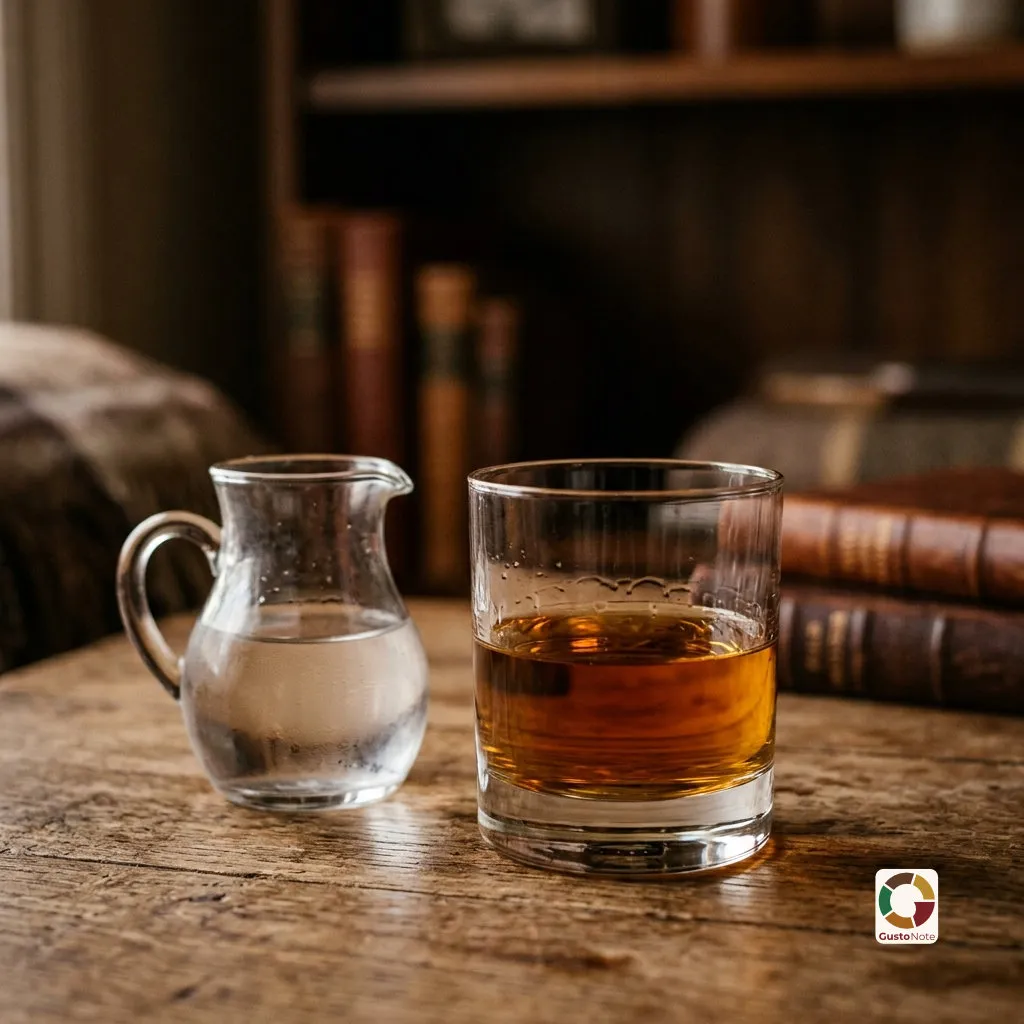
This is the oldest and best advice, used even by distillers. A few drops of water lower the alcohol concentration, so the TRPV1 receptors are less activated and the burn weakens. What is more, water releases aroma compounds from the whisky that stay trapped at high alcohol. So after adding water the whisky not only burns less but actually smells stronger and fuller. Add it little by little and taste, until you hit your spot. I break this down in more detail in does water or ice ruin whisky.
Nose with your mouth open
The most common beginner mistake is putting your nose deep into the glass and inhaling hard. You then breathe in concentrated alcohol vapour, which stings your nostrils and numbs your sense of smell. Instead, hold your nose near the rim of the glass and smell gently, with your lips slightly parted. An open mouth lets the alcohol vapour escape and the aromas reach your nose. It is a small change that completely transforms the experience.
Sip small and spread it
Do not drink whisky like water or like a shot. Take a small sip, hold it for a moment and let it spread across your whole mouth, instead of swallowing at once. This distributes the alcohol over a larger surface, so the burn is milder and the flavour fuller.
Start with the right bottle
Not every whisky is good to start with. Heavily peated or cask strength ones can put people off. To begin, choose whiskies at standard strength, well matured, mellow and slightly sweet, for example from sherry casks or gentle Irish whiskies. Smoke and high strength are a pleasure you usually grow into. I describe where individual notes come from in where whisky flavours come from.
Mind the temperature and the glass
Whisky gives up its aroma best at room temperature, not straight from the fridge. Gently warming the glass in your hand releases the scents. A glass with a tapered rim, like a Glencairn, concentrates the aroma, but remember it also concentrates the alcohol vapour, so all the more reason to nose gently and with your mouth open.
The burn is not an enemy but a stage
Over time your palate gets used to alcohol, and what was once a wall of fire becomes warmth and character. Many whisky lovers eventually even enjoy a gentle burn, because it carries the strength and depth of the spirit. The whole trick is not to let it push you away at the start and to give yourself a chance to pass through this stage. I describe how to do it step by step in how to fall in love with whisky.
In GustoNote you note the strength of every whisky, how much water you added and how it changed the experience, and after a few entries you will see for yourself at what concentration and with how much water a given whisky tastes best to you. It turns the fight with the burn into a conscious tuning of conditions for your own palate.