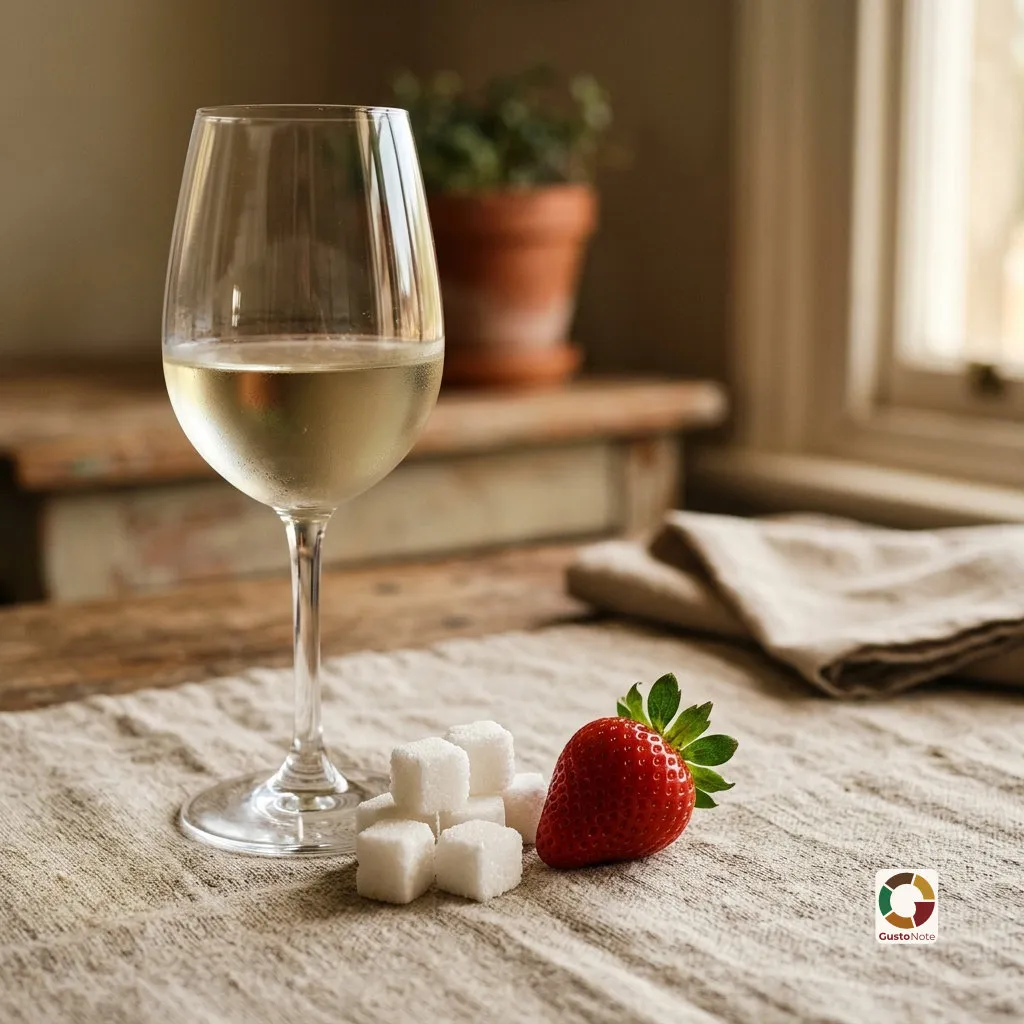
Dry vs sweet - what „dry" really means in wine
To many people, dry wine sounds like something harsh or sour that puckers the mouth. That is a misunderstanding. Dry and sweet is one specific axis: how much sugar is left in the wine. And because we often confuse it with acidity and fruitiness, it is worth sorting out once.
Where sweetness comes from
Grapes are sweet because they are full of sugar. During fermentation the yeast eats that sugar and turns it into alcohol. If it processes all the sugar, the wine is dry. If fermentation is stopped early or very sweet fruit is used, some sugar stays in the glass and the wine is off-dry, medium-sweet or sweet. So dry does not mean bitter - it simply means no residual sugar.
Fruity is not the same as sweet
This is the most common trap. A dry wine can smell intensely of fruit, but fruit aroma and sweet taste are two different things. Your nose catches strawberry or peach while your tongue detects no sugar. That is why many people say a wine is sweet when it is fully dry - they confuse the smell with actual sweetness. There is a simple test: pinch your nose as you sip, and you will feel whether the sugar is really there.
Acidity masks sugar
The second layer. High acidity balances sweetness, so a wine with quite a bit of sugar can taste crisp and not very sweet. A good sweet wine is not cloying precisely because of its acidity. I cover it separately in acidity in wine.
The scale from brut to sweet
On labels, especially sparkling, you will meet specific terms from the driest to the sweetest:
- Brut nature, extra brut, brut - dry, from almost zero sugar upward.
- Extra dry, dry - careful here, in sparkling wine „dry" is paradoxically sweeter than „brut".
- Demi-sec, medium-sweet - clearly noticeable sweetness.
- Doux, sweet, dessert - distinctly sweet wines, for dessert.
For still wines, the split into dry, off-dry, medium-sweet and sweet is usually enough.
Learn to recognise it
In GustoNote you rate the sweetness alongside acidity, body and tannin for every wine, and after a few dozen entries you will see whether you really prefer dry, or actually lean toward a touch of sugar. If you are still learning to separate these impressions, start with how to actually taste wine.