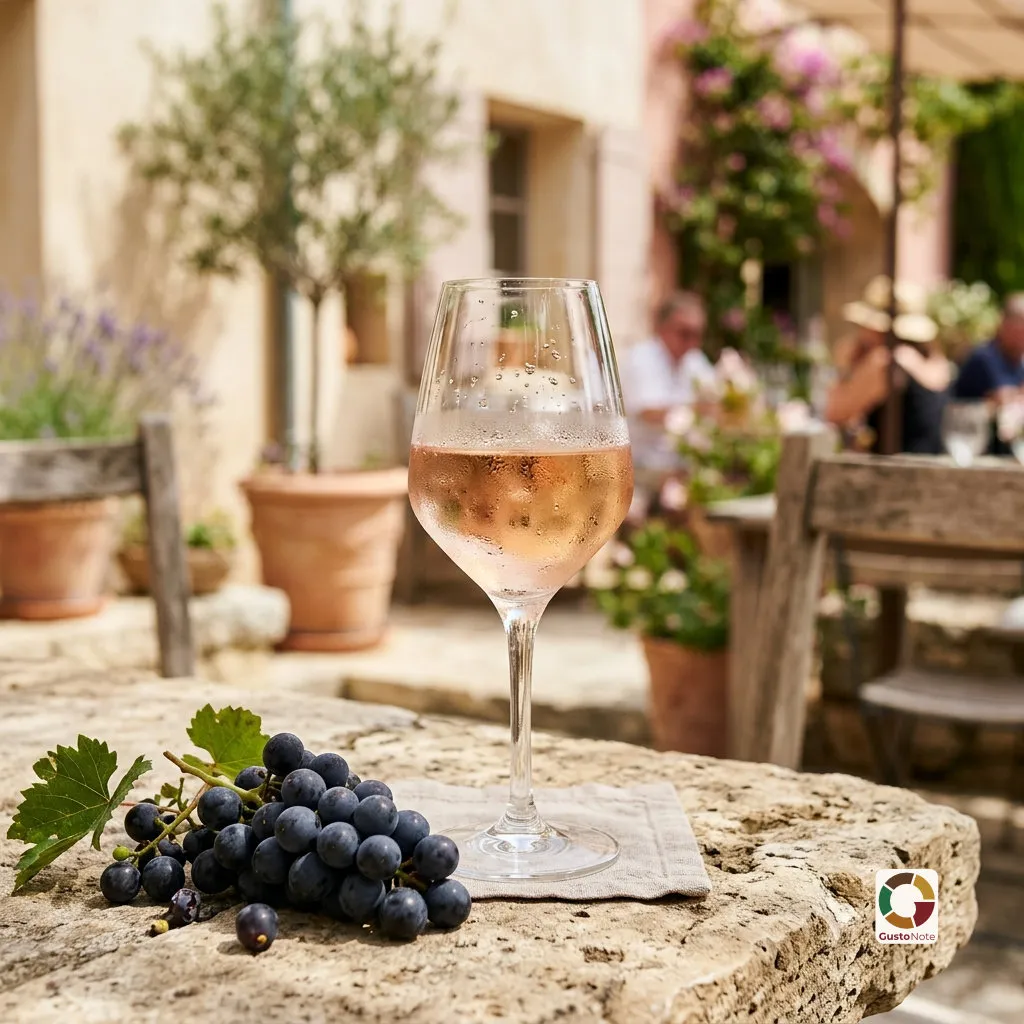
How rosé is made and why it is not a blend of red and white
The most popular myth about rosé wine is that it is made by mixing red and white. That is untrue, and in most of Europe it is actually illegal. Rosé is a separate, deliberate method of production, in which the colour comes not from mixing but from brief contact of the juice with the skins of dark grapes. Understanding how it is really made explains, among other things, why some rosés are pale pink and delicate while others are intense and almost red. It is not chance but a choice of method.
Why it is not a blend
Let us start by debunking the myth. Mixing finished red wine with white to obtain rosé is essentially forbidden in the European Union and treated as adulteration. There is one famous exception: rosé Champagne, where adding a little red wine to white is permitted and common. Beyond that, though, real rosé is made differently, from dark grapes alone, by controlling the contact of juice with skins. That, not mixing, is where the pink colour comes from.
Where the colour in wine comes from
To understand rosé production, you have to remember one thing: the juice of almost every grape is pale, and the colour of red wine comes from the skins. The longer the juice macerates with the skins of dark varieties, the darker the result. Rosé is simply stopping this process at a very early stage, when only a little pigment and very little tannin have passed from the skins. I describe the whole mechanism in how wine is made.
The three methods of making rosé
In practice winemakers use three main approaches, and each gives a different style of rosé.
Maceration
This is the method closest to making red wine, only shortened. Dark grapes are crushed and the juice is left in contact with the skins, usually for a few to a dozen or so, sometimes twenty hours, at a low temperature. When the colour and aroma reach the desired level, the juice is pressed off the skins and ferments on like a white. Maceration rosés usually have a more intense colour and a clearer, fruity aroma.
Direct press
This is the method that gives the palest, most delicate rosés, and the one preferred by purists in Provence. Dark grapes are pressed almost immediately, often as whole clusters, with minimal contact between juice and skins. A lightly pink juice already runs from the press and ferments like a white wine. The result is wines the colour of pale salmon, delicate, citrusy, with a note of strawberry. It is this style that made Provence rosé a synonym for elegant, pale pink.
Saignée, or bleeding
The third method, with the French name saignée, meaning bleeding, is really a by-product of making red wine. A portion of juice is bled off from a tank of fermenting red wine shortly after crushing. The remaining red becomes more concentrated, because it has a higher ratio of skins to juice, and the bled-off pink juice ferments separately as rosé. Wines made this way usually have a deeper colour and a fuller flavour than those from direct press.
What decides the style
From this comes a simple rule: the colour and intensity of a rosé depend above all on the time the juice spends in contact with the skins and on the chosen method. A pale, delicate rosé is usually direct press, while an intense, fruity and fuller one is maceration or saignée. The colour says nothing about sweetness, because most serious rosés are dry, regardless of hue. I cover how to tell dry from sweet in dry vs sweet.
What to expect in the glass
A good rosé is a crisp, fruity, refreshing wine, with notes of strawberry, raspberry, redcurrant, sometimes citrus and herbs, underpinned by clear acidity. It has only a trace of tannin, because the skin contact was brief, so it is drunk light and cool. It is the perfect wine for warm days, which I cover in summer wines. I cover tannins, and why there is so little of them in rosé, in tannins in wine.
How to explore it
The best way to feel the difference is to compare a pale Provence rosé and a more intense, fruity maceration rosé side by side. The same type of wine, yet two different styles, following directly from the method of production. In GustoNote you note the colour, fruitiness, acidity and your impressions of every rosé, and after a dozen or so entries you will see whether you prefer the delicate, pale pink ones or the fuller, intense ones. It turns a general I like rosé into a specific, conscious choice at the shelf. You will find a full overview of wine types in types of wine.