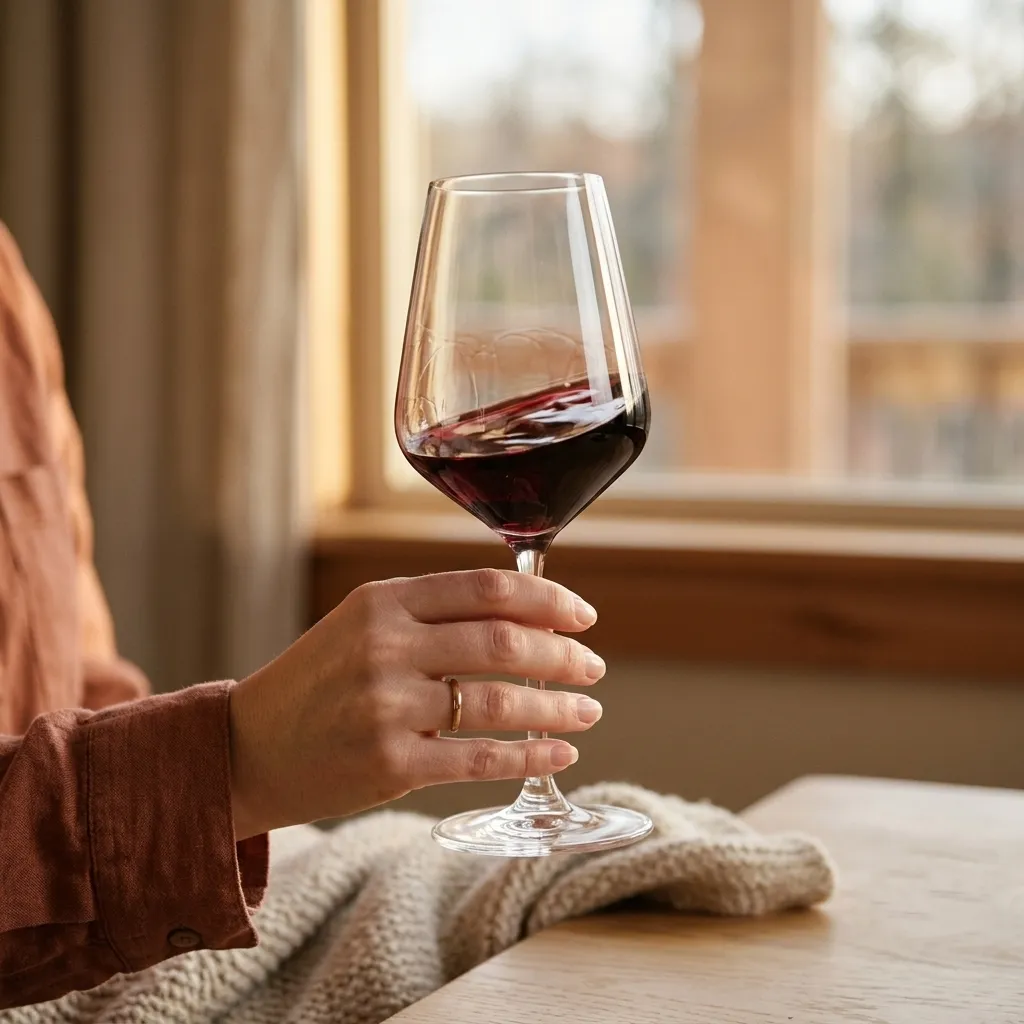
How to actually taste wine - without the snobbery
Most of us sort wine into two boxes: nice and not-nice. Maybe red or white, dry or sweet. And that is all we feel - the rest is just „some wine". If that sounds familiar, relax: it is not about talent or a palate you are born with. It is a few simple habits nobody ever showed you. Wine, much like whisky or coffee, is very easy to drink in a way that lets you feel almost nothing - and a few small changes are enough to make it start „talking".
Stop serving it at the wrong temperature
This ruins more wine than any choice of bottle. White straight from the fridge is so cold that the flavour hides - you feel nothing but the chill. Red, on the other hand, we usually drink too warm, because „room temperature" once meant 18°C, not 24°C in an overheated living room - and warm red turns heavy and alcoholic.
A simple rule: take white out of the fridge about 15 minutes early so it is not ice-cold. Red the other way round - pop it in the fridge for a quarter of an hour, especially in summer. Getting the temperature right alone reveals half the aromas you paid for.
Pour less, into a bigger glass
It sounds backwards, but it makes sense. Wine needs room to breathe and something to smell. A small glass filled to the brim gives you neither. Pour just enough to reach the widest point of the glass at most - the rest of the space works on the aroma. That is not snobbery, it is physics.
Swirl and smell before you sip
This is where the real difference begins. Swirl the wine in the glass for a moment - it releases the aromas - and put your nose right in, properly, before you drink. Most of wine’s flavour is actually smell. Give yourself a second and check what you sense: fruit? flowers? something spicy, woody, buttery? There are no wrong answers - what matters is that you ask at all.
Small sip, hold it, feel the structure
Do not gulp wine like water. Take a small sip, hold it in your mouth for a moment, let it spread. And instead of jumping straight to „good or not", notice three things that are easy to catch:
- Acidity - does saliva rush in after you swallow, like after a lemon? The more it does, the more refreshing the wine.
- Tannins (in reds) - that rough, drying pucker on your gums, like after strong tea. Not to be confused with bitterness.
- Body - is the wine light like water, or thick and filling like cream?
These three sensations are repeatable and objective - understanding wine starts with them, long before any fancy aromas.
Two myths worth dropping right away
„Dry means worse." No - dry simply means „no sugar". Most of the world’s great wines are dry. If you prefer something off-dry, no shame in that, but do not mistake sweetness for quality.
„More expensive means better." Also no. Above a certain point you are mostly paying for the brand, the region and rarity. A wine at 40-50 zł can give more joy than a 200 zł bottle, as long as you serve it with care. The best way to see this for yourself - drink different ones and remember what you actually enjoyed.
Swap „I don’t know much about it" for actual words
And here is the heart of it. At first every wine is just „nice" or „so-so". But when you pause, that „nice" breaks down into cherry, violet, a note of pepper and vanilla from the cask. The brain stops waving it off with „I don’t know much about it" once it has something to call what it senses. Tasting wine is largely learning its language - the more words you have, the more you actually feel.
Write it down, because taste memory is fleeting
One glass will not make anyone an expert. What counts is a series of notes you can return to - because only then can you see which wines you really like and what to look for next time. Without notes, a month later you will not remember whether it was that juicy, fruity bottle or a completely different one.
That is exactly why GustoNote exists: you record every wine, the aroma wheel suggests words when you are short of them, the radar draws the profile, and the app keeps your whole history in one place. And once you catch the bug and want to go further, you can start calibrating your palate - comparing your own description against the grape’s typical profile and genuinely sharpening your senses.
Start with one bottle tonight. Chill it right, pour it into a proper glass, swirl, smell - and instead of drinking it on the run, taste it and write it down. Wine says more than you think; you just have to give it a chance.