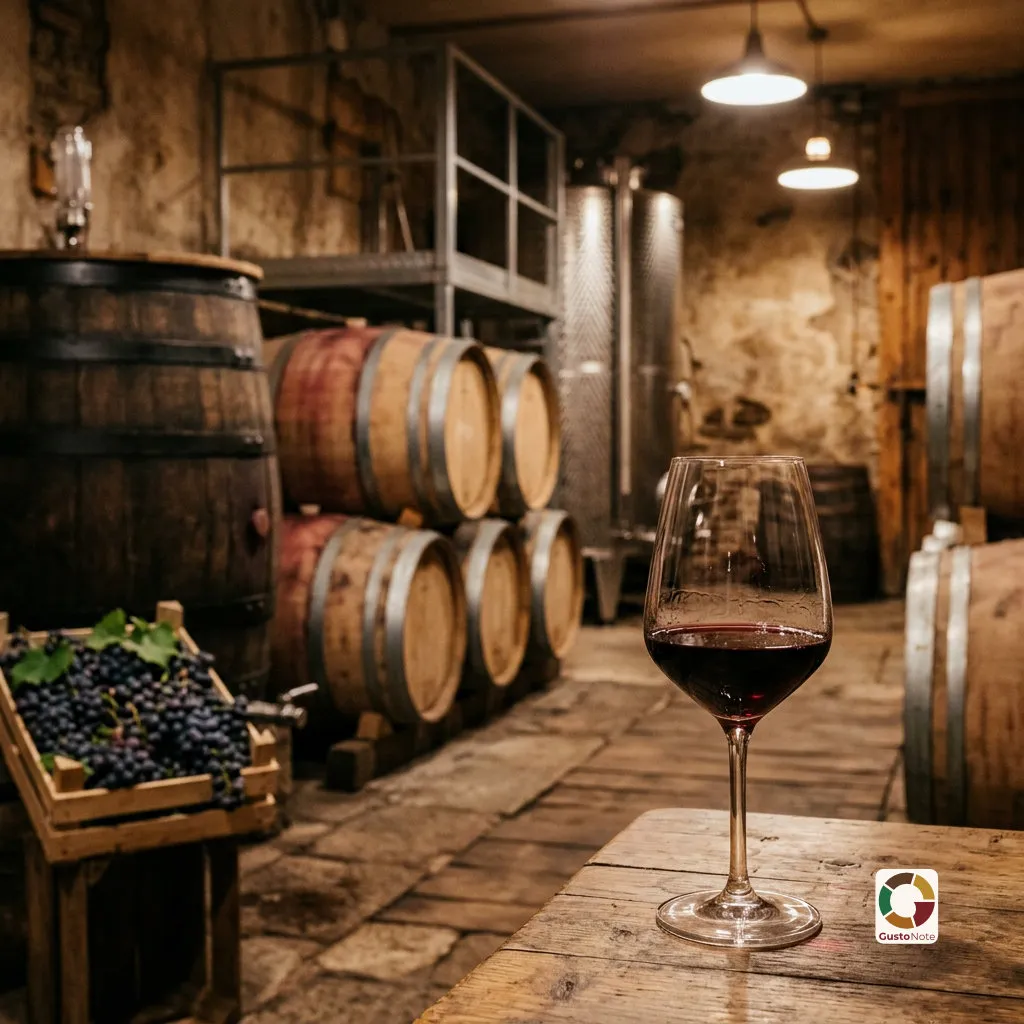
How wine is made - from grape to bottle
Wine seems like a simple thing: fermented grape juice. And yet on the road from grape to bottle the winemaker makes dozens of decisions that determine the colour, tannin, acidity and character of what ends up in the glass. Understanding this road, the process of winemaking, changes the way you drink: suddenly you know where the tannin in a red comes from, the smoothness in a white, or the buttery note in a Chardonnay. It is not magic, just a sequence of specific stages.
Harvest and crushing
It all begins in the vineyard, with the decision on when to pick. The later the grapes are harvested, the more sugar they hold, the less acid, and the riper the fruit, so the winemaker balances these forces. After picking, the grapes usually go through a machine that removes them from the stems and gently crushes them, so the skin breaks and the juice is released. The seeds stay whole, because crushed they would give up bitter, aggressive tannins.
Here red and white part ways
The most important division in winemaking is the moment the juice contacts the skins. The juice of almost every grape is pale, so the skins decide the colour:
- Red wine ferments together with the skins and pulp. During this maceration, pigments and tannins pass from the skins into the wine. That is why red has colour, tannin and a fuller body. I cover tannins in tannins in wine.
- White wine is pressed off the skins right after crushing, before fermentation starts. The clear juice ferments without skins, so it stays pale, fresh and clearly acidic. White can even be made from dark grapes.
- Rosé is the middle road: the skins of dark grapes contact the juice for only a few hours, enough to tint it, too little to extract much tannin.
You will find more on what distinguishes these types in types of wine.
Alcoholic fermentation
This is the heart of the process. Yeast, wild or added, eats the sugar from the grapes and turns it into alcohol and carbon dioxide, creating a whole range of aromas along the way. If the yeast processes all the sugar, the wine is dry, if fermentation is stopped early, sweetness remains. Red fermentation usually lasts from a few to a dozen or so days, and the temperature and length of maceration affect the strength of the colour and tannin.
Pressing and press wine
After red fermentation, the liquid is separated from the solids, the pomace. The wine that runs off on its own, by gravity, is called free-run wine and is the most delicate. The rest is recovered by pressing the pomace, giving press wine, darker and more tannic. The winemaker can add it back in a chosen proportion to strengthen the structure.
Malolactic fermentation
This is a lesser-known but crucial stage, especially for reds and some whites. A second fermentation, carried out by bacteria, converts the sharp malic acid, the one from green apple, into the gentler lactic acid. The result is a smoother, less acidic wine, often with a buttery, creamy note. It is precisely this that gives many Chardonnays their characteristic buttery aftertaste.
Ageing
After fermentation, wine ages to gain depth and harmony. This can be neutral stainless steel, which keeps the freshness and fruit, or an oak barrel, which adds vanilla, toast, tannin and lets the wine breathe through the fine pores of the wood. This contact with a little oxygen softens the tannins and stabilises the colour. I break down exactly where the oaky notes come from in where wine gets oak, vanilla and toast.
Fining and bottling
Before bottling, wine is usually fined and sometimes filtered, to remove suspended matter and yeast particles, so it is clear and stable. Some winemakers deliberately skip filtration to keep the maximum flavour, accepting a slight sediment. Finally the wine goes into the bottle, where, in the case of wines for ageing, it can mature for years more.
Sparkling and sweet wines are made slightly differently, with an extra stage, but the foundation is the same. This whole chain of decisions then shows up in the aroma, which I describe in why wine smells of fruit.
From process to glass
Next time you catch tannin, a buttery note or vanilla in a wine, you will know at which stage they were born. In GustoNote you note these impressions for every wine, and after a few dozen entries you will see which production styles suit you best: fresh and fruity from steel, or full and oaky from the barrel. It turns passive drinking into understanding what is in your glass.