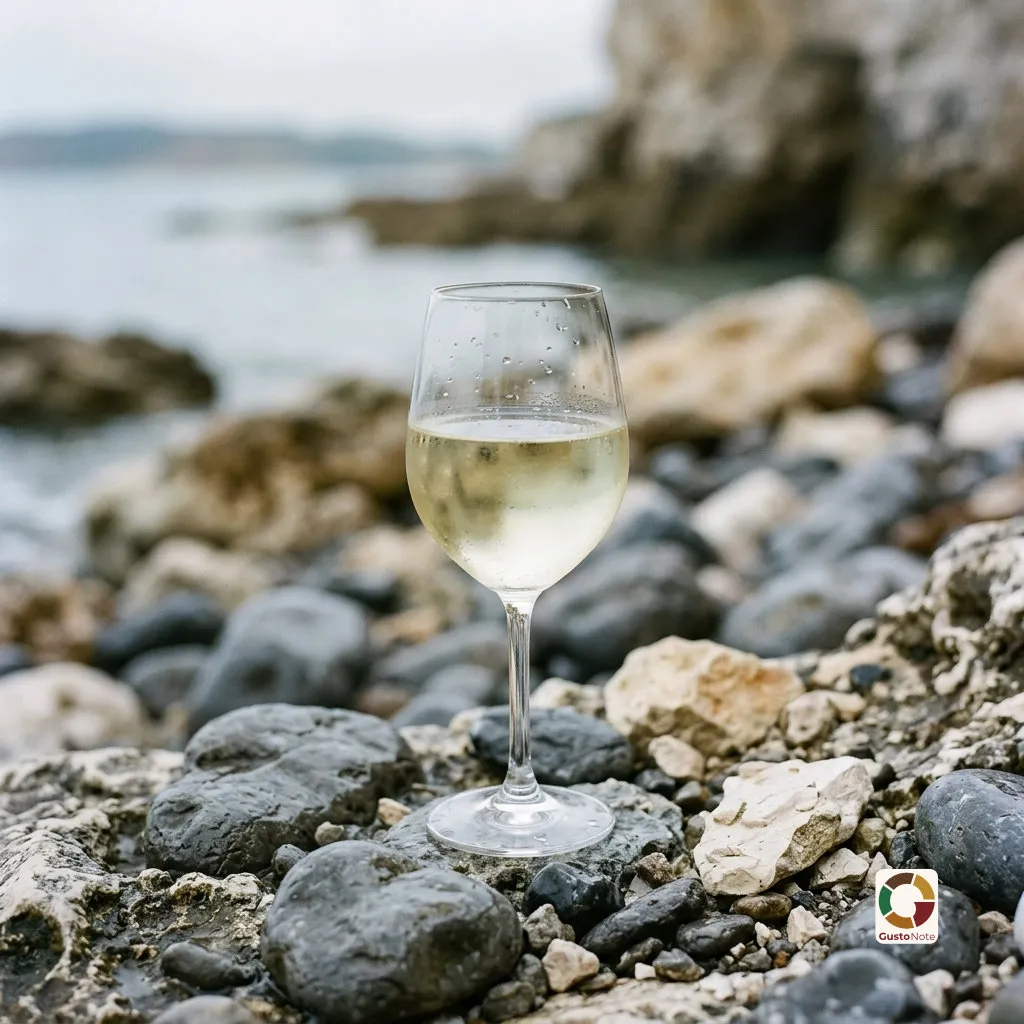
Minerality in wine - what it actually is
Minerality is one of those words that come up at every tasting, and if you ask five people what it means, you get five different answers. Some talk of wet stone, others of flint, chalk, a saline note or the feeling of licking a rock after rain. It is at once one of the most used and most contested terms in the wine world, because to this day there is no full agreement on what minerality actually is and where it comes from. It is worth untangling, because behind the fashionable word lies a real, perceptible impression, only its origin is different from what is commonly believed.
What people mean
Minerality is usually a catch-all name for a group of impressions that are neither fruity, floral nor oaky. It is most often described like this:
- Flint and stone - the sense of a freshly struck spark, wet stone, sometimes a smoky, matchstick note.
- Chalk and limestone - a dry, chalky sensation, associated with white wines from limestone soils.
- Salt and sea - a salty, almost iodine-like note in some wines from coastal regions.
These are impressions on the border of smell, taste and texture rather than a classic fruit aroma.
The myth of soil in the glass
The most popular explanation says that minerality is the taste of minerals from the soil, which the vine draws up through its roots and carries into the fruit. It is a beautiful story but scientifically untrue. The minerals in soil, such as calcium, magnesium or potassium, are ions with no taste or smell of their own, and the plant takes them up in trace amounts and uses them for growth, not to give the wine a stony flavour. There is no mechanism that would carry the literal taste of rock from the soil into the glass. In other words, wine does not taste of terroir in a chemical sense, although terroir genuinely shapes the style of the wine by another route.
So where does the impression come from
If not from literal minerals, then from what? Most likely from several things at once that together give the brain a sense of stoniness:
- High acidity with low fruitiness. A crisp, dry wine with restrained fruit is often perceived as mineral, because the absence of sweet fruit reveals a sharp, stony side. That is why minerality so often goes hand in hand with high acidity, which I cover in acidity in wine.
- Reductive notes. The flinty, matchstick, smoky note is usually the effect of so-called reduction, certain sulfur compounds that form when the wine has limited contact with oxygen. It is a deliberate or accidental result of winemaking, not the taste of rock.
- Salinity. A genuinely salty note appears in wines from coastal regions and may be linked to tiny salts, but this is still a subject of research.
- Low pH and little oak. Lean, acidic wines without a masking barrel are more readily perceived as mineral.
In short: minerality is most likely the sum of acidity, restrained fruit and reductive notes, not the literal taste of the soil.
Classic mineral wines
Though the mechanism is contested, the impression itself is real and repeatable, and certain wines are famous for their mineral character. It is worth reaching for them to feel what it is about:
- Chablis - a white from Burgundy made from Chardonnay, without oak, the classic example of chalky, stony minerality.
- Sancerre and other Loire wines from Sauvignon Blanc - flinty, smoky, crisp.
- Riesling from the Mosel - dry, low in alcohol, with a flinty, almost matchstick note.
- Muscadet from the Atlantic - lean, salty, maritime.
- Assyrtiko from Greek Santorini - salty, volcanic, intensely mineral.
These are wines of high acidity and restrained fruit, exactly where the impression of minerality most often appears.
How to taste it and how to think about it
Minerality is easiest to understand through contrast: put a crisp, reductive Chablis next to a lush, fruity, oaked Chardonnay from a warm climate. The same grape, yet a completely different impression. What you perceive as stone, flint or salt is precisely that restrained, acidic, unsweet side of the wine. I cover how to name aromas and impressions in general in why wine smells of fruit.
Treat minerality as a useful description of an impression, not proof of the taste of soil. That is quite enough for tasting. In GustoNote you mark the mineral notes, acidity and body of every wine, and after a few dozen entries you will see whether you lean toward crisp, stony wines or lush, fruity ones. It turns a contested, fashionable word into a concrete element of your own flavour profile.