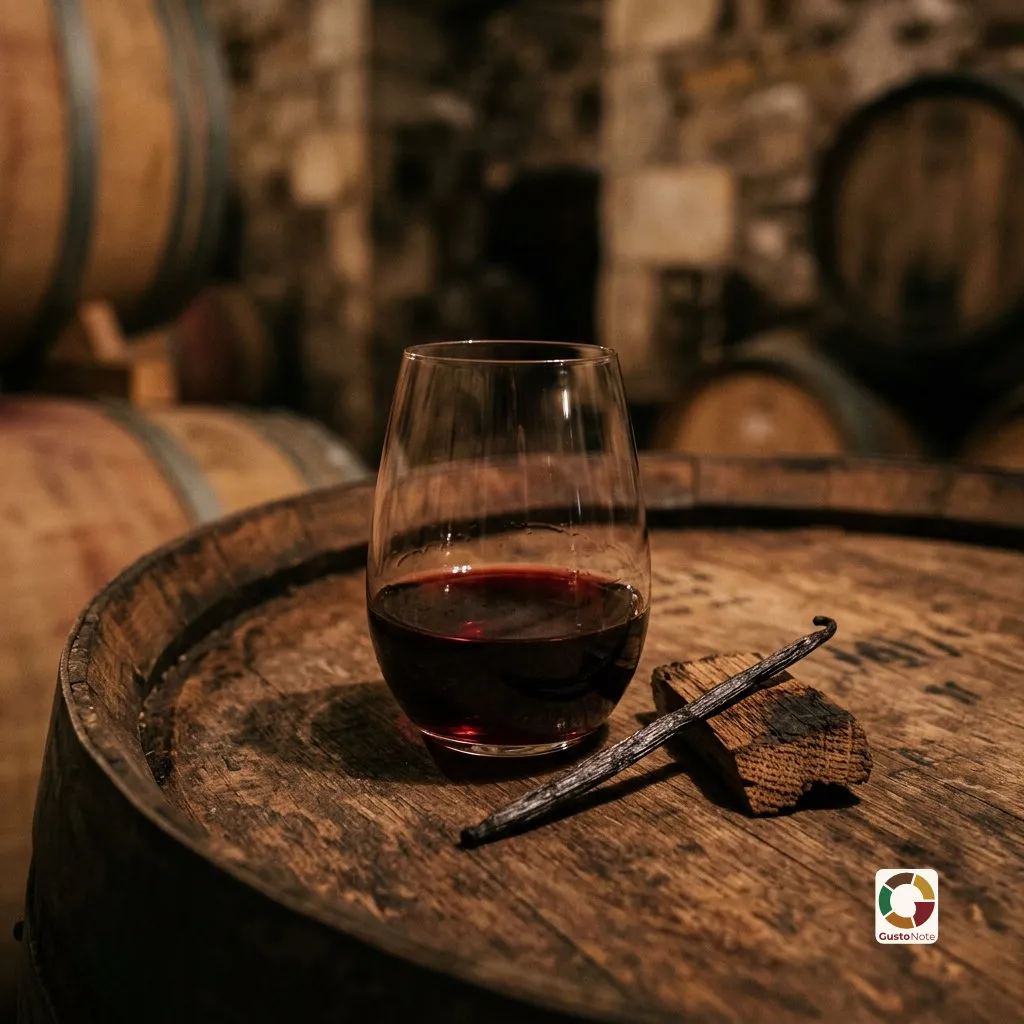
Where wine gets oak, vanilla and toast - the role of the barrel
You smell a glass of red and clearly catch vanilla, toast, maybe coconut or a spicy note. These smells are not in the grapes. They come from the oak barrel the wine matured in, and they are one of the most powerful tools in a winemaker’s hands. Oak can add depth, structure and complexity, but used without restraint it buries the fruit and gives an over-sweet, sawmill taste. Understanding where these notes come from lets you tell well-used oak from abused oak, and choose the styles you genuinely like on purpose.
A barrel is not just a container
An oak barrel, classically 225 litres and called a barrique, does two things to wine at once. First, it gives up its own aromatic compounds and tannins from the wood. Second, it is slightly porous, so it lets in a little oxygen, which softens tannins and stabilises colour. This slow maturation with a micro-dose of oxygen is called micro-oxygenation, and it changes the texture of the wine on its own, regardless of aroma. That is why wine from a barrel is usually smoother and rounder than wine from steel. I cover tannins separately in tannins in wine.
Where the specific notes come from
The characteristic aromas of oak form mainly when the inside of the barrel is toasted over a fire during its making. Heat breaks down the compounds in the wood and creates new ones:
- Vanilla comes from vanillin, released from lignin, the woody building material of oak. It is the same molecule that gives the smell of real vanilla.
- Coconut and woody notes are the work of oak lactones. American oak has far more of them than French, which is why wines from American oak more often smell of coconut and vanilla.
- Toast, caramel and spicy notes come from the caramelisation of wood sugars and the breakdown of hemicellulose during toasting. The heavier the toast, the darker the notes.
- Smoke, coffee and dark chocolate appear with the heaviest toasting of the barrel.
French oak versus American
This is one of the winemaker’s most important choices, and you can hear it in the glass:
- French oak has tighter grain and gives the wine more subtly: delicate vanilla, spice, toast, silky tannins. It is more expensive and prized in elegant wines, like Bordeaux or Burgundy.
- American oak is more expressive and sweeter: clear coconut, vanilla, a sweet note. Common in bold wines from Spain or the New World, like Spanish Rioja.
The toast level of the barrel
The cooper toasts the inside of the barrel at three main levels, and each gives a different profile. A light toast keeps more of the fresh, woody character and subtle vanilla. A medium toast, the most popular, gives the classic notes of vanilla, toast and spice. A heavy toast brings smoke, coffee, caramel and dark chocolate, but it easily buries the fruit. That is why two oaked wines can taste completely different, though both matured in a barrel.
New barrel versus used
The younger the barrel, the more aroma it gives. A new barrel marks the wine strongly, so winemakers often blend wine from new and used barrels to control the strength of the oak. After a few years a barrel becomes neutral and serves mainly for micro-oxygenation, adding almost no flavour. That is why the note that a wine matured in new oak promises a more pronounced oaky character.
Cheaper tricks: chips and staves
A real barrel is expensive, so cheaper wines often use shortcuts: oak chips, staves or oak powder added to stainless steel. They give the aroma of oak without the cost and without micro-oxygenation, but the effect can be flat, one-dimensional, sometimes downright artificially vanilla-like. This is one reason very cheap wine can smell of excessive vanilla that nothing else balances.
How to spot an over-oaked wine
Good oak supports the fruit and structure, it does not drown them. An over-oaked wine gives itself away like this:
- Vanilla, coconut or toast dominate, and the fruit is barely there.
- A sense of dry wood, sawmill or a bitter, woody astringency appears in the finish.
- The taste is sweetish and one-dimensional, as if someone added vanilla syrup.
Many wines, especially whites like Sauvignon Blanc or Riesling, deliberately see no oak, to keep a clean, fruity character. The absence of a barrel is not a fault but a style choice. I cover how to recognise aromas in general in why wine smells of fruit.
Learn to catch it and note it
The best way to understand the role of oak is to compare two wines from the same grape, one matured in steel, the other in a barrel. The difference in aroma and texture is immediate. In GustoNote you mark the oaky notes, body and tannins of every wine, and after a few dozen entries you will see whether you lean toward clearly oaked wines or fresh and fruity ones without a barrel. It turns a vague smells woody into a specific, conscious choice at the shelf. I cover the effect of oak on body in wine body.