Tannins in wine - where they come from and how to feel them
One sip of a bold red and suddenly it feels as if someone wicked the moisture from your gums. That is tannin - one of the most important and least understood features of wine. It is not a taste or a smell, but a feeling in the mouth. And that is exactly why it is so hard to name until someone tells you what to look for.
What tannins actually are
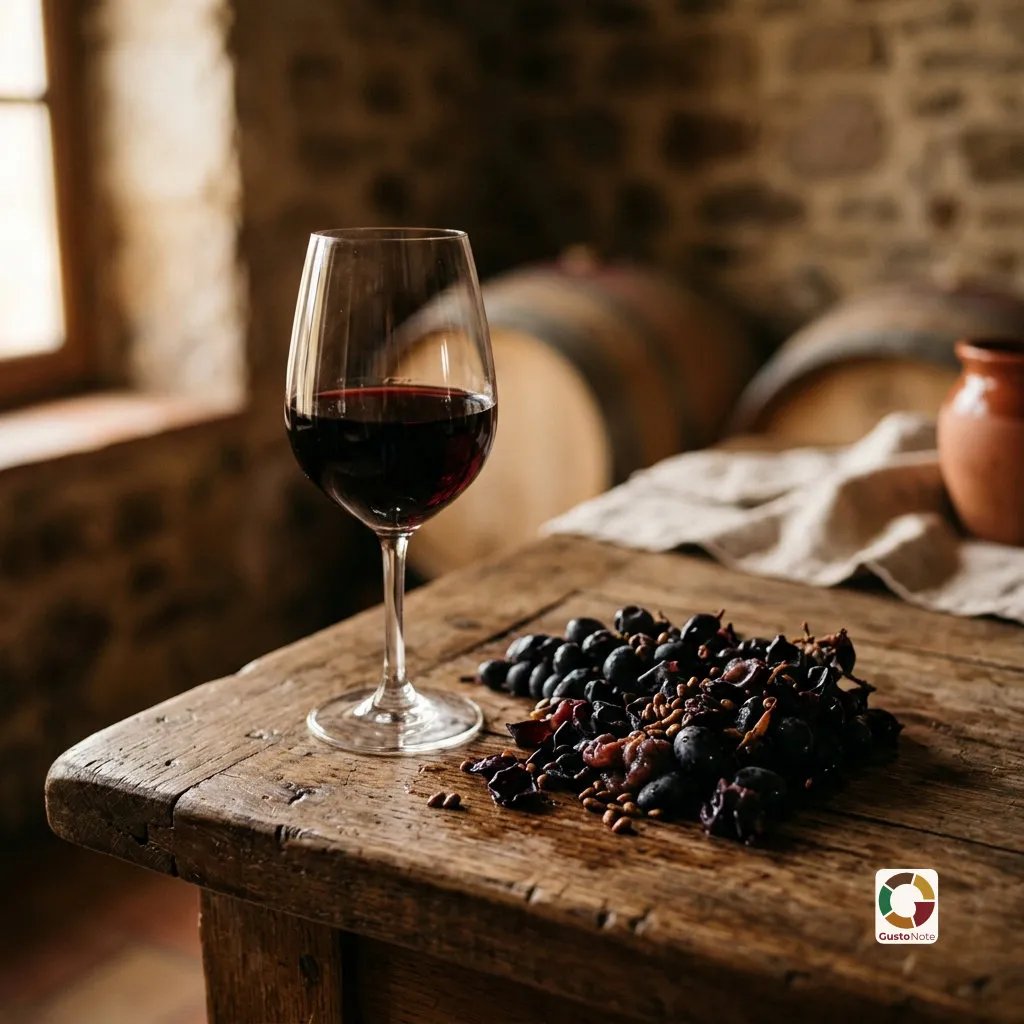
Tannins are natural plant compounds that wine draws mainly from grape skins, seeds and stems, and also from the oak barrel. They bind to the proteins in your saliva, so the saliva loses its slip and you feel a rough, drying grip. Strong tea or an unripe banana gives you the same sensation.
Why they are in red and not white
Grape juice contains almost no tannin. It enters the wine during maceration, when the juice ferments together with the skins and seeds. Red wine is made in exactly that contact, so the tannins travel into the glass. White is pressed off the skins earlier, which is why it has only a trace. That is also why red has a fuller body.
How to feel them step by step
- Take a sip and swallow, then pay attention to your gums and the inside of your cheeks.
- Look for dryness and grip, not taste. Tannin is texture, not a fruit note.
- Check how long it holds. Good tannins settle smoothly and fade slowly, aggressive ones scrape and quickly turn bitter.
Ripe, well-made tannins feel like velvet or well-worn leather. Young, harsh ones can feel like sandpaper, and they usually soften over time in the bottle.
Why it all matters
Tannins have a real job. They are a natural preservative, which is why tannic wines age best. They also work brilliantly with food: they bind to fat and protein, so they clean the palate after rich meat or a mature cheese. If a red ever tasted bitter on its own with a steak, try the reverse - the dish can tame the tannin. You will find more in pairing wine with food.
Learn to recognise them
Tannin is one of the axes your taste is built on. In GustoNote you rate the level and quality of tannin for every red, and after a few dozen entries you will see whether you prefer soft wines or firmly tannic ones. Before you start, it is worth working through calibrating your palate - it helps you name what you feel faster.