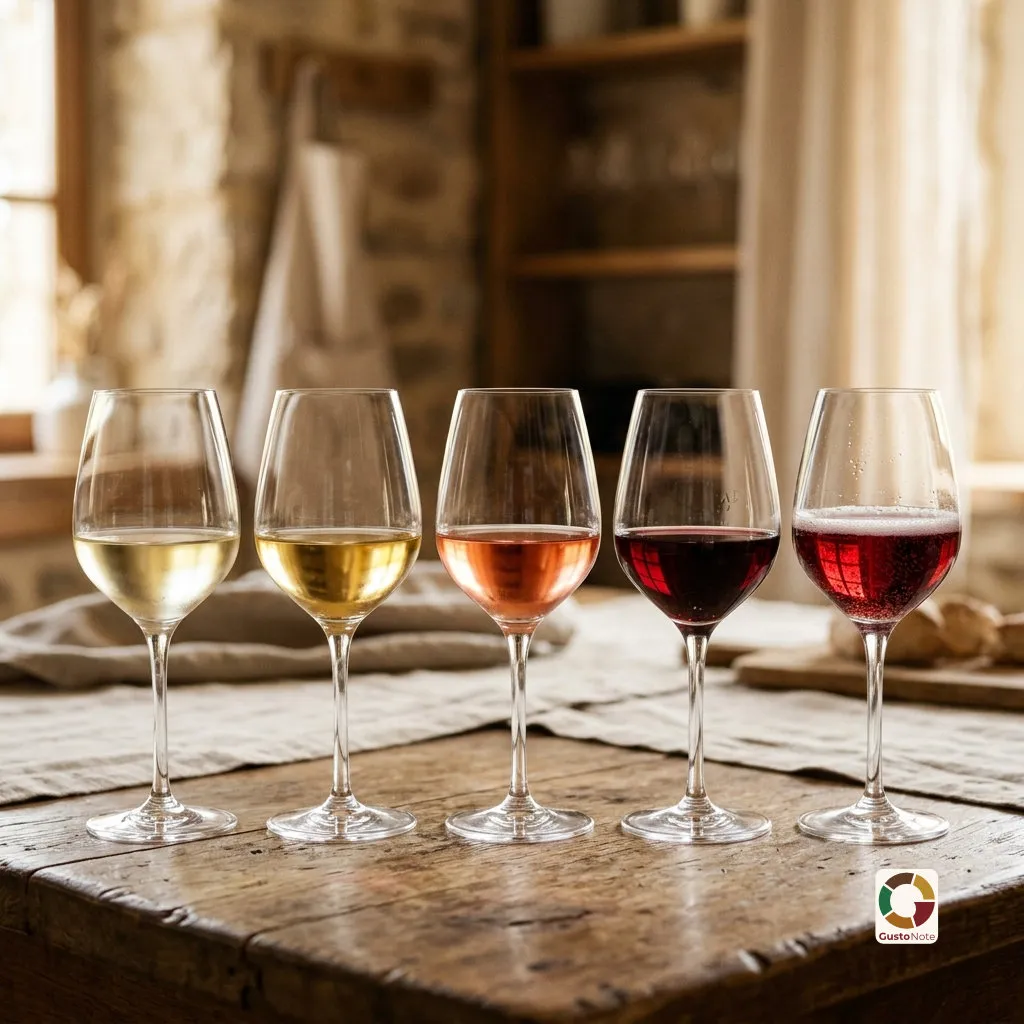
Red, white, rosé, sparkling, dessert - what really sets them apart
Red, white, rosé, sparkling, dessert - on the shelf they look like five separate worlds. In reality a handful of simple winemaker decisions, made before the wine is even bottled, is all that divides them. Once you understand them, you stop guessing and start predicting what you will taste in the glass.
Where the colour comes from
The juice of almost every grape is pale. The colour of red wine does not come from the pulp but from the skins, which macerate with the juice during fermentation.
- Red - juice ferments with the skins of dark grapes. That gives the colour, but also tannins and a fuller body.
- White - juice is pressed off the skins before fermentation, so it stays pale. It can even be made from dark grapes.
- Rosé - the skins of dark grapes touch the juice for only a few hours, enough to tint it, too little to pull out much tannin.
Where the bubbles come from
Sparkling is not a separate grape, just wine that has gone through a second fermentation in a sealed vessel. The yeast produces carbon dioxide that has no way to escape and dissolves into the wine. When you open the bottle, it is released as bubbles. The rest is a matter of method and pressure.
Where the sweetness comes from
Dessert wine is sweet because some of the grape sugar never turned into alcohol. The winemaker can stop fermentation early, use overripe or dried fruit, or grapes touched by noble rot. The sugar stays in the glass, which is why these wines are sipped in small amounts and usually with dessert.
How to taste it, not just read it
These differences can be felt, not only read:
- Tannins - the drying, slightly rough feeling on your gums. Most in reds, a trace in rosés, almost none in whites.
- Acidity - the thing that makes your mouth water. Usually higher in whites and sparkling.
- Body - the sense of the wine’s weight in your mouth, from a light white to a dense red.
Start naming what you drink
The fastest way to learn these types is to drink them side by side and write down your impressions. In GustoNote you note the type, colour, acidity and body for every wine, and after a few dozen entries you will see which style you genuinely like. If you are just starting, read how to actually taste wine first, and for naming flavour with more confidence, see calibrating your palate.