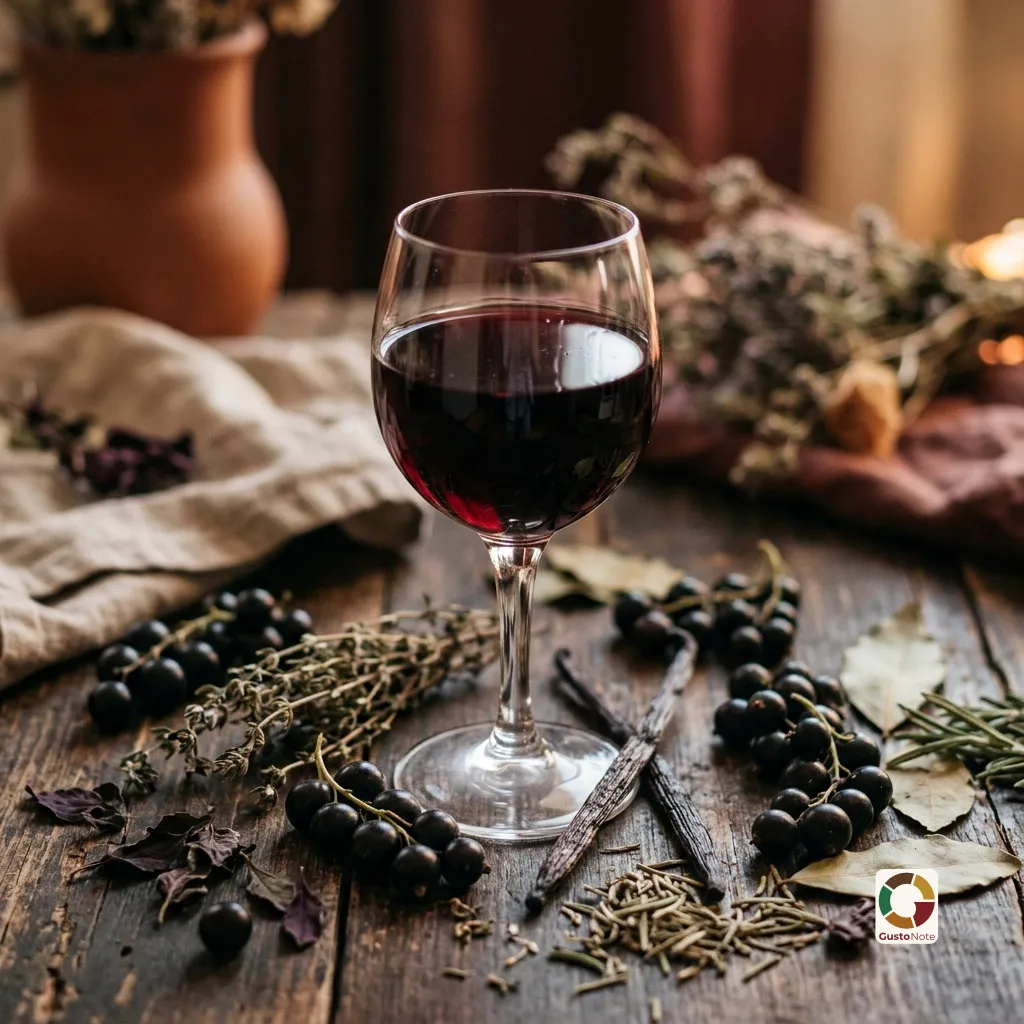
Why wine smells of fruit it does not contain
You smell the glass and clearly catch blackcurrant, plus a note of vanilla and something like leather. And yet the bottle holds only fermented grapes. So where does it all come from? This is one of the most fascinating parts of tasting: wine can smell of a hundred things it physically does not contain.
Not additives, but the chemistry of smell
In good wine no one adds aromas. These smells are natural volatile compounds that form in the grape, during fermentation and through ageing. The interesting part is that the very same chemical compound that gives, say, the smell of blackberry also appears in wine. Your nose recognises it as blackberry because it knows it from the fruit. So the wine is not imitating the fruit, it shares the same scent molecule with it.
Three sources of aroma
Tasters divide wine aromas into three groups, depending on where they come from:
- Primary - from the grape and variety itself. Mainly fruit, flowers, herbs, vegetal notes.
- Secondary - from fermentation and the work of the yeast. Hence notes of bread, butter, yeast, sometimes yoghurt.
- Tertiary - from ageing, especially in oak and with time. Vanilla, toast, leather, tobacco, dried fruit, nuts.
That is why a young wine from a cool region smells of fresh fruit and flowers, while an older one aged in oak smells more of vanilla, spice and earthy notes.
Why everyone smells something different
Aromas are subjective, because we name them through our own memory of smells. Someone who knows the smell of gooseberry will catch it in Sauvignon Blanc at once, while another person will only say it smells green. That does not mean anyone is wrong. Naming aromas is a skill you practise, by connecting the smell in the glass with smells remembered from life.
How to learn to recognise them
- Smell consciously. Swirl the wine in the glass, put your nose deep in and breathe in a few times.
- Go from general to specific. First fruit or non-fruit, then which kind, then the exact thing.
- Build a smell memory. Smell fruit, spices and herbs in daily life. The more smells you know, the more you will catch in wine.
This training is exactly what I describe in how to actually taste wine and how to calibrate your palate.
Note what you smell
In GustoNote you mark the aromas you catch and add your own for every wine, and after a few dozen entries you will see which notes keep returning in the wines you love. It is the fastest way to move from a vague „smells nice" to a specific, personal language of taste.