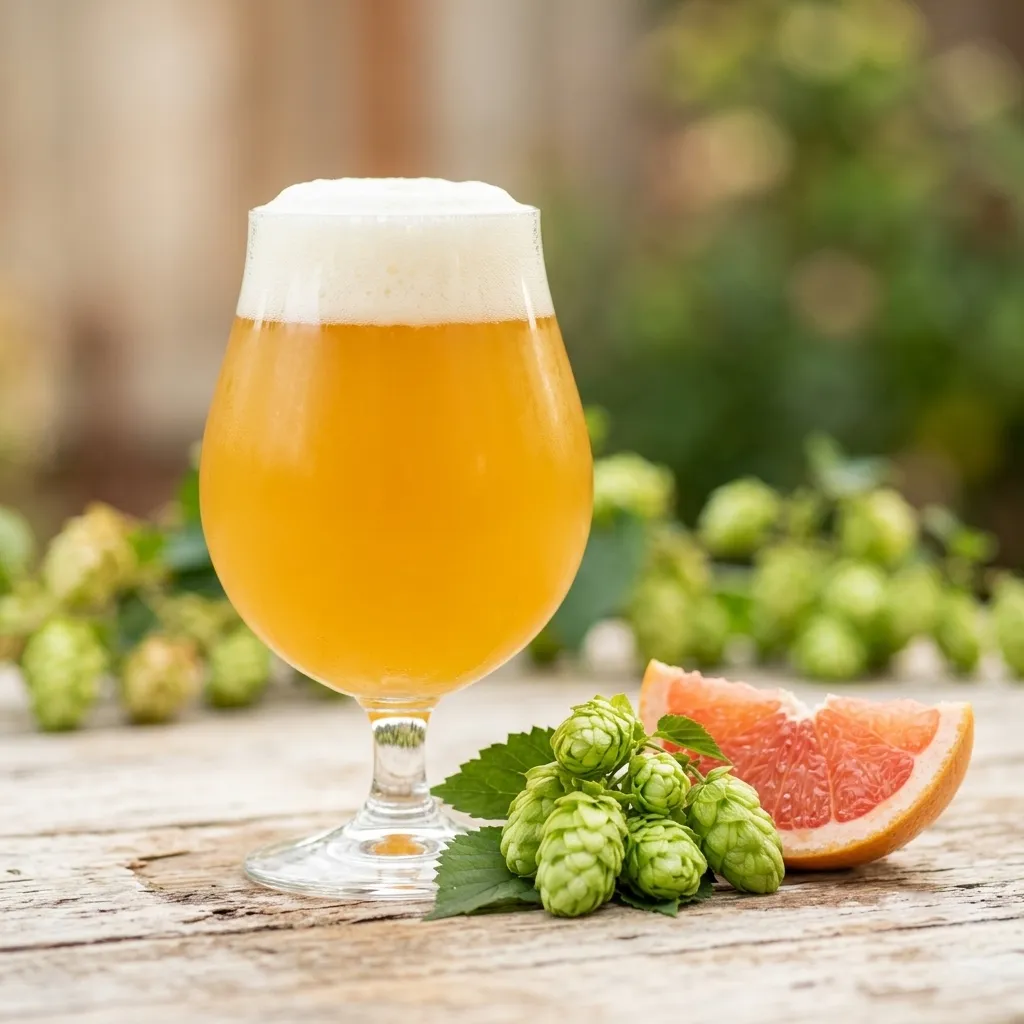
Why IPA tastes like grapefruit and turns bitter - all about hops
You take the first sip of a proper IPA and get a wave of grapefruit, pine resin, sometimes mango or passion fruit, and a clear bitterness at the end. Where does all that come from, when beer is water, malt, yeast and… well, exactly. This whole explosion of flavour comes from one ingredient: hops. If you have already stepped into craft beer and wonder why some IPAs are bitter as quinine while others are juicy as juice - this post is for you.
What hops actually are
Hops are a climbing plant - specifically its cones: green, slightly sticky, full of resins and essential oils. They are added to beer during brewing, and they are responsible for two completely different things: bitterness and aroma. For centuries hops also acted as a preservative (hence the legend of IPA „heavily hopped for the voyage to India"), but today we drink them mostly for flavour.
The two faces of hops: bitterness and aroma
Here is the key that is not obvious at first: when you add the hops decides what you get.
- Hops added early, during the boil - give bitterness. The longer they boil, the more bitter, while the aroma evaporates with the steam.
- Hops added late or after fermentation (dry hopping) - give aroma, with almost no bitterness. That is where all those citrus and tropical notes in modern IPAs come from.
So a brewery can make a beer very aromatic but not very bitter - or the other way round. It is not chance, it is a decision.
IBU - the bitterness measure (with an asterisk)
Bitterness is measured in IBU (International Bitterness Units). A lager has a dozen or so IBU, a classic IPA 40-60, and extreme beers can pass 100. But mind the trap: IBU does not tell you how bitter a beer tastes - because malt sweetness can mask the bitterness. A malty beer at 60 IBU will seem gentler than a dry one at 40. Treat IBU as a hint, not a verdict.
Where the grapefruit, pine and mango come from - hop varieties
Just as there are grape varieties, there are hop varieties, each with its own profile:
- American (Citra, Mosaic, Cascade, Simcoe) - citrus, grapefruit, tropical fruit, pine resin. These started the craft revolution.
- European / noble (Saaz, Hallertau) - gentler, herbal, floral, spicy. The classic „pilsner" character.
- From New Zealand and Australia (Nelson Sauvin, Galaxy) - white wine, passion fruit, gooseberry.
Next time you sense a specific fruit in a beer, it is almost certainly down to a specific hop variety - not some added flavouring.
IPA, NEIPA, APA - what sets them apart
- APA (American Pale Ale) - lighter, balanced, a gateway to the hoppy world.
- IPA - more hops, more bitterness, clear citrus and resin.
- NEIPA / Hazy IPA - cloudy, juicy, fruity, low bitterness. The haze and „juice" character come from large amounts of dry hops and special yeast. Today it is the most popular style for people who dislike sharp bitterness.
- DIPA / Imperial IPA - a stronger, even hoppier version for the advanced.
If a classic bitter IPA put you off, try a NEIPA - that is often the moment people fall in love with hops.
Drink it fresh - hops do not wait
This is the most important practical tip: hoppy beers age fast. The hop aroma - all that grapefruit and mango - fades in weeks, not years. A year-old IPA is a pale shadow of what it was. Check the production date and drink hoppy beers fresh, ideally within a few months. (We wrote more about this in beer is more than a cold lager.)
Name the hops and you will taste more
At first an IPA is just „bitter and strong". But when you pause, that „bitter" breaks down into grapefruit, pine resin, orange peel, passion fruit. The more words you have for what you sense, the more clearly you tell varieties and styles apart.
That is why GustoNote exists: you record every beer, the aroma wheel suggests words for hop notes, the radar shows the profile, and after a few entries you see in black and white which hops you really like - citrusy American ones or maybe winey New Zealand ones. And next time in the shop you do not guess, you know what to look for.