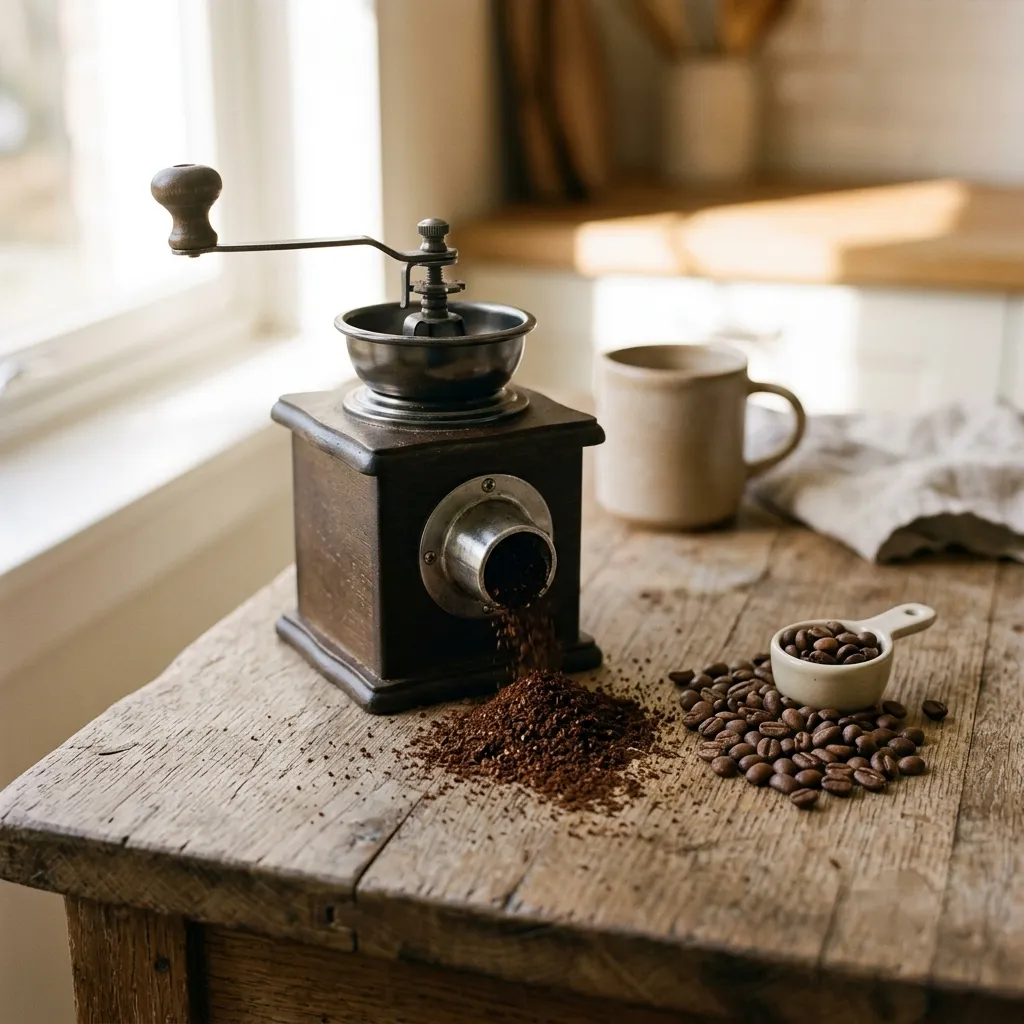
Coffee grind size - how it changes the taste in your cup
We usually think about coffee through the beans and the machine, yet one of the most powerful flavour controls is right under our hand for free: grind size. The same coffee ground differently can taste like two different drinks - sour and watery one way, bitter and heavy the other. Here is how it works and how to set your grinder.
Why grind size matters
Brewing is washing flavour out of coffee with water, that is extraction. The finer you grind, the more bean surface meets the water, and the faster and harder the coffee extracts. Grind is your dial: it controls the pace at which water pulls acids, then sugars, then bitter tannins out of the coffee.
Too coarse - sour and watery
If you grind too coarse, water flows through too fast and pulls mostly acids, never reaching the sweetness. The coffee comes out sour, salty, thin and empty, as if something is missing. That is under-extraction. We go into it more around acidity: why good coffee tastes sour.
Too fine - bitter and drying
The opposite problem: too fine a grind slows the flow, water sits in the coffee too long and also pulls the bitter, drying compounds from the end of extraction. The coffee turns bitter, dry in the mouth, sometimes with a note of ash. That is over-extraction. If your coffee is aggressively bitter, before you change the beans, grind coarser.
Grind to method
Every method has its range. A French press likes a coarse grind like coarse salt, because the coffee steeps for a long time. Pour-over, or drip, is medium, like sand. Aeropress is medium-fine. Espresso is very fine, like flour, because the water meets the coffee for only a dozen or so seconds under pressure. Matching grind to contact time is the foundation. More on the methods themselves: coffee brewing methods.
Fresh grinding beats everything
Ground coffee loses aroma in minutes, not days - the oils escape the moment it is ground. So even a cheap burr grinder and grinding just before brewing give a bigger jump in quality than pricier beans bought already ground. If you are going to invest in one thing, start with a grinder.
Change one thing at a time
The golden rule: when you fix the taste, change only the grind and keep the rest (ratio, water, time) constant. Bitter coffee - grind coarser. Sour and empty - grind finer. With one change at a time you know exactly what worked.
Note your settings and hit it every time
You will learn your grinder fastest if you take notes. In GustoNote you record the method, grind and ratio for each brew, mark on the wheel whether the coffee came out sour, balanced or bitter, and rate the profile. After a few entries you have your own tested settings for every bean and method.