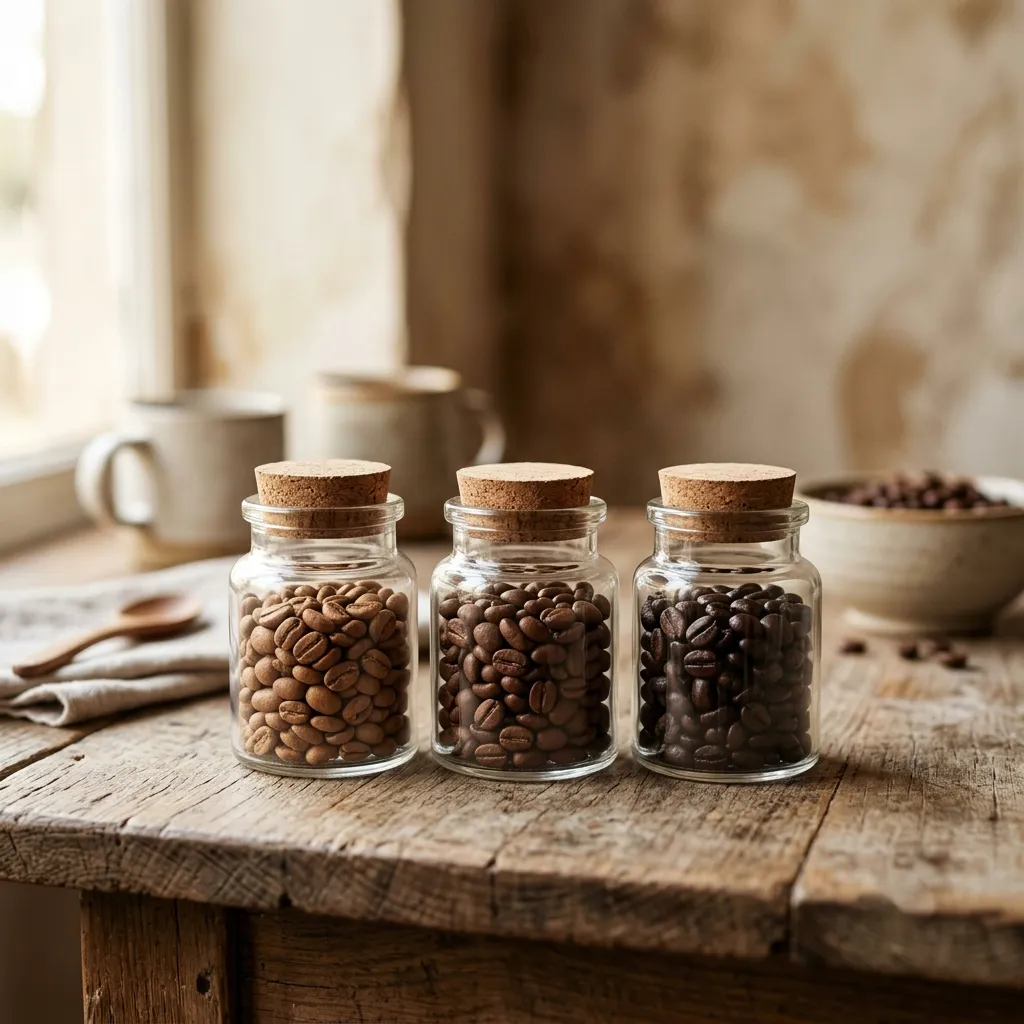
Coffee roast levels - light, medium, dark and what it means
Two bags of the same coffee, from the same plantation, can taste completely different - because of the roast level. It is one of the most important and most often ignored words on the packaging. Light, medium or dark decides whether you taste fruit and acidity in the cup, or chocolate and bitterness. Here is what those words really mean.
What roasting does
Raw coffee beans are green, hard and tasteless. Only roasting, that is heating at a high temperature, wakes the aromas. The longer and stronger you roast, the more:
- the acidity and the fruity, floral notes from the plantation disappear,
- notes from the roasting itself appear - chocolate, nuts, caramel, and finally bitterness and burnt crust.
So roasting is a slider: at one end the character of the origin, at the other the character of the roast.
Light roast
Shorter, gentler. It keeps the most of what the coffee is at the source: acidity, fruit, flowers, a tea-like lightness. It is the favourite roast of speciality cafes, because it best shows the differences between origins - one coffee will smell of blueberry and citrus, another of peach. If a coffee seems sour to you, that is often not a flaw but a light roast. We wrote about it in the post why good coffee tastes sour.
Medium roast
The golden middle. Less acidity, more sweetness and body, notes of nuts, caramel and chocolate, but still with the character of the origin. The most versatile - it works well in a pour-over, a moka pot and an espresso. For many people a safe start.
Dark roast
Long, intense. Here the flavour of the roast rules: dark chocolate, roasted notes, smoke, sometimes a bitterness like strong espresso. Acidity and fruit disappear almost entirely. It is the classic Italian style, strong and bold. A note of caution: a very dark roast can mask the flaws of cheap beans, which is why the cheapest coffees are usually dark-roasted.
Which for what
- Light - best in a pour-over (V60), which shows the aromas and acidity.
- Medium - versatile, good everywhere.
- Dark - great for a moka pot and espresso, especially with milk, because it cuts through the foam.
We wrote about the brewing methods themselves separately: coffee brewing methods.
Freshness matters more than you think
Whatever the roast level, coffee is at its best a few weeks after roasting, not after a year. Look for the roast date on the bag, not just the best-before date. Freshly roasted, medium coffee will beat an old supermarket bag regardless of price.
Note it down and compare
The easiest way to understand roasting is to try and note. In GustoNote you can note the roast level and brewing method for each coffee, mark the notes on the flavour wheel and rate acidity, sweetness, body and finish. After a few entries you will see in black and white whether you lean towards light and fruity or dark and chocolatey - and you will stop buying coffee blind.