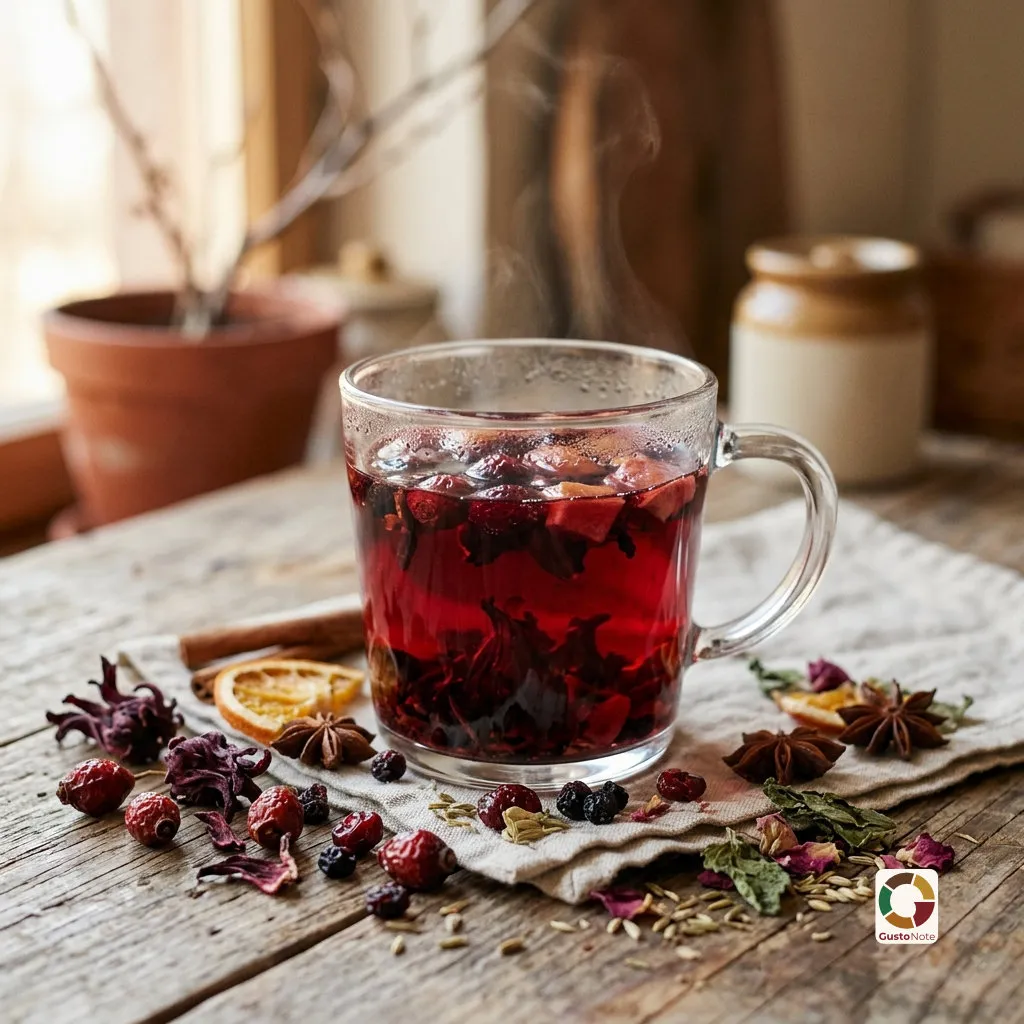
Herbal and fruit - why it is not „real" tea
You reach for a chamomile tea for sleep, a peppermint one for digestion or a fruit one for refreshment. We casually call all of them tea, but from the point of view of the tea world, none of them is. They are herbal infusions, tisanes from the French, and though they can be delicious and healthy, they belong to a different category than real tea. Understanding this difference is not pedantry but practical knowledge, because real tea and a herbal infusion require different treatment and have different properties.
The definition is simple
The difference between tea and a herbal infusion comes down to one plant. Real tea comes only from the Camellia sinensis shrub, the same one from which green, white, oolong, black, yellow and pu-erh are made. Everything else we pour boiling water over is a herbal infusion, a tisane: an infusion of any plant other than the tea shrub. That is why, technically, fruit tea or chamomile is not tea but precisely a tisane, even though the package often says tea. I describe the whole world of real tea in types of tea.
Caffeine, the key difference
The most important practical consequence concerns caffeine. Real tea from Camellia sinensis naturally contains caffeine and antioxidants called flavonoids. Herbal infusions are by nature caffeine-free, or contain only trace amounts from other ingredients. That is why chamomile or lemon balm are suitable for the evening, when we avoid stimulation, while real tea, even white, has caffeine. There is an exception, though: some plants for infusions, like yerba mate or guarana, contain their own caffeine, even though they are not tea. I cover caffeine in real tea, and why it stimulates differently from coffee, in caffeine in tea.
The world of herbal infusions
The tisane is a huge and varied category, worth breaking down into groups depending on the part of the plant used:
- Leaves - peppermint, lemon balm, lemongrass, verbena.
- Flowers - chamomile, hibiscus, lavender, rosehip.
- Roots - ginger, liquorice.
- Bark and spices - cinnamon, cardamom, fennel, anise.
- Fruit and berries - apple, raspberry, blueberry, peach, the classic fruit teas.
A separate, popular item is rooibos, the red bush from South Africa, naturally caffeine-free, with a mild, slightly nutty and sweet flavour, often confused with tea but actually a herbal infusion.
Not a lesser category, just a different one
It is worth emphasising that calling a fruit infusion a herbal infusion rather than tea is no insult. It is simply a different category of drinks, with its own merits: a wealth of flavours, the absence of caffeine and often health-promoting properties. Many people drink tisanes precisely because they do not want caffeine or are looking for a specific effect, like chamomile for sleep or ginger for warming. Real tea and herbal infusions simply do different things.
How to brew them
Here lies the practical benefit of the distinction. Delicate real teas, especially green or white, are sensitive to water that is too hot and to long steeping, which give a bitter brew. Herbal infusions are usually far more forgiving: most of them can and should be brewed with boiling water and steeped longer, even several or a dozen or so minutes, to fully draw out the flavour and properties of roots, bark or dried fruit. I cover matching temperature and time to real teas in how to brew tea.
How to explore them
The best way to appreciate the difference is to brew a real tea and a herbal infusion side by side, for example a green tea and chamomile. You will feel how different their character, body and effect are. In GustoNote you note the type, ingredients and your impressions of every infusion, and after a few entries you will see which herbs, flowers and fruits you really like and when you reach for them. It turns a shelf full of colourful bags into a conscious, organised collection of flavours.