How to host a blind wine tasting at home (and why it is the best party game)
Blind tasting brings to mind serious sommeliers who sniff a glass and announce „Pinot Noir, Burgundy, 2018, south-facing slope". It sounds intimidating - but it is really one of the best home party games you can throw with friends over wine. You do not need expert knowledge. You need a few bottles, some aluminium foil, and an appetite for a little surprise - because blind tasting can completely upend what you think you know about wine.
Why drink „blind" at all
Because the label and the price trick your brain. When you know you are holding a bottle worth 150 zł, you subconsciously look for its merits. When you know it is cheap supermarket wine, you are critical from the start. Blind tasting removes those cues: you judge what is actually in the glass, not what the sticker says. The results can be embarrassing and very funny - a favourite „expensive" wine loses to a bottle half the price, and someone who „knows wine" confuses red with white when blindfolded. That is no shame - it is the best lesson in humility and taste at once.
What to prepare
You do not need a fortune in gear. All it takes is:
- 4-6 bottles of wine. Fewer than 4 is not enough fun, more than 6 and the palate tires.
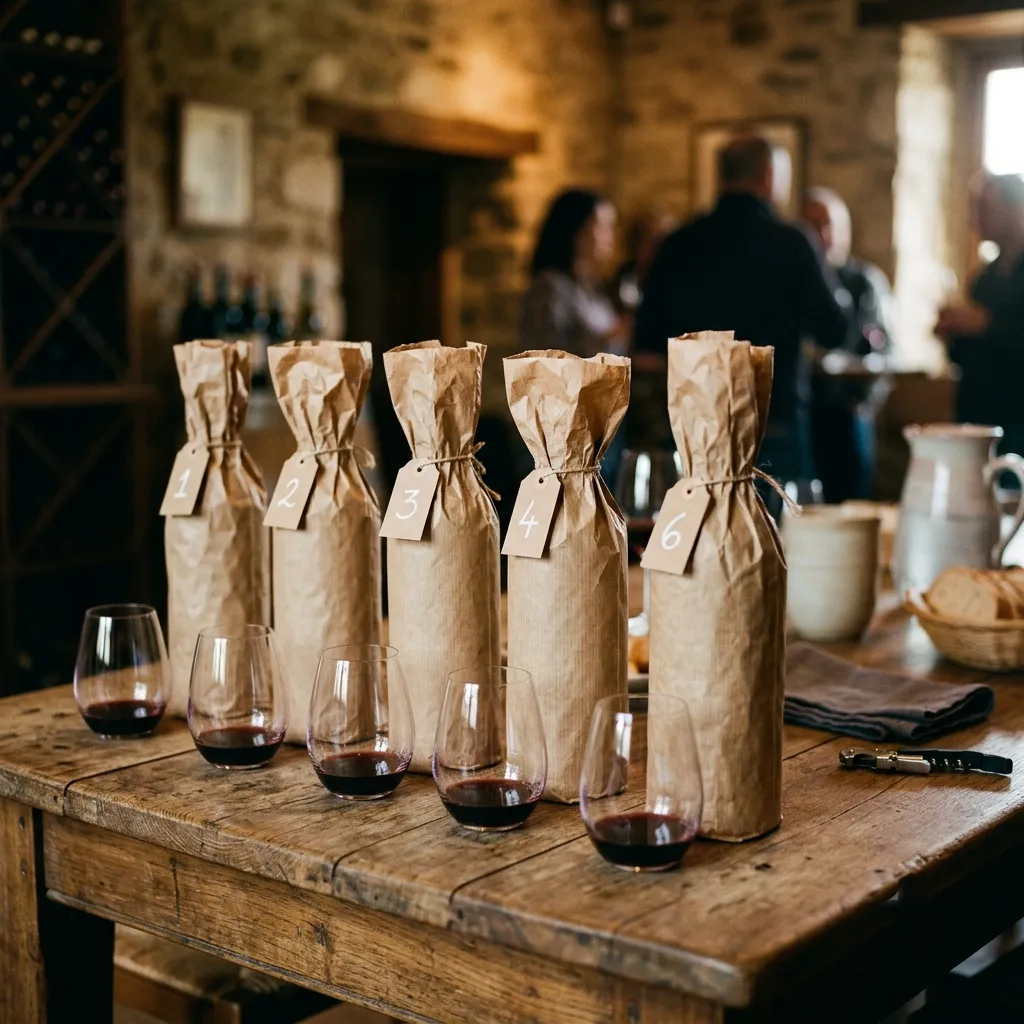
- Something to cover the bottles - aluminium foil, paper bags, even socks. Number them (1, 2, 3…), and let only the person pouring know the labels (or cover them all together and shuffle).
- Glasses - ideally one per wine per person, but in practice rinsing between pours works fine.
- Note cards - paper and a pen for everyone, to write down impressions and guesses before anyone reveals the answer.
- Water and bread / crackers - to reset the palate between wines.
Mind the temperature: take whites out of the fridge a quarter-hour early, and in summer put reds in the fridge for a quarter-hour. (More on the basics in our post how to actually taste wine.)
Pick a theme - that is what makes it fun
Random wines are fine, but a theme turns the tasting into a game:
- Same grape, different countries - e.g. four Cabernets from France, Chile, Italy and Poland. You see how place changes the taste.
- Price duel - two cheap wines, two expensive, all covered. Guess which is which. A classic that usually ends in a burst of laughter.
- White versus white or different styles of one region - for the more advanced.
- Everyone brings one bottle in a bag - the simplest way to taste blind with no host.
How to run it
- Pour everyone from bottle number 1 (label hidden).
- Everyone judges on their own and writes it down before anyone says a word - colour, smell, taste, whether they like it. Silence at this stage matters, so one loud opinion does not sway the rest.
- Only then talk it over and try to guess: grape? country? dry or not? expensive or cheap?
- Repeat for the next wines.
- The big reveal - take off the foil and see who got it right and who missed. This is usually where it gets loudest.
Want scoring? Award points for a correct country, grape, price bracket - and crown the „nose of the evening". It adds rivalry and makes people really focus.
The best twist: expensive next to cheap
If you want one „wow" moment, do this: put an expensive wine and a much cheaper one side by side, both covered, and ask everyone to point out the pricier one. Very often the group gets it wrong - or is split. That does not mean price is meaningless; it means your palate has its own opinion, independent of the price tag. And that is the whole point.
From a game to real learning
Blind tasting is not just a party - it is the best taste training there is. When you judge a wine with no hints and then check how much you guessed, you learn from your own mistakes faster than from any book. If you catch the bug, the natural next step is calibrating your palate - systematically comparing your description with the grape’s typical profile, calmly and on your own.
And here is where note-taking comes in. That is why GustoNote exists: during a blind tasting everyone records their impressions and guesses, the aroma wheel suggests words, and after the reveal you can compare who was closest to the truth - and see your taste profile in the clear. And since the same works beyond wine - next time, run a blind tasting of whisky, beer or coffee. The principle is exactly the same, and the surprise just as big.