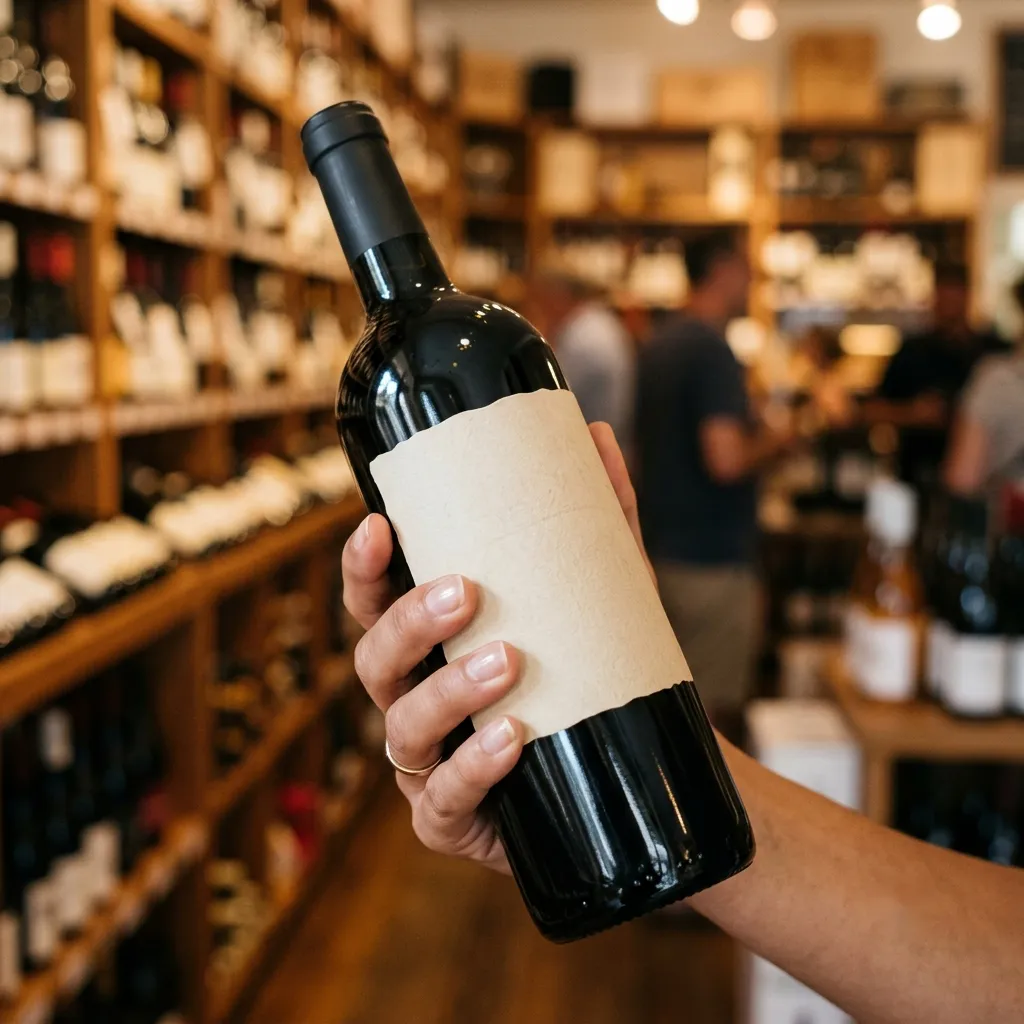
How to read a wine label and not get fooled by the bottle
You stand in front of the wine shelf, every bottle crammed with text - region, vintage, some French or Italian words, medals, „reserva" - and in the end you pick by the nice label or the price. Sound familiar? A wine label is really an instruction manual, only nobody taught us to read it. Once you can, you stop shooting in the dark and start buying with intent. Let us go through it, piece by piece.
Region (appellation) - often more important than the grape
This is the first thing that confuses beginners. In the New World (Chile, Australia, the US, South Africa) the front usually shows the grape: Cabernet Sauvignon, Chardonnay. Simple. But in the Old World (France, Italy, Spain) the label often has no grape - it has a region: Bordeaux, Chianti, Rioja. Why? Because there the character of the wine is decided by place, and the grape is taken as given (Chianti = mostly Sangiovese, red Burgundy = Pinot Noir).
Abbreviations worth knowing: AOC/AOP (France), DOC/DOCG (Italy), DO/DOCa (Spain) - marks of controlled origin. They do not guarantee you will like the wine, but they say it follows the rules of its region (grapes, production). DOCG or DOCa is usually a higher, more strictly controlled tier than plain DOC/DO.
Vintage - what the date tells you
The year on the label is the vintage - the year the grapes were harvested, not when it was bottled. Why does it matter?
- Freshness: most wines (especially whites, rosés, light reds) are meant to be drunk young, within 1-3 years. A five-year-old white off a supermarket shelf is often a risk, not a bargain.
- Weather: in a given region some years are better than others. That is a topic for the advanced, but the simple rule holds: very young wine = fresh and fruity, older = potentially more complex (if it was built to age).
A wine with no vintage (NV, non-vintage) is the norm for Champagne and many sparklers - a deliberate blend across years for a consistent style.
Sweetness: dry, off-dry, brut
This is where most misunderstandings happen - because „dry" gets confused with „sour" or „strong". Dry simply means no residual sugar. What to look for:
- Still wines: dry / off-dry / medium-sweet / sweet.
- Sparkling wines have their own scale, from driest: brut nature → extra brut → brut → extra dry → sec → demi-sec → doux. Watch the trap: „sec" means „dry" in French, but in Champagne sec is already noticeably sweetish - because the sparkling scale is shifted. If you want a genuinely dry Champagne, look for brut or extra brut.
Alcohol (% vol.) - it tells you more than you think
The percentage is not just „how strong". It is a hint about style:
- 11-12.5% - usually lighter, fresher, from a cooler climate (e.g. light whites, Riesling).
- 13.5-15% - fuller, heavier, from a warmer climate or very ripe grapes (bold reds, some oaked Chardonnay).
There is no „better" number - but if you know you like light, refreshing wines, lower alcohol is a useful clue right there on the shelf.
„Reserva", „Riserva", „Gran Reserva" - what they really mean
This is not always marketing - in some countries these are regulated terms about ageing time. Spain is the clearest:
- Crianza - younger, shorter ageing.
- Reserva - longer (usually min. 3 years, part in barrel).
- Gran Reserva - longest (often 5+ years), only in better vintages.
Italian Riserva also means longer ageing under the rules of its DOCG. But beware: in New World countries „Reserve" is often a word with no definition - pure marketing. So: in Spain/Italy it carries real information, elsewhere treat it with caution.
The small print: who bottled it, and where
It is worth glancing at the back and bottom of the label:
- „Estate bottled" / „Mis en bouteille au château / au domaine" - bottled at the estate that grew the grapes. Usually a good sign (control from vineyard to bottle).
- „Mis en bouteille par…" without „château/domaine" - bottled by a merchant/négociant. Not necessarily worse, but it tells you less about the origin.
What the label will NOT tell you - and the traps
- A pretty label ≠ good wine. The design is the marketing department’s work, not the cellar’s.
- Medals and „awards". Often from minor competitions where almost everyone gets a medal. A single gold sticker is weak evidence.
- „Old vines / vieilles vignes". Old vines can give better fruit, but it is an unregulated term - anyone can print it.
- Price. Above a certain point you pay for the brand, the region and rarity, not for „that much better taste". A wine at 40-50 zł served with care can be more enjoyable than a 200 zł bottle opened carelessly (more on that in our post how to actually taste wine).
Turn the label into knowledge about your own taste
The best thing you can do with a label is not throw it into oblivion. Buy a bottle, read the label consciously, and then record what was inside and whether you liked it - region, grape, vintage, your impressions. After a dozen entries you will see a pattern: that you keep gravitating, say, to dry whites from cool climates or to Spanish Reservas. And next time you do not guess - you know what to look for on the shelf.
That is exactly why GustoNote exists: you record every wine with its label details, rate aromas and structure, and the app shows your taste profile and lets you compare your description with the grape’s typicity. The label tells you what you are buying; your notes tell you what you actually like - and only together do they make you a confident buyer.